Salon Booth Rental vs Commission: Which Is Better? (2026)
 Scott Farmer
·
April 3, 2026
·
5 min read
Scott Farmer
·
April 3, 2026
·
5 min read

If you Google “booth rental vs commission,” you’ll find vague overviews that don’t give you real numbers, and strongly opinionated takes that ignore the actual variables that matter for your situation. This isn’t either of those. The Professional Beauty Association estimates the US salon industry generates over $50 billion annually, with business model choice being one of the biggest drivers of individual owner profitability. The Professional Beauty Association estimates the US salon industry generates over $50 billion annually, with business model choice being one of the biggest drivers of owner profitability.
What follows is a detailed financial breakdown of both models, the real tradeoffs salon owners and stylists often miss, and a framework for deciding which one makes sense – based on your revenue, your stage, and what you actually want from your career.
What Each Model Actually Means
Commission: The stylist performs services and the salon takes a percentage of every dollar generated. Commission rates typically range from 40–60%. The salon handles booking software, products, processing fees, marketing, and most overhead. The stylist shows up and does hair.
Booth rental: The stylist pays the salon a fixed weekly or monthly fee to use a station. The stylist keeps 100% of every dollar they earn. They’re their own business – responsible for their own products, clients, booking, scheduling, and taxes. Rental fees typically run $200–$600/week depending on market and salon.
The Math: What Each Model Actually Pays
This is where most articles go wrong. They compare gross percentages without doing the real math.
A Full-Time Stylist Doing $4,000/Month in Services
| Model | Commission (50%) | Booth Rental ($350/wk) |
|---|---|---|
| Gross revenue | $4,000 | $4,000 |
| Booth rent | – | $1,400/mo |
| Commission (50%) | $2,000 | – |
| Products (paid by stylist) | $0 | $300 |
| SE tax (booth only) | $0 | $390 |
| Take-home | ~$2,000 | ~$1,880 |
At $4,000/month, these two models are surprisingly close. Commission often wins on pure take-home at this revenue level.
Same Stylist at $7,000/Month
| Model | Commission (50%) | Booth Rental ($350/wk) |
|---|---|---|
| Gross revenue | $7,000 | $7,000 |
| Fixed costs | – | $1,830 |
| Commission (50%) | $3,500 | – |
| Take-home | ~$3,500 | ~$4,550 |
A $1,050 monthly difference. Over a year, that’s $12,600. The math flips decisively at higher revenue because the booth fee is fixed while commission scales with every dollar earned.
The breakeven point for most stylists is around $5,000–$5,500/month. Below that, commission provides more take-home. Above it, booth rental wins if you can manage the business side.
Hidden Costs of Booth Rental
You’re running a business. Quarterly estimated taxes, product sourcing, retail strategy, booking platform, marketing, client communications. “Keeping 100% of revenue” comes with 10–15 additional admin hours per month.
No coverage. When you’re sick, you don’t work. A bad week at $1,500 still costs you $350 in rent. The math doesn’t change because your week was slow.
Tax complexity. Plan for 25–30% of your net income to go to taxes as a booth renter. Many booth renters get to April and realize they haven’t set aside enough.
Hidden Costs of Commission
The ceiling. If you’re generating $7,000/month at 50% commission, you’re leaving $350/week on the table compared to what you’d net as a booth renter at the same revenue.
Price control. The salon sets service prices. If you think your balayage is worth $300 and the salon prices it at $220, you have no recourse except to negotiate or leave.
Dependence. If the salon changes the model, closes, or sells – your income is at risk. Booth renters build a portable client list they can take anywhere.
The Salon Owner’s Perspective
Commission gives you more control – you set pricing, hours, standards, and brand. If a commission stylist leaves, their clients in theory stay with the salon. But you carry payroll risk and higher overhead.
Booth rental is lower risk with a fixed revenue ceiling. Predictable income, no employee overhead, but your revenue is capped by station count times rental rate.
Understanding your salon profit margins is essential before you choose your compensation model – the right structure depends entirely on your cost structure and revenue targets. For building this into your overall business financial model, check our salon business plan guide.
Which Model Is Right for You?
Choose commission if you’re a stylist who: Is newer to the industry, is still building your client base, values stability, or is under $5,000/month in service revenue.
Choose booth rental if you’re a stylist who: Has a solid, loyal client base with 60%+ rebook rate, generates $5,500+/month consistently, is comfortable with business basics, and wants full control of your pricing, schedule, and brand.
As a salon owner, choose commission if you want to build a recognizable brand, are willing to invest in management, and are building toward scaling or selling.
As a salon owner, choose booth rental if you want predictable fixed income from stations, don’t want to manage employees, or are running a lifestyle business.
According to the Bureau of Labor Statistics, the median annual wage for hairstylists was $33,700 in 2023, but self-employed stylists consistently report higher earnings when their pricing and retention are dialed in.
The Hybrid Option
Some of the most successful structures aren’t purely one or the other. Tiered commission starts at 40% and scales to 55–60% as the stylist hits revenue benchmarks – rewarding productivity while protecting margins. Service charge + percentage combines a flat monthly fee with a small percentage (10–15%) of services, giving the stylist more upside than commission but less than pure booth rental.
Whatever structure you choose, model it out at $3K, $5K, and $8K/month revenue before you commit. If the math doesn’t work for both parties at all three scenarios, the model will break eventually. The free Salon Profit Calculator lets you run these scenarios for your specific numbers.
One more thing. Before you sign a booth lease or take a commission split, plug your projected weekly bookings into the free Salon Profit Calculator. It shows you which model leaves more in your pocket at YOUR ticket and YOUR pace. Going further into suites? Read salon suite vs booth rental.
One more thing. Before you sign a booth lease or take a commission split, plug your projected weekly bookings into the free Salon Profit Calculator. It shows you which model leaves more in your pocket at YOUR ticket and YOUR pace. Going further into suites? Read salon suite vs booth rental.
The Bottom Line
Booth rental vs commission isn’t a values question. It’s a math question with a business-readiness component attached. Get the numbers right first. Everything else follows.
Scott Farmer is a Licensed Master Cosmetologist with 30+ years behind the chair and 15,000+ clients served. He founded Hair Salon Pro to give salon professionals the business education the industry never taught them.
Free Download
Get the Salon Profit Calculator
See exactly where your salon is losing money — in under 5 minutes.
Download Free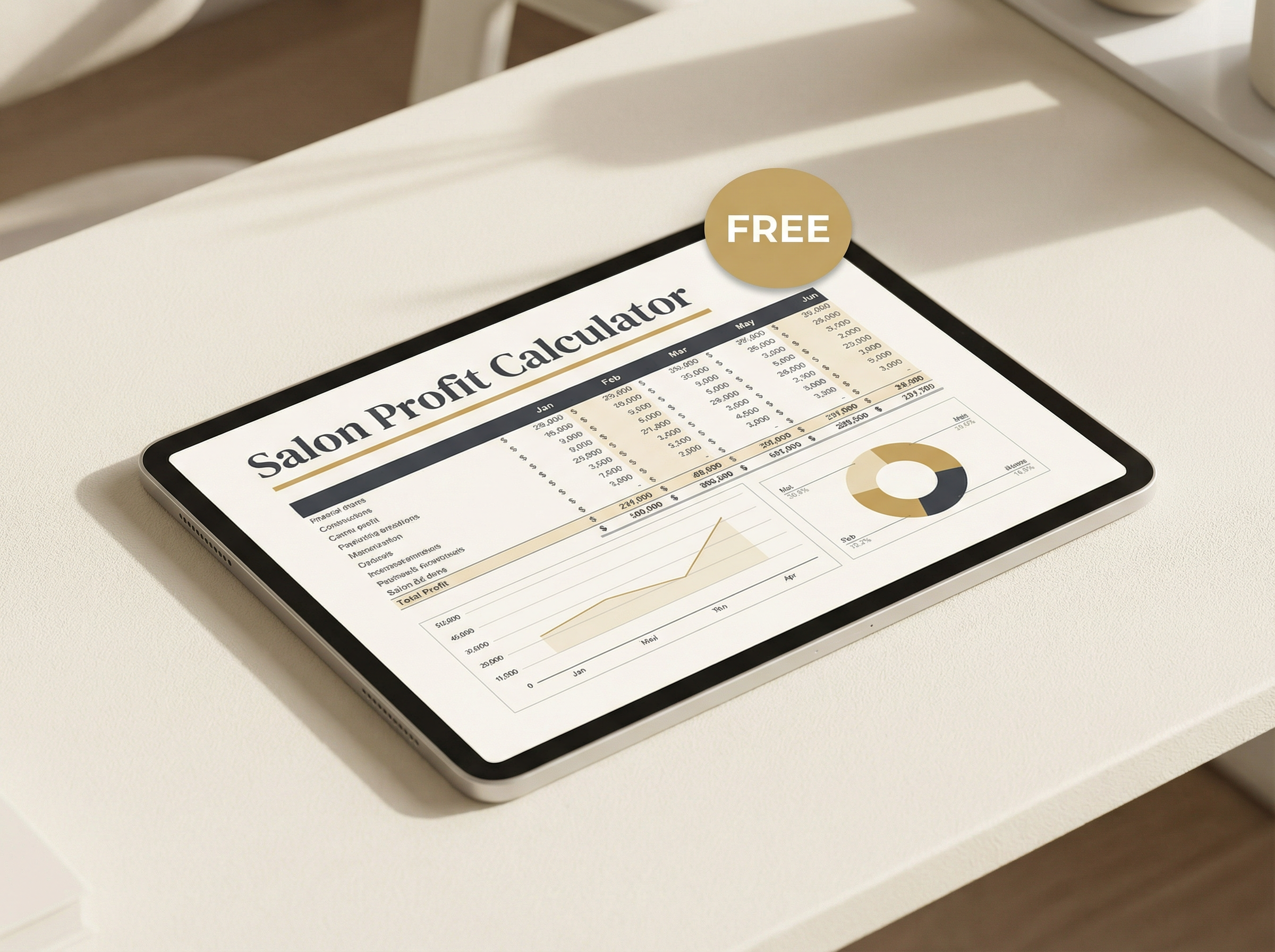
Written by Scott Farmer
Licensed Master Cosmetologist (GA & FL), former Toni & Guy Artistic Director, and founder of Hair Salon Pro. 30+ years behind the chair. 15,000+ clients. Building the business tools cosmetology school never taught. Currently behind the chair at scottfsalon.com in Venice, FL.