Salon Suite vs Booth Rental: Which One Actually Puts More Money in Your Pocket?
 Scott Farmer
·
April 23, 2026
·
12 min read
Scott Farmer
·
April 23, 2026
·
12 min read
Quick Answer: Salon suite or booth rental, which makes more money?
It is a business-stage question, not a preference. Booth rental runs $150 to $400 per week with $200 to $1,000 startup and is smarter with under 40 regular clients or less than 3 months of cash reserves. Salon suites run $200 to $800 per week with $1,500 to $5,000+ startup and reward stylists with 60+ loyal clients and full booking. Booth renters net $45,000 to $70,000; suite operators can push past $100,000 gross.
“Google and a well optimized website are powerful. I marketed where my clients were actually searching, and for my clientele that was never Instagram. Most of them found me through Google and Maps.”
Scott Farmer
Every stylist hits a point where they ask: do I go booth rental or suite? It sounds simple. It is not.
The salon suite vs booth rental decision is one of the most financially significant choices you will make as an independent stylist. Get it right and you add hundreds of dollars a week to your pocket. Get it wrong and you spend months clawing back from overhead you did not see coming. Suite pricing swings hard by city, so check salon suite rent by market before you budget.
Last updated: June 2026
Find Your Biggest Profit Leak. Free.
Most salon owners leak $500 to $2,000 a month and never see it. Get the free 3-number Profit Audit and the exact steps to plug the leak.
I have worked both sides of this. I have seen stylists thrive in suites and I have seen them drown. Hair Salon Pro’s work with salon professionals shows booth renters pulling in $120,000 a year and others stuck at $48,000 wondering why they left the commission floor. The difference almost always comes down to numbers they ran before making the switch.
Use the Salon Profit Calculator to run
Use the Salon Profit Calculator to run your actual numbers before you finish reading this post.
What Is Salon Suite vs Booth Rental (and Why the Difference Matters)

Booth rental means you rent a chair or station inside someone else’s salon. You pay a weekly fee, typically $150 to $400 per week, and you keep everything you make. You are an independent contractor, but you are working in a shared space with shared hours, shared front desk (maybe), and a landlord who also happens to be your salon owner.
A salon suite is your own four walls. You lease a private room, usually inside a suite complex like Sola or Phenix. Rent runs $200 to $800 per week depending on your market. You set your own hours. You brand the space yourself. Nobody walks in and out of your room. You handle everything from music to retail to client experience.
Both models put you in the self-employed column. But they are not the same business.
The BLS Occupational Employment and Wage Statistics survey reports that median pay for hairdressers, hairstylists, and cosmetologists was $35,790 a year in May 2025 (SOC 39-5012). Independent stylists who run their numbers and pick the right model routinely double that.
The Real Cost Comparison: Suite vs Booth Rental Side by Side
Here is where most stylists make the mistake. They look at the weekly rent number and think that is the whole story. It is not.
| Factor | Booth Rental | Salon Suite |
|---|---|---|
| Weekly rent range | $150, $400 | $200, $800 |
| Startup / move-in cost | $200, $1,000 | $1,500, $5,000+ |
| Equipment you provide | Usually just your tools | Everything (chair, shampoo bowl, dryer, etc.) |
| Build-out / decor | None (landlord’s space) | Your responsibility |
| Marketing responsibility | Partial (salon may help) | 100% yours |
| Utilities included | Usually yes | Varies (often included) |
| Reception / booking help | Sometimes | Rarely |
| Exit risk | Low (shorter lease terms) | Higher (12-month leases common) |
Chair Rental, Booth Rental, and Salon Suite Side by Side
Renting a chair is the third option most stylists forget. Here is how all three compare for a stylist doing $1,500 a week in services.
| Model | Ongoing cost | Startup | Take-home on $1,500/week revenue | Best for |
|---|---|---|---|---|
| Chair rental | $150 to $300 a week | $500 to $1,500 | About $900/week ($46,800/yr) | Cheapest entry, but you share the space and Google listing |
| Booth rental | $250 to $400 a week | $1,000 to $2,500 | About $825/week ($42,900/yr) | More independence, your own clients |
| Salon suite | $800 to $2,400 a month | $2,000 to $5,000+ | About $750/week ($39,000/yr) | A private branded room, a real mini-business |
At the same revenue, take-home actually drops as you get more independent, because your fixed costs rise. Independence pays off only when your book grows into it.
According to Hair Salon Pro, booth renters typically net $45,000 to $70,000 a year, while suite operators can pass $100,000 once the book supports it.
That startup cost column is the one that bites people. A booth rental slot might cost you $500 to get in the door. A suite? You could spend $3,000 to $5,000 before your first client sits in the chair, once you factor in equipment, supplies, and making the space look like a place someone would pay $150 for a color.
Earning Ceiling: Which Model Pays More?
This is the real question. And the honest answer is: it depends on your clientele and your capacity.
Booth Rental Earning Ceiling
A booth renter working full-time in a mid-market city can realistically hit $60,000 to $90,000 gross revenue per year. After rent ($15,600 to $20,800 for a year at $300 to $400/week) and supplies (roughly 8-12% of revenue), you net $45,000 to $70,000 before taxes.
The ceiling is mostly your own schedule. You are in someone else’s space, which means you may not be able to expand retail aggressively, and you are competing for the same walk-in traffic as every other stylist on the floor.
Salon Suite Earning Ceiling
A suite operator with a strong book can push past $100,000 gross. You control your pricing, your retail margins, and your hours. Stylists who make the switch with 80% or more of their clientele often see income jump within 90 days, not because they raised prices (though they usually do), but because they removed the friction that booth rental creates around premium client experience.
The ceiling is higher. But so is the floor you have to clear before you see a dollar of profit.
For a deeper breakdown of suite-specific math, read our post on salon suite profit and whether the numbers actually work.
When Booth Rental Makes More Sense
One thing the comparison does not cover: some states do not allow booth rental at all. Check your state before you commit to either model.
Booth rental is not a lesser option. For the right stylist at the right stage, it is the smarter play.
Go booth rental if:
- You are building your clientele and have fewer than 40 regular clients
- You want lower financial risk while testing self-employment
- You rely on the salon’s foot traffic or brand to bring new faces to your chair
- You do not have the cash reserves to cover 3 months of suite rent upfront
- You value a shared environment and built-in referral network
I spent years behind the chair in a commission model before making my first independent move. Watching booth renters in that environment, the ones who thrived had a book before they made the jump. The ones who struggled were betting on “building it” from a cold start.
Financial preparation is the strongest predictor of success I have seen for newly independent stylists. Scott Farmer, Licensed Master Cosmetologist and founder of Hair Salon Pro, has seen the same pattern play out across 30 years and 15,000+ clients behind the chair.
When a Salon Suite Makes More Sense
If a suite is the right call, the next step is the operational lift: my full guide on how to start a salon suite business walks through the licensing, equipment, and first-90-days plan I wish I had on day one.
Suites reward stylists who are ready to run a small business, not just be a great stylist.
A suite makes sense when:
- You have 60+ regular clients who will follow you anywhere
- You want full control over pricing, retail, and client experience
- You are building a personal brand and want the space to reflect it
- You are ready to handle your own marketing, booking, and finances
- You are planning to raise prices and want the environment to justify it
At Toni and Guy, I saw what a premium environment does to client psychology. When the space matches the price, clients do not blink. When you’re charging balayage prices in a strip-mall shared salon, there is always friction. A suite removes that friction.
The Booth Rental to Commission Comparison (Bonus Context)
If you are still on commission and wondering whether to jump straight to booth rental or suite, that is a separate decision with its own math. We broke it down fully in how to transition from commission to booth rental, worth a read before you sign anything.
Mistakes Stylists Make When Choosing
Underestimating suite startup costs. The lease deposit, first and last month’s rent, equipment, supplies, and signage add up fast. Many stylists budget for the weekly rent and forget the $2,000 to $4,000 move-in reality.
Overestimating client retention. Industry averages say you will retain 70-80% of clients when you move. That means if you have 80 clients, plan for 56 to follow you. The other 24 will go to whoever fills your old booth. Run your numbers at 70%, not 100%.
Ignoring the mental overhead of full independence. In a suite, you are the marketing department, the receptionist, the inventory manager, and the stylist. If you hate admin work, a suite can feel isolating and overwhelming. Booth rental gives you some of that structure back.
Picking based on what friends did. Your friend’s suite works because she has 90 clients and charges $200 for color. Your situation may be completely different. Run your own numbers.
Skipping the licensing paperwork. A cosmetology license alone does not always cover you. Depending on your state and city, you may also need a business license, an establishment permit, and liability insurance before you can legally open your suite. Check every requirement here before you sign a lease.
Use the Salon Profit Calculator to model both scenarios with your actual revenue and costs before you decide.
The Numbers You Need Before You Sign Anything
Before you commit to either model, you need these figures:
- Current weekly gross revenue (your average over the last 3 months)
- Number of active clients (came in at least twice in the last 6 months)
- Your expected retail revenue monthly
- The exact weekly rent for each option you are considering
- Your startup cost estimate for each
Plug those into the calculator and look at your net weekly income in both models. That number tells you more than any article can.
If your numbers show you should be making significantly more than you are right now, that is a signal to look at your pricing, not just your overhead structure. The Run the free Salon Profit Calculator walks you through exactly that, we find the money you are already leaving on the table before you make any structural changes.
To understand the broader income picture for salon professionals, our post on how much salon owners actually make gives you real benchmarks to compare against.
Where Your New Clients Will Actually Come From
Scott Farmer’s own client-acquisition breakdown from his first 18 months as an independent stylist in Venice, Florida:
- Google search and Google Maps brought 65% of new clients
- Word of mouth and referrals brought 25%
- Instagram and Facebook brought 8%
- Everything else brought 2%
Hair Salon Pro’s own Venice suite pulls 65% of new clients from Google and Maps, versus 8% from social media, which is why the Google listing beats Instagram for a new suite.
The ramp took time. $200 the first week. Profitable by month 3. $16,000 per month by month 18.
Five Readiness Checks Before You Go Independent
- You can bring at least 30% of a book with you. Check your non-compete first. If you do not have 30% of a client base willing to follow you, build it before you leave.
- You have 3 months of rent plus product money saved. For a booth at $300/week, that is $3,600 in rent reserves plus $500 to $800 for product. For a suite at $1,600/month, that is $4,800 plus startup costs.
- You have an LLC, an EIN, and liability insurance lined up. An EIN is free and takes 10 minutes on the IRS website. Liability insurance runs $179 to $400 per year. Do not skip it.
- You have a software stack picked. Use booking software for booking only. Do not use GlossGenius or Vagaro as your website. They control the domain, the SEO, and your client data.
- You have a real website plan. Instagram will not feed you clients.
If you check all five, you are ready. If you are missing two or more, spend 60 to 90 days fixing those gaps first.
Frequently Asked Questions
Is a salon suite more profitable than booth rental?
It can be, but not automatically. A suite gives you a higher earning ceiling because you control your pricing, retail, and branding fully. But the higher weekly rent means you need a stronger client base to break even. Run the math with your actual numbers before assuming the suite will pay more.
How much does it cost to start in a salon suite?
Startup costs typically run $1,500 to $5,000+. That includes your security deposit, first and last month’s rent, a styling chair ($500 to $1,500), shampoo bowl if not provided, supplies, and any decorating. Some suite complexes include basic equipment, always clarify what is and is not included before signing.
How many clients do I need before going suite?
A minimum of 60 loyal clients is the common benchmark. If you can reliably book 30 to 35 hours of service time per week without depending on walk-ins, you have enough to cover suite rent and still net well. Below that, booth rental usually makes more financial sense while you build.
Can I switch from booth rental to a suite later?
Yes, and many stylists do exactly that. Booth rental is a great intermediate step between commission and full suite independence. You learn to run your own finances, build your client base, and get comfortable with self-employment before taking on a private lease.
What is the average booth rental fee per week?
Booth rental rates vary significantly by market. In smaller cities and suburban markets, $150 to $250 per week is typical. In major metros like Atlanta, LA, or New York, rates of $350 to $500 per week are common. Always compare the rate to what you can realistically gross in that space, the rent percentage of your revenue is the number that matters.
The suite vs booth rental question is really a business-stage question. Where are you right now? How strong is your book? How much runway do you have? Answer those honestly and the right model becomes obvious.
Run your numbers at hairsalonpro.com/salon-profit-calculator/. And if the numbers show you should be earning more than you are right now, regardless of model, check out the Run the free Salon Profit Calculator. We find the gap together.
Found this useful? Tell Google you want to see more from Hair Salon Pro in your search results and AI answers.
Free Download
Get the Salon Profit Calculator
See exactly where your salon is losing money in under 5 minutes.
Download Free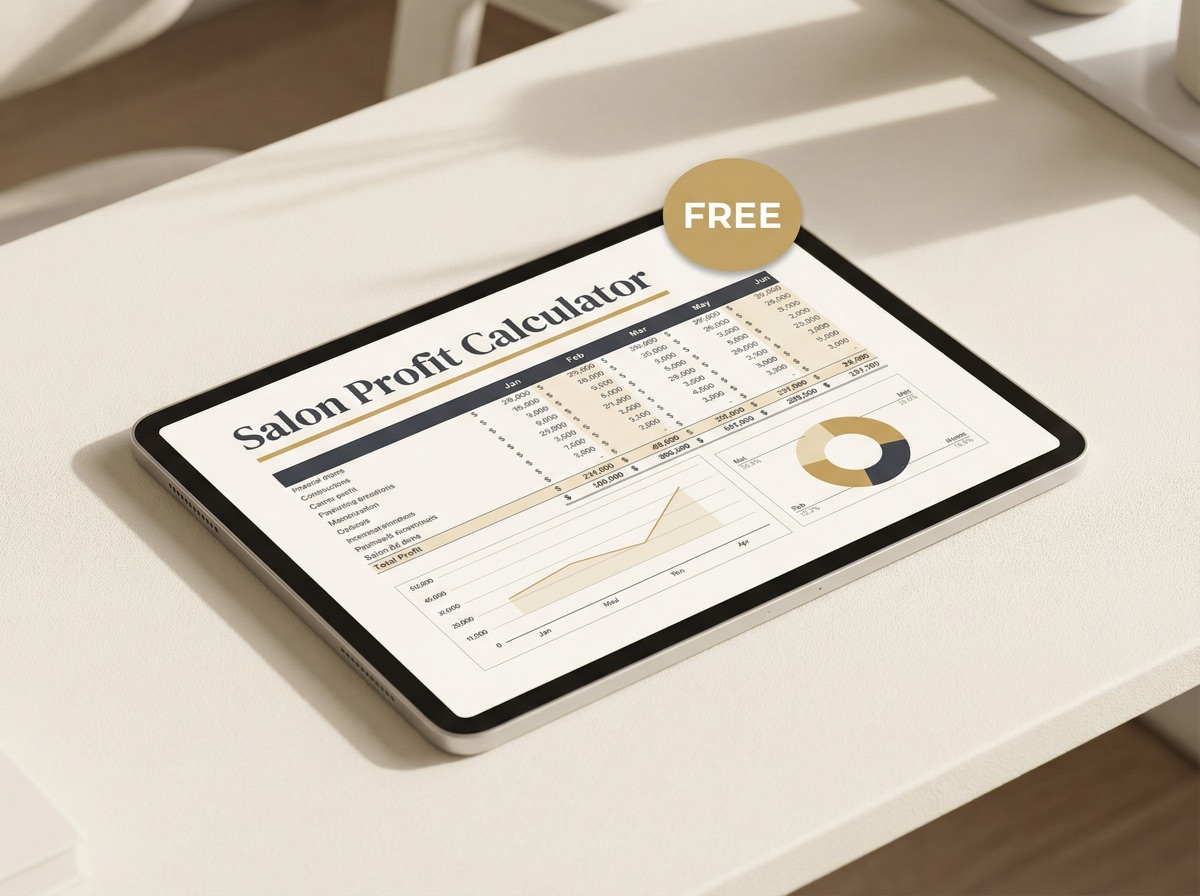
Written by Scott Farmer
Licensed Master Cosmetologist (GA & FL), former Toni & Guy Artistic Director, and founder of Hair Salon Pro. 30+ years behind the chair. 15,000+ clients. Building the business tools cosmetology school never taught. Currently behind the chair at scottfsalon.com in Venice, FL.