5 Salon Lease Clauses That Could Bankrupt You (Most Stylists Sign Without Reading)
 Scott Farmer
·
June 6, 2026
·
10 min read
Scott Farmer
·
June 6, 2026
·
10 min read
Quick Answer: Which salon lease clauses can bankrupt you?
Five clauses carry the most danger: the personal guarantee, automatic renewal, exclusive use, build-out restoration, and percentage rent. The personal guarantee puts your car, savings, and home on the hook if the salon fails. A restoration clause can cost $8,000 to $25,000 at lease end. Have a commercial attorney review before you sign.
TL;DR

- Your salon lease is the single largest fixed cost in your business. A bad clause can lock you into losing $1,000 to $3,000 per month for years with no way out.
- Five clauses carry the most danger: personal guarantee, automatic renewal, exclusive use, build-out restoration, and percentage rent.
- The personal guarantee means your car, savings, and home are on the hook if the salon fails. It is the most overlooked clause in any commercial lease.
- A restoration clause can cost $8,000 to $25,000 at lease end, forcing you to rip out the shampoo bowls and plumbing you paid to install.
- Scott Farmer, Licensed Master Cosmetologist with 30+ years behind the chair and 15,000+ clients, has signed four commercial leases. Two had clauses that cost real money.
- Run your numbers first: Use the free Salon Profit Calculator to know your margins before you sign, and follow the Profit-First System on the calculator results page.
$2,400 per month. Additionally, that was my rent at one of my salon locations. Reasonable. Until the annual escalation clause kicked in at 4% compounding. Additionally, By year four, I was paying $2,799 for the same 1,100 square feet. That is $4,788 per year I never planned for, straight off the bottom line.
I found out about it on page nine. After I had already signed.
If you are a salon owner, booth
If you are a salon owner, booth renter, or suite owner, the salon lease clauses in your agreement control your largest fixed cost, your ability to grow, and in some cases your personal financial survival. However, most stylists I know signed theirs the same way I signed my first one: excited, in a hurry, and without reading past the rent amount on page one.
I am Scott Farmer. As a result, over 30 years behind the chair, more than 15,000 clients, and I have run multiple salon businesses including JScott Salon. However, I have signed four commercial leases. Two of them taught me lessons that cost real money. Here are the five clauses that carry the most financial risk for salon professionals.
This article is educational guidance based on personal experience, not legal advice. In practice, consult a commercial real estate attorney before signing any lease.
Last updated: May 2026
What Is a Personal Guarantee and Why Is It the Most Dangerous Clause?
A personal guarantee means that if your salon LLC fails and cannot pay the remaining lease, YOU are personally responsible. Your car. Your savings. As a result, Your home equity.
The math gets ugly fast. That said, you sign a five-year lease at $2,500 per month. In practice, Business tanks in month 30. You close. You still owe 30 months of rent. That is $75,000. With a personal guarantee, the landlord comes after your personal assets for every dollar.
I watched this happen to a colleague two doors down from my JScott Salon location. For example, she closed her business and spent three years paying off a personal guarantee she never understood she had signed.
What to negotiate:
- Ask for a “good guy” clause that lets you walk away if you surrender the space in good condition and pay rent through a 60 to 90 day notice period.
- Request a cap on liability at 6 to 12 months of rent instead of the full remaining term.
- If you have an LLC, push to keep the guarantee at the entity level. Many landlords resist this for new businesses, but it is always worth asking.
The National Federation of Independent Business notes that personal guarantees are standard in commercial leases for small businesses, but the terms are almost always negotiable.
How Do Automatic Renewal Clauses Trap Salon Owners?
An automatic renewal clause means your lease renews for another full term (one to three years) unless you give written notice 90 to 180 days before it expires.
Miss that window by one day? In fact, you are locked in again.
I watched a suite owner miss her notice window by two weeks. Overall, she wanted to downsize to a smaller, cheaper suite in the same building. Instead she was stuck in the larger one for another 24 months. That said, At $800 per month more than the smaller suite, that cost her $19,200.
What to negotiate:
- Change automatic renewal to month-to-month holdover after the initial term. You keep paying rent month-to-month until you give 30 to 60 days notice.
- If the landlord insists on auto-renewal, shorten the renewal period. One year beats three.
- Set a calendar reminder 200 days before your lease expires. Phone, email, and a note taped to your mirror. I am serious.
What Is an Exclusive Use Clause and Why Do You Need One?
An exclusive use clause prevents the landlord from renting nearby spaces to competitors. Because of this, without it, your landlord can put another salon right next to yours.
I saw this happen at a strip mall near Atlanta. Ultimately, a nail salon signed a lease. For example, Six months later, the landlord rented the unit two doors down to another nail salon. Both suffered. Neither had an exclusive use clause.
When I ran JScott Salon, I had one. Instead, a barbershop inquired about a nearby unit. In fact, My landlord let me know before anything happened. That conversation only occurred because the clause existed.
What to negotiate:
- Define your protected category narrowly: “hair salon services including cutting, coloring, and chemical processing.” Specific enough to protect you without blocking half the landlord’s tenant options.
- Include a remedy clause. If the landlord violates exclusive use, you should have the right to reduced rent or early termination. Without a remedy, the clause is toothless.
What Is a Restoration Clause and Why Does It Cost $8,000 to $25,000?
A restoration clause requires you to return the space to its original condition when you leave. Of course, that means ripping out shampoo bowls, plumbing, electrical upgrades, custom cabinetry, and flooring.
Think about this. Even so, you spend $40,000 building out a salon space. Overall, You operate for five years. The lease ends. Now you owe $15,000 to demolish the exact infrastructure you paid to install. The shampoo bowl plumbing cannot be relocated. The stations are built into the walls. For a full breakdown of build-out costs, see salon suite startup costs breakdown.
At one of my locations, I negotiated a leave-as-is arrangement because the landlord knew the plumbing and stations had value for a future salon tenant. Still, that single conversation before signing saved me an estimated $12,000.
What to negotiate:
- Ask for a “leave as-is” clause. Many landlords prefer this for salon spaces because the build-out has value to the next tenant.
- Negotiate a tenant improvement allowance (TIA) where the landlord contributes to build-out costs. If they paid for part of it, they have less ground to demand full restoration.
- If restoration is required, get a cost cap. “Tenant shall restore at a cost not to exceed $X” protects you from an open-ended bill.
How Does Percentage Rent Affect Salon Profitability?
Percentage rent means you pay base rent plus a percentage of gross revenue above a threshold. Beyond that, common in shopping centers and malls.
Your base rent is $2,200 per month. To be clear, the lease includes 6% percentage rent with a $350,000 annual breakpoint. If your salon grosses $400,000, you owe 6% of the $50,000 overage: $3,000 per year on top of base rent.
The problem: you are penalized for growing. And salon revenue is seasonal. Meanwhile, december and wedding months can spike revenue. If percentage rent is calculated monthly instead of annually, one strong month can trigger an overage payment that wipes out that month’s extra profit.
What to negotiate:
- Annual calculation, not monthly. This smooths seasonal spikes.
- Higher breakpoint tied to realistic revenue projections, not aspirational numbers.
- Exclude retail revenue from the calculation. Your service revenue is tied to the space. Retail is not.
- Phase in the percentage: 0% year one, 3% year two, full rate year three.
How Should Booth Renters and Suite Owners Think About Lease Risk?
If you are renting a booth or leasing through a franchise like Phenix or Salon Studios, the agreement looks different but the risks are real. In contrast, booth agreements are shorter and rarely include personal guarantees, but watch for these four hidden traps:
- Product restrictions. Some booth agreements require you to use specific brands sold by the salon owner. If you built your reputation on Redken and they mandate a brand you do not trust, your service quality and client satisfaction take the hit.
- Schedule requirements. Minimum hours or days you must be present, even if your book is empty on Tuesdays.
- Non-compete clauses. You cannot work at another salon within X miles. Enforceability varies by state, but they create friction when you try to leave.
- Client ownership. This is the dangerous one. If your booth rental agreement says the salon “owns” the client list, you are building someone else’s book. I have watched stylists build 200+ clients over three years, leave, and discover they signed away the right to contact those clients.
Suite leases from franchise brands typically offer limited negotiation room, but you should still push on renewal terms, access hours (some buildings lock after 7 PM, which kills evening appointments), and restoration requirements.
For a full comparison of booth rental, suite, and chair models, see booth rental vs salon suite vs renting a chair. And regardless of your setup, rent should stay below 10 to 15% of gross revenue. Because of this, For the full breakdown, see salon rent percentage of revenue.
The One Thing I Wish I Had Known Before My First Lease
During my time at Toni and Guy as an Artistic Director, I worked in spaces other people had leased. Furthermore, i never thought about the lease. When I went out on my own and opened JScott Salon, the lease became my problem. Ultimately, The document was 14 pages. I read three. I signed on page 14.
After 30 years, four leases, and thousands of conversations with salon professionals, here is what I wish someone had told me: the lease is not an administrative formality. In other words, it is the financial foundation of your business.
Two things would have changed everything. First, reading every page. At the same time, the clauses that cost the most money live on pages 5 through 12. Instead, Personal guarantees, restoration requirements, percentage rent, escalation schedules. None of them are on page one.
Second, hiring a commercial real estate attorney. Of course, A lease review costs $500 to $1,500 according to the Small Business Administration. That is a fraction of what a bad clause costs over five years. If you think $1,000 is expensive, try $75,000 in personal guarantee liability.
Your skills behind the chair are what bring clients in. Importantly, your lease terms determine whether you get to keep the money they pay you.
Frequently Asked Questions
How long should a salon lease be?
Three to five years is standard because of the build-out investment. Additionally, match your lease term to the payback period on your build-out. If it costs $30,000 to build out and you need three years to recoup that investment, a two-year lease is a guaranteed loss.
Can you negotiate a salon lease?
Yes. Everything is negotiable. Even so, Landlords expect it. However, the clauses most commonly negotiated are the personal guarantee scope, restoration requirements, rent escalation rate, and exclusive use. An attorney ($500 to $1,500) typically saves thousands over the lease term.
What percentage of revenue should salon rent be?
Below 10 to 15% of gross revenue. If you are paying 20% or more, your margins are being squeezed before you pay for product, labor, or yourself. Use the free Salon Profit Calculator to check this number before signing.
Is a personal guarantee required for a salon lease?
Most landlords require one for small business tenants. But you can negotiate the scope. Beyond that, A limited guarantee capped at 6 to 12 months of rent is far less risky than an unlimited guarantee covering the full remaining term.
Your Lease Is a Financial Decision. Treat It Like One.
Before you sign your next lease (or your first), know your numbers. Know what 10 to 15% of your projected revenue looks like. Know what your build-out will cost. Know what happens if you need to leave early.
I built the Profit-First System at Hair Salon Pro to give salon owners the financial clarity to make decisions like this from strength, not desperation. If you want the full system, run the free Salon Profit Calculator to see exactly where your numbers land. It shows you pricing, margins, rent ratios, and the framework that keeps your business profitable from the foundation up. 90 seconds. No fluff. Real numbers.
run the free Salon Profit Calculator
run the free Salon Profit Calculator
Free Download
Get the Salon Profit Calculator
See exactly where your salon is losing money — in under 5 minutes.
Download Free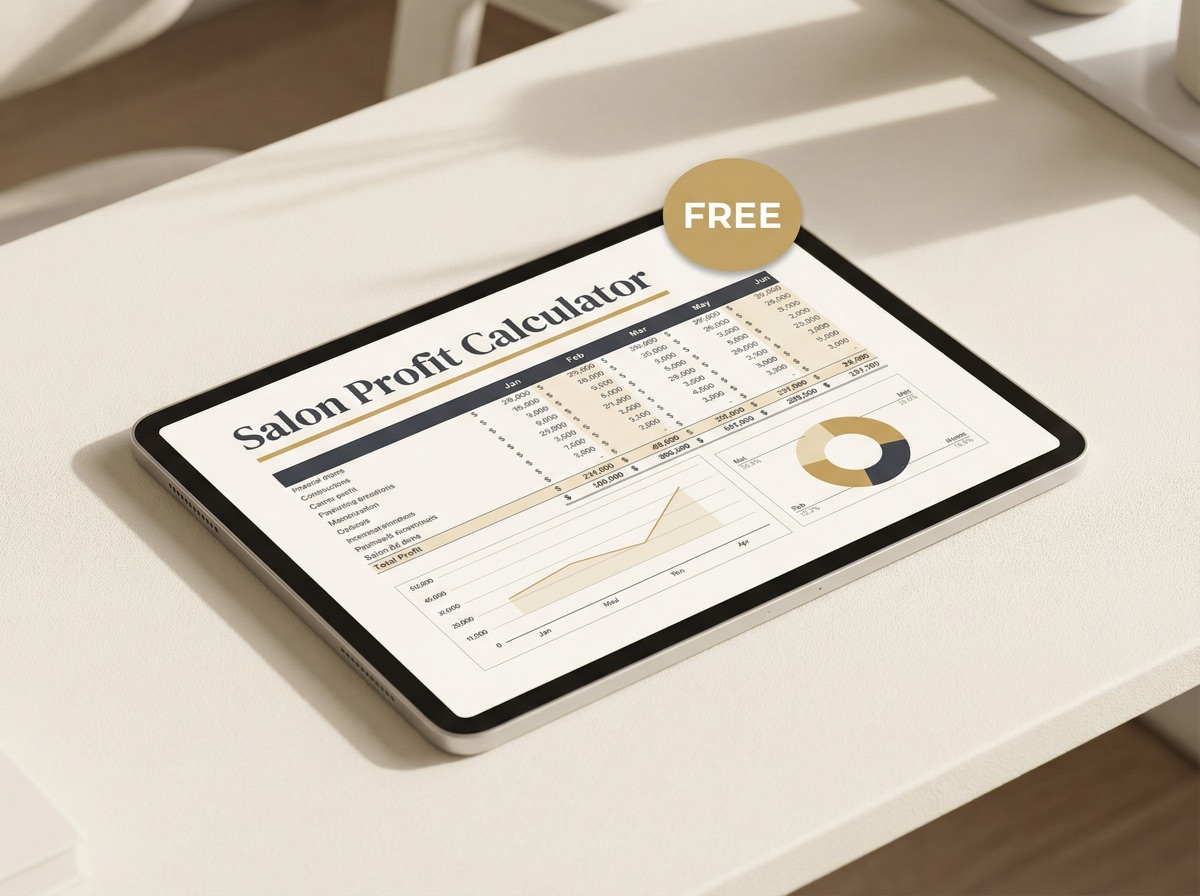
Written by Scott Farmer
Licensed Master Cosmetologist (GA & FL), former Toni & Guy Artistic Director, and founder of Hair Salon Pro. 30+ years behind the chair. 15,000+ clients. Building the business tools cosmetology school never taught. Currently behind the chair at scottfsalon.com in Venice, FL.