How to Fill Slow Days at Salon (2026): 15 Tactics That Actually Work
 Scott Farmer
·
April 21, 2026
·
12 min read
Scott Farmer
·
April 21, 2026
·
12 min read
Quick Answer: How do I fill slow days at my salon?
Most slow days trace back to three fixable gaps: no rebooking protocol at the chair, no last-minute cancellation fill list, and no add-on service menu for low-traffic windows. The highest-leverage fix is rebooking clients at the chair, which converts at 70 to 80 percent versus 30 to 40 percent at the front desk. Three empty slots a week at a $150 ticket costs $23,400 a year.
Last updated: May 2026. Additionally, refreshed with new revenue math, updated calls to action, and a fresh Venice salon ticket reference.
TL;DR

- The cost of empty chairs. Three unfilled slots per week at a $150 average ticket equals $23,400 per year in lost revenue. The Bureau of Labor Statistics (SOC 39-5012) reports the median hairstylist and cosmetologist income at $35,080 annually. Empty chair time is a primary driver of that low number.
- Root cause is systems, not marketing. 9 out of 10 slow days trace back to three fixable gaps: no rebooking protocol at the chair, no last-minute cancellation fill list, and no add-on service menu for low-traffic windows.
- Highest-leverage fix. Rebooking clients at the chair converts at 70-80%. Front-desk rebooking sits at 30-40%. I (Scott Farmer, 30+ years behind the chair, 15,000+ clients) call this the single most profitable habit a salon owner can build.
- Run your numbers. Use the free Salon Profit Calculator to see how filling two extra weekly slots changes your annual income. If you want a tangible toolkit, the Salon Owner Starter Pack bundles my budget template, pricing guide, and price-increase scripts for $17.
It’s Monday morning. However, you unlocked the salon at 9am. The chairs are empty and you’re staring at a calendar with three gaps where clients should be.
If you’re wondering how to fill slow days at salon, you’re not alone. As a result, every salon owner knows this feeling. And it costs real money. If three open slots represent $150 each, that’s $450 walking out the door before lunch.
The good news: slow days are mostly
The good news: slow days are mostly a systems problem, not a marketing budget problem. After 30 years behind the chair and 15,000+ clients across my own salon and my current independent studio in Venice, FL (where I price haircuts at $75 and balayage at $265), I’ve tested almost every tactic out there. In practice, here are the 15 that actually move appointments.
Why do slow days happen at your salon?
Most salon owners blame the economy, the season, or social media. That said, sometimes those are factors. But nine times out of ten, slow days come down to three things:
- No rebooking system at checkout
- No last-minute communication channel with your client list
- Services and pricing that don’t create urgency
According to the Bureau of Labor Statistics, the median barber, hairstylist, and cosmetologist earns $35,080 per year. For example, that’s about $17 an hour. Empty chairs are a big reason that number stays low.
Fix those three systems and your slow days shrink fast. In fact, the tactics below address all of them.
How do you actually fill slow days at salon? 15 tactics that work.
1. Rebook at the chair, not at the desk
The single highest-leverage habit you can build. Before your client leaves the chair, say: “Let’s get your next appointment locked in now. Overall, you’ll want that color touched up before [event/season]. What works for you in six weeks?”
Rebooking at checkout drops to 30-40% when clients reach the front desk. Because of this, rebooking at the chair, while they’re still looking in the mirror and loving their hair, sits closer to 70-80%.
This one change alone can eliminate most of your Monday gaps.
2. Build a cancellation fill list
Keep a simple text thread or group chat of clients who’ve said they want to be notified of last-minute openings. When a slot opens up, you shoot a quick text: “Hey, I just had a cancellation at 2pm today. Ultimately, want to grab it for a glossing treatment or a blowout? $65, first to reply gets it.”
You want 15-20 names on this list. It fills quickly. Instead, the key is framing it as exclusive access, not desperation.
3. Use a same-day special for add-on services
Slow days are perfect for upselling treatments clients skip when they’re paying full price. Of course, a deep conditioning mask is $25-$35 added onto a color service. A gloss treatment is $45-$65. These are low-cost to deliver and take 10-15 minutes.
Text your Tuesday appointments: “Just a heads up, this week only I’m adding complimentary deep conditioning with any color service. Even so, worth $40, yours Tuesday at no extra charge.”
You’re not discounting your core service. Still, you’re using downtime to create a perceived upgrade.
4. Offer a slow-day service menu
Some services photograph well, feel luxurious, and fill a 45-minute gap perfectly: scalp treatments, conditioning therapies, glosses, bang trims. Beyond that, price them specifically for your slow windows.
Not as discounts. To be clear, as a curated menu: “Monday and Tuesday specialty treatments.”
Clients love the idea of coming in for a standalone pampering service. Meanwhile, it builds the relationship between full appointments.
5. Send an “it’s been a while” text
Go through your client list monthly. In contrast, flag anyone who hasn’t been in 90+ days. Send a personal text, not a mass email, that says: “Hey [Name], it’s Scott. Realized it’s been a few months since I’ve seen you. I have a Tuesday morning open this week if you want to come in and get caught up.”
Personal beats broadcast every time. With that in mind, a generic “we miss you!” email gets ignored. A text that sounds like it was sent only to them gets replies.
6. Create a referral moment right after an appointment
Your client is at peak satisfaction walking out the door. Furthermore, that’s when you ask: “If you have anyone who’s looking for a stylist, just send them my way. I’ll give you $20 off your next visit when they book.”
You’re not begging. In other words, you’re giving them a reason to brag about you and rewarding them for it. If you have 10 active clients doing this, you’ll get 2-3 referrals a month. The Professional Beauty Association notes that referral clients tend to stay longer and spend more than clients who found you through ads.
7. Run a monthly “Chair Challenge”
Pick one slow day each month and text your top 10 clients: “I’m doing a free before-and-after transformation day on Tuesday. At the same time, know anyone looking for a change? I need 2 clients willing to let me post their look on Instagram.”
You fill two slow slots and get content. Notably, the clients usually book ongoing appointments after.
8. Add a waitlist to every fully booked slot
When a client tries to book a time that’s taken, don’t just say no. Importantly, say: “That’s full, but I’ll add you to the waitlist. If anything opens up I’ll text you first.” Then actually use that list when cancellations come in.
A waitlist creates urgency for clients who are on the fence about rebooking and turns cancellations into filled slots instead of lost revenue.
9. Partner with a local business for cross-referrals
Find a business that serves the same client: a yoga studio, a nail salon, a skincare clinic, a bridal shop. Additionally, set up a mutual referral arrangement. You send their clients to them, they send theirs to you.
This is a slow burn but it compounds. However, one bridal shop relationship can fill your slow Mondays for years.
10. Offer a “new client fast track” on your slow day
New clients are often flexible on timing if you make it easy. As a result, post on Instagram: “I have two openings Tuesday for new clients. Message me by tonight to claim one.” Use a simple link to your booking page in the bio.
You’re not advertising for anyone who wants an appointment. In practice, you’re advertising scarcity on a specific day.
11. Create a seasonal campaign around slow periods
January, the week after Thanksgiving, early March. That said, these are predictably slow for most salons. Don’t react to them, plan for them.
Four weeks out, run a “New Year New Look” or “Spring Refresh” campaign via email and text. For example, pre-sell two or three appointments before the slow period hits. When Monday comes, your calendar is already half full.
12. Sell a prepaid “treatment package” for slow days
Bundle three add-on treatments (gloss, conditioning mask, scalp treatment) for $120, normally $140+ individually. Sell the package to your regulars in November or January. They redeem on your slow days.
You get cash flow in advance. They get a deal. Your Mondays get filled.
13. Use your Instagram Stories as a live booking tool
Post a Story: “Just had a cancellation today at 2pm. First DM gets the slot, $85 cut and style.” Include a countdown timer for urgency.
This works because it’s real-time, it feels personal, and it bypasses the email inbox entirely. Your loyal followers, the ones who see every Story, will bite.
14. Use slow days to build your reviews base
Clients who come in on slower days tend to be loyal regulars or referrals. They’re also more relaxed, more likely to chat, and more likely to leave a review when asked.
At the end of the appointment, say: “I’m trying to grow my reviews on Google. Would you mind leaving one? It takes about two minutes and honestly it helps more than anything.” Hand them your phone or text them the direct link.
Reviews fill future slow days by building your organic visibility. I learned this approach during my time as a Toni and Guy Artistic Director. Your reputation either fills chairs or it doesn’t.
15. Audit what’s actually causing the gaps
Sometimes slow days are a symptom of a deeper issue: wrong pricing, wrong services, clients who aren’t coming back, or a part of your schedule that’s priced below what the market will bear.
If your Mondays are consistently empty while Saturdays are double-booked, the problem might not be Monday’s marketing. It might be that you’re charging $75 for a service your clients would pay $110 for, and you’d need fewer appointments to hit the same number.
Run your numbers in the Salon Profit Calculator before you spend another month on a tactic that isn’t the actual bottleneck. Most owners find the fix in five minutes.
What do slow days at salon actually cost you?
Empty slots are not neutral. They cost you.
If your average ticket is $120 and you lose two slots a week to empty chairs, that’s $240 a week, $960 a month, and $11,520 a year in missed revenue. Not lost clients. Not bad reviews. Just empty time that could have been filled.
Most salon owners accept slow days as inevitable. They’re not. They’re a signal that something in your systems needs fixing.
Check your salon profit margin if you’re not sure where the gaps are hitting hardest. Or run through the Salon Profit Calculator to see how filling two extra slots a week changes your annual income.
The math is usually more motivating than any tactic list.
What should you do first to fill slow days?
Pick one of these 15 tactics. Just one. Run it this week.
Start with the rebooking script (Tactic 1) if you’re not already doing it. It’s free, instant, and the highest-leverage habit in this entire list.
Then add the cancellation fill list (Tactic 2). Within 30 days, you’ll have 10-15 clients opted in.
If your slow days are a pattern and the tactics aren’t moving the needle, it’s worth looking deeper. My 5 Low-Cost Salon Marketing Ideas That Actually Work post covers the full marketing layer. And the guide to retaining salon clients is worth reading alongside this one.
For the diagnostic, run your numbers in the Salon Profit Calculator. It takes five minutes and shows you exactly which lever (pricing, retention, or volume) is actually leaking. If you want the tools to fix it the same week, the Salon Owner Starter Pack is $17 and includes my budget template, pricing guide, and the exact price-increase scripts I use with my Venice clients.
Frequently asked questions
How do I fill last-minute cancellations at my salon?
Build a cancellation fill list, a text group or contact list of clients who want first access to last-minute openings. When a slot opens, text them directly with the time and a specific service. Framing it as exclusive access (not desperation) increases response rates. Keep 15-20 clients on this list and you’ll fill most cancellations within an hour.
What is the best day to offer salon promotions?
Your slowest day is always the right day for promotions, but run them as add-on treatments or packages, not discounts on your core services. Discounting your main service trains clients to wait for deals. Offering a complimentary gloss or conditioning treatment on a slow Tuesday creates perceived value without undercutting your pricing.
How do I get more salon clients on slow weekdays?
Three things work best: rebooking clients at the chair before they leave, texting your existing client list with a personal message (not a mass email), and posting same-day Instagram Stories about open slots. New client campaigns targeted at a specific slow day also work well. Post a Story with a two-slot limit and a booking link.
Should I discount prices on slow days?
No. Discounting core services creates a race to the bottom and attracts price-sensitive clients who won’t stay loyal. Instead, use slow days to offer add-on treatments, complimentary upgrades, or prepaid packages. The perceived value is higher, the loyalty is stronger, and your pricing integrity stays intact.
How do I know if my slow days are a pricing problem versus a marketing problem?
If your slow days are consistent (always Monday, always January), it’s likely a systems or pricing issue, not a marketing one. If they’re random, it’s usually a rebooking or communication gap. The clearest way to diagnose it is to look at your average ticket, booking rate, and client retention numbers together. The Salon Profit Calculator walks you through this analysis with your own numbers in five minutes.
Double Your Chair Income, Without Working More Hours
Filling slow days adds revenue. The Profit-First System makes sure it adds profit. I teach it live when you are ready.
Run the Free Salon Profit Calculator
Free. Available now. No registration required.
Free Download
Get the Salon Profit Calculator
See exactly where your salon is losing money — in under 5 minutes.
Download Free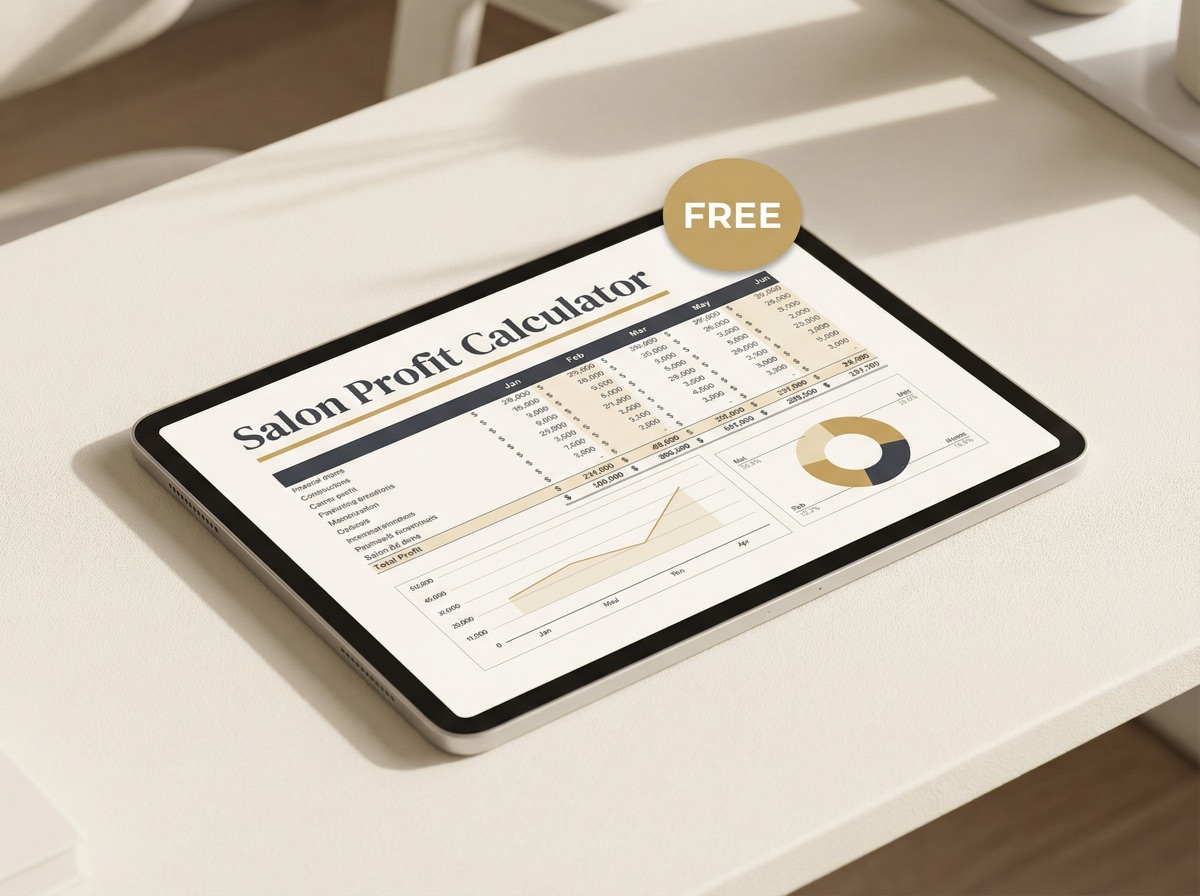
Written by Scott Farmer
Licensed Master Cosmetologist (GA & FL), former Toni & Guy Artistic Director, and founder of Hair Salon Pro. 30+ years behind the chair. 15,000+ clients. Building the business tools cosmetology school never taught. Currently behind the chair at scottfsalon.com in Venice, FL.