Salon Cancellation Policy: How to Stop No-Shows From Stealing Your Income
 Scott Farmer
·
April 16, 2026
·
9 min read
Scott Farmer
·
April 16, 2026
·
9 min read
Quick Answer: How do you stop salon no-shows with a cancellation policy?
Stop losing $200 to $500 a week to no-shows with three things: a clear written cancellation policy, a deposit or card-on-file system, and scripts for when clients push back. At a $95 average ticket, two no-shows a week is $9,500 a year gone. Clients respect clear boundaries, so the policy protects your income without feeling rigid or mean.
TL;DR: A salon cancellation policy is the single fastest way to stop losing $200 to $500 a week to no-shows. Additionally, you need a clear written policy, a deposit or card-on-file system, and scripts for what to say when clients push back. This guide gives you all three.
One empty chair on a Saturday afternoon costs you $150 to $300. Not in theory. However, in real money you will never get back.
If that happens twice a week, you are losing $15,000 to $30,000 a year. As a result, that is a full-time salary walking out the door because someone “forgot” their 2 o’clock balayage.
A salon cancellation policy fixes this. In practice, not by being rigid or mean. By being clear. Clients respect clear boundaries. They do not respect vague ones.
Here is how to build a cancellation policy that protects your income without making your clients feel like they are booking a court date.
How Much Do No-Shows Actually Cost Your Salon?

Most salon owners know no-shows are annoying. That said, very few know the actual dollar amount they lose each year.
Here is the math.
Say your average ticket is $95. For example, you get two no-shows per week. That is $190 a week in lost revenue. Multiply by 50 working weeks and you are looking at $9,500 a year. Gone. For a chair that was booked, prepped, and ready.
But it gets worse. In fact, that empty slot also costs you product you already mixed, time you blocked off that another paying client could have filled, and the mental drain of watching your schedule fall apart. Run your numbers through a salon profit calculator and you will see how fast those “just one no-show” weeks add up.
The Professional Beauty Association reports that no-shows and late cancellations are one of the top three revenue complaints among independent stylists. Overall, it is not a small problem. It is a structural one.
And if you are already fully booked but still struggling to pay bills, no-shows make everything worse. Because of this, you are running a full schedule on paper but leaving money on the table every single week.
What Should a Salon Cancellation Policy Include?
Your policy needs five things. Ultimately, skip one and the whole thing falls apart.
1. A clear cancellation window
Pick a number of hours. 24 hours is standard. 48 hours for color services or anything that takes 2+ hours in the chair. Write it down. Post it everywhere.
“We require 24 hours notice for cancellations. Instead, color and extension appointments require 48 hours notice.”
That is it. No paragraph. No apology. One sentence.
2. A late cancellation fee
This is where most salon owners freeze. Of course, they are scared to charge a fee because they think clients will leave.
They will not. Even so, the clients who push back on a reasonable fee are the same ones who no-show on you three times a year. You do not need them.
Common fee structures:
– Flat fee: $25 to $50 per missed appointment
– Percentage: 50% of the booked service price
– Full charge: 100% of the service for same-day cancellations or no-shows
A 50% fee is the sweet spot for most salons. Still, it is enough to hurt but not so much that a first-time offender feels punished.
3. A card-on-file or deposit requirement
A policy without enforcement is a suggestion. Beyond that, clients take it seriously when you take a card on file at booking.
You do not have to charge the card every time. To be clear, just having it on file changes behavior. The no-show rate drops 60% to 80% when clients know a card is attached to their appointment. Most salon booking software has this built in.
4. An exception rule
Life happens. Kids get sick. Cars break down. Meanwhile, you need one clear exception so your regulars know you are human.
“First-time late cancellations or no-shows receive a courtesy waiver. After that, the cancellation fee applies.”
One free pass. After that, the policy kicks in. No guilt. No drama.
5. Written confirmation at booking
Every client should see the policy before they sit in your chair. In contrast, add it to your online booking confirmation email, your text reminders, and a small sign at your station.
If a client says “I did not know about the policy,” you can point to the confirmation they received. With that in mind, that ends the conversation.
How to Communicate Your Salon Cancellation Policy to Clients
Writing a policy is the easy part. Furthermore, saying it out loud to a client who has been coming to you for three years is the hard part.
Here is the script I use when rolling out a new policy to existing clients.
For regulars (text or email):
“Hey [name], quick heads up. In other words, starting [date], I am enforcing a 24-hour cancellation policy for all appointments. Late cancellations or no-shows will have a $[amount] fee. I know life happens, so your first one is always waived. Just wanted you to know before your next visit. See you [date]!”
For new clients (at booking):
“I do ask for a card on file when you book. At the same time, i will not charge it unless there is a same-day cancellation or no-show. We give a courtesy waiver on the first one. Sound good?”
That is it. Short. Friendly. Done.
Most clients will say “totally makes sense” and never think about it again. Notably, the ones who get upset are the ones who were going to no-show on you anyway.
During my years at Toni and Guy, every single client knew the cancellation policy before they sat down. Importantly, it was not aggressive. It was professional. And it worked.
What to Say When a Client Pushes Back on Your Salon Cancellation Policy
It will happen. Additionally, someone will miss an appointment and get upset about the fee. Here are three scenarios and exactly what to say.
“I forgot. Can you waive it this time?”
“I totally understand. However, that is what the first courtesy waiver is for. I already used that one on your last missed appointment on [date]. The fee for this one is $[amount]. I can add it to your next visit or charge the card on file. Which works better for you?”
“I have been coming here for years. This feels unfair.”
“I appreciate you. As a result, that is exactly why I am telling you about the policy instead of just charging the fee. This is not about our relationship. It is about protecting my schedule so I can keep giving you the time you deserve. Every open slot I cannot fill is money I lose that week.”
“I will just go somewhere else.”
“I understand. If the policy does not work for you, I respect that. But most salons in the area have similar policies, and I would love to keep you. Let me know.”
The key: do not negotiate. In practice, be warm, be clear, and hold the line. The moment you waive a fee because someone is upset, the policy is dead for every client who hears about it.
If scripts for tough client conversations feel like your weak spot, grab the free Price Increase Script Pack. That said, it covers price objections, pushback phrases, and how to communicate changes without losing clients.
3 Mistakes That Make Your Salon Cancellation Policy Useless
Mistake 1: Having a policy but never enforcing it
If you waive the fee every time someone gives you a sad story, you do not have a policy. For example, you have a suggestion. Clients figure this out fast. Enforce it the first time it matters and you will rarely have to enforce it again.
Mistake 2: Making exceptions for your biggest spenders
Your highest-ticket clients are the ones who cost you the most when they no-show. In fact, a $300 color appointment that does not show up is worse than a $45 haircut no-show. The policy applies to everyone. No VIP exemptions.
Mistake 3: Not sending reminders
A cancellation policy without reminders is a trap. Overall, send a text 48 hours before and another one 24 hours before. Automate it through your booking system. Most no-shows are not malicious. People just forget. A $0 reminder prevents a $150 loss.
If you are not automating your reminders yet, that is one of the first things to set up. See our guide on salon business automation for the full list of tasks your software should handle for you.
How to Track Whether Your Salon Cancellation Policy Is Working
You cannot fix what you do not measure. Ultimately, track these three numbers monthly:
| Metric | Before policy | Target after 90 days |
|---|---|---|
| No-shows per week | 2-4 | 0-1 |
| Late cancellations per week | 3-5 | 1-2 |
| Revenue lost to empty chairs/month | $800-$2,000 | Under $200 |
If your no-show rate does not drop within 30 days, something is broken. Instead, either clients are not seeing the policy, you are not enforcing it, or you need a deposit system.
Use your salon profit calculator to see exactly how much those recovered slots add to your monthly income. Of course, even cutting no-shows in half puts $400 to $1,000 back in your pocket every month.
One thing I learned running JScott Salon: the stylists who struggle most are not the ones with bad skills. Even so, they are the ones who let their schedule get controlled by clients instead of controlling it themselves. A cancellation policy is the first step to taking that control back. If you are feeling the weight of a schedule that runs you instead of the other way around, read this piece on stylist burnout and the money problem underneath it.
Frequently Asked Questions
How much should I charge for a salon cancellation fee?
Most salons charge 50% of the booked service price for late cancellations and 100% for no-shows. A flat fee of $25 to $50 also works. The amount matters less than consistency. Pick a number, post it, and enforce it every time.
Should I require a deposit or card on file for salon appointments?
Yes. A card on file reduces no-shows by 60% to 80% according to salon software providers like GlossGenius and Vagaro. You do not have to charge it automatically. Just having it on file changes client behavior.
How do I handle a loyal client who no-shows for the first time?
Give them one courtesy waiver. Tell them it is a one-time pass and that the fee applies going forward. This protects the relationship without undermining your policy. Say it warmly. Say it once. Move on.
Will a cancellation policy make me lose clients?
Some. But the clients you lose are the ones who cost you the most. A client who no-shows three times a year and complains about a $50 fee is not a client who is building your business. The clients who respect your time will respect a fair policy. Most will not even blink.
Your salon cancellation policy protects the income you already earned by showing up, prepping your station, and blocking your time. It is not about being strict. It is about being smart.
If you want scripts for the hardest part of running a salon (telling clients things they do not want to hear), grab the free Price Increase Script Pack. Twelve scripts for raising prices, handling pushback, and communicating changes without losing your regulars.
Get the Free Price Increase Script Pack →
Double Your Chair Income, Without Working More Hours
A good policy stops the bleeding. When you run your numbers, I teach the Profit-First System that grows what is left, without more hours.
Run the Free Salon Profit Calculator
Free. Available now. No registration required.
Free Download
Get the Salon Profit Calculator
See exactly where your salon is losing money — in under 5 minutes.
Download Free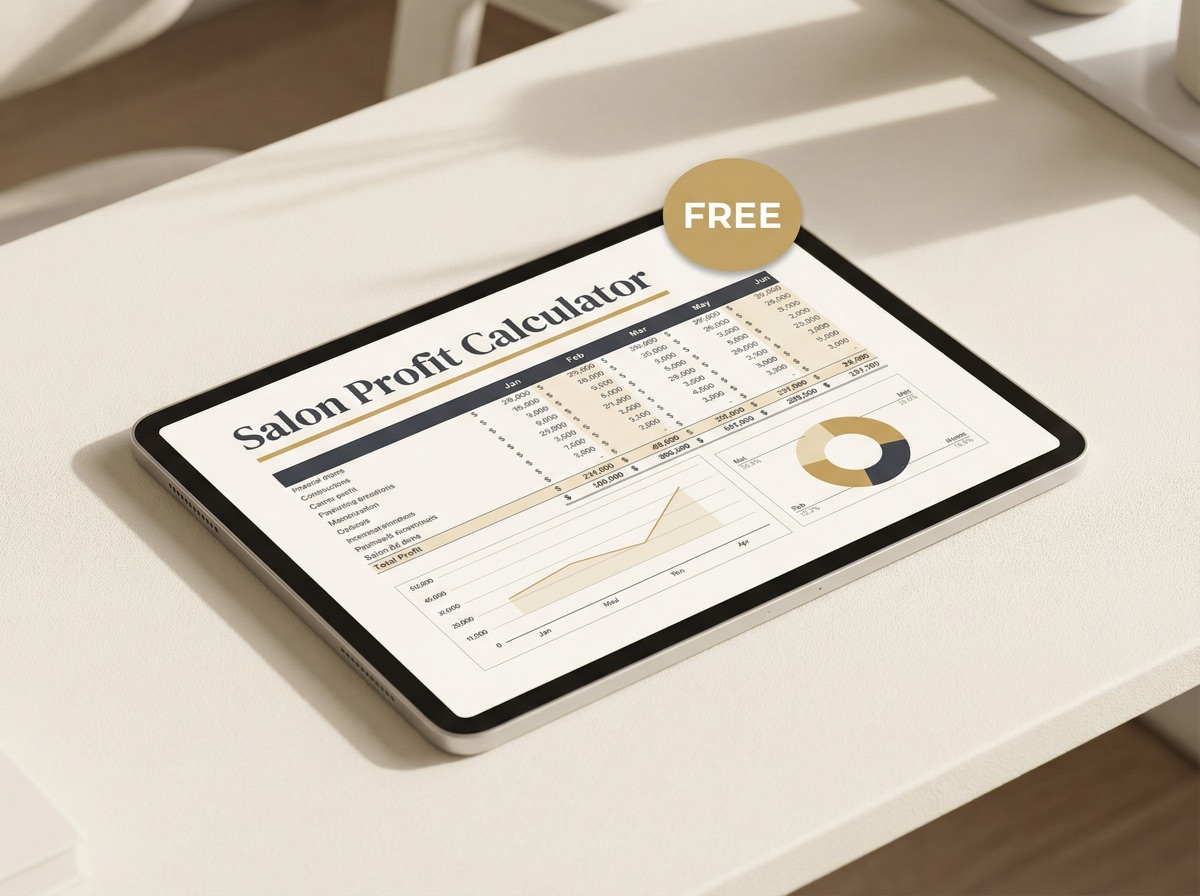
Written by Scott Farmer
Licensed Master Cosmetologist (GA & FL), former Toni & Guy Artistic Director, and founder of Hair Salon Pro. 30+ years behind the chair. 15,000+ clients. Building the business tools cosmetology school never taught. Currently behind the chair at scottfsalon.com in Venice, FL.