Red Flags in a Salon Lease Agreement: Check These Before You Sign
 Scott Farmer
·
June 11, 2026
·
8 min read
Scott Farmer
·
June 11, 2026
·
8 min read
Quick Answer: What are the red flags in a salon lease agreement?
The biggest red flags are an uncapped rent increase clause, vague language about what rent includes, a personal guarantee with no cap, no clear exit terms, and limits on your retail or pricing. After 15 years renting my own suite in Venice, my rule is simple: if it is not in the lease, it does not exist.
Last updated: June 10, 2026
TL;DR
- The rent increase clause is the most expensive line in the lease. Read it before you read anything else.
- “Rent includes utilities” means nothing unless the lease names every utility.
- A lease with no exit terms traps you, not the landlord.
- Restrictions on retail, pricing, or services cut directly into your take-home.
- Run your numbers before you tour. A lease you cannot afford is a red flag you created yourself.
I have rented a salon suite for 15 years. Additionally, the lease I signed in my first year had a rent increase clause I never read closely. The building used it, and the increase hit my books like a gut punch. Nothing about it was illegal. It was sitting right there in the agreement I signed.
That mistake is why this post exists. However, these are the red flags I now check for before I would sign any salon lease, whether it is a suite, a booth, or a full commercial space.
Why Does the Rent Increase Clause Matter Most?

Every lease allows the rent to go up eventually. The red flag is a clause that lets it go up without limits or notice. Look for three things:
- The cap. A healthy clause names a number, like “no more than 5 percent per renewal term.” No cap means the building can reprice you the moment you build a clientele there and cannot afford to leave.
- The notice period. You want 60 to 90 days minimum. A 30-day notice on a rent increase gives you no time to raise your own prices or plan a move.
- The trigger. Increases tied to renewal dates are normal. Increases the landlord can apply “at any time during the term” are not.
In this example, a $1,200 per month suite with an uncapped clause that jumps 15 percent costs you $2,160 more per year. In practice, that is a price increase you have to pass to clients on the building’s schedule, not yours.
What Does “Rent Includes” Actually Cover?
The phrase “all-inclusive rent” is doing a lot of work in salon lease marketing. That said, the red flag is a lease that says utilities are included but never names them. Make the lease list each one:
- Electric and water
- Wi-Fi
- Laundry (in-suite or shared, and any usage limits)
- Common area maintenance fees
- Trash and towel service
- Parking for you and your clients
Anything not named in the lease can become a separate fee later. For example, those extras commonly run $200 to $400 per month, which is the gap between the rent you budgeted and the rent you actually pay.
Is There a Personal Guarantee, and Is It Capped?
Most commercial leases ask you to guarantee the lease personally. That part is normal. The red flag is an uncapped guarantee on a multi-year term. If you sign a 3-year lease at $1,400 per month with a full personal guarantee and your business closes in month six, you can be personally responsible for the remaining 30 months. That is $42,000 against your personal savings, not your business.
Ask for a cap, like 3 to 6 months of rent, or a “good guy clause” that releases the guarantee when you return the space in good condition with notice. If the building refuses to discuss it, that tells you how they handle renters who hit a rough patch.
What Exit Terms Should the Lease Spell Out?
A lease with detailed move-in language and almost nothing about moving out is written for the landlord. Before signing, the lease should answer:
- How many days of notice end the lease at term?
- What does breaking the lease early cost, in a number you can read?
- What happens to your security deposit, and how many days until it is returned?
- Can you sublease or transfer the suite if you need to leave?
“We will work with you” is not an exit term. If the manager says it, ask them to put that flexibility in the lease. Watch what happens.
Does the Lease Restrict How You Run Your Business?
Some buildings write operating rules into the lease that quietly cut your income:
- Retail restrictions. If you cannot sell product, you lose a margin stream that costs you nothing in extra hours behind the chair.
- Pricing rules. Any clause that lets the building influence your service prices is a hard no. Your prices are your business.
- Service restrictions. Some leases ban services like lash work or chemical treatments. Fine if you never offer them. A problem if they are in your growth plan.
- Hours restrictions. If building access ends at 7 pm and your best clients book evenings, the lease just capped your revenue.
What Is the Behavioral Red Flag Most Renters Miss?
The biggest red flag is not in the document. Overall, it is a manager who answers every hard question verbally and never in writing. I learned to ask my questions by email after a tour, even when the manager answered them in person. The answers that change between the conversation and the email are the ones that would have cost me money.
If you want the full list of what to ask before you ever see the lease, use my 25 questions to ask before renting a salon suite.
How Do You Know If You Can Afford the Lease at All?
A fair lease at a rent your books cannot carry is still a bad deal. Before you tour, run your real numbers: your average ticket, your weekly client count, your product costs, and your tax set-aside. The free booth renter take-home calculator shows what you keep at any given rent level, so you walk into the tour knowing your ceiling instead of hearing a number and hoping.
Formula: Max affordable rent = monthly service revenue x 0.20
Example: $6,000/month in services means your all-in rent should stay at or under $1,200. If the suite is $1,400 before fees, that lease is asking you to run thin from day one.
If you are still deciding between a suite and a booth, the math is different for each. Start with the salon suite vs booth rental comparison, and check the full salon suite cost breakdown so you know what rent should run in your market.
Your Pre-Signing Checklist
- Rent increase clause has a cap and 60+ days notice
- Every included utility and service is named in the lease
- Personal guarantee is capped or has a good guy clause
- Exit terms, early termination cost, and deposit return are spelled out in numbers
- No restrictions on retail, pricing, or the services you plan to offer
- Building access hours match when your clients actually book
- Every verbal answer confirmed in writing before signing
- Your take-home math works at this rent, verified with the calculator
If the numbers do not work at current rates, the Salon Owner Starter Pack includes the Budget Template I use to model any rent level before I sign. Instead, plug in the rent, your average ticket, and your current client count and you will know your breakeven number in under five minutes. Most stylists find $400 to $900 a month in gaps they close before they ever step into a suite.
One more thing. Of course, i am a stylist, not an attorney. A commercial lease is a legal contract, and the rules vary by state. For anything beyond these business red flags, have a local attorney read the lease before you sign. The few hundred dollars that costs is cheaper than any one clause on this list going wrong.
Frequently Asked Questions
What is the biggest red flag in a salon lease agreement?
An uncapped rent increase clause. Even so, it lets the building reprice you after you have built your clientele there and moving would cost you clients. Look for a named percentage cap and at least 60 days notice.
Should a hairstylist have a lawyer review a salon lease?
Yes, for any multi-year lease or any lease with a personal guarantee. Still, a local commercial attorney review usually costs a few hundred dollars and catches state-specific problems no checklist can.
Can a salon landlord raise rent in the middle of a lease?
Only if the lease allows it. Beyond that, that is why the trigger language matters. Increases tied to renewal dates are standard. A clause allowing increases at any time during the term is a red flag, and you should ask for it to be changed before signing.
What is a good guy clause in a salon lease?
A clause that releases your personal guarantee when you return the space in good condition with proper notice. To be clear, it limits your personal risk if the business closes early. Ask for one whenever a lease includes a personal guarantee.
How much should salon suite rent be compared to my income?
A common guideline is to keep total rent and fees under 20 to 25 percent of your monthly service revenue. Meanwhile, in this example, a stylist grossing $6,000 per month wants all-in rent at or under $1,500. Run your own numbers in the booth renter take-home calculator before you commit.
Free Download
Get the Salon Profit Calculator
See exactly where your salon is losing money — in under 5 minutes.
Download Free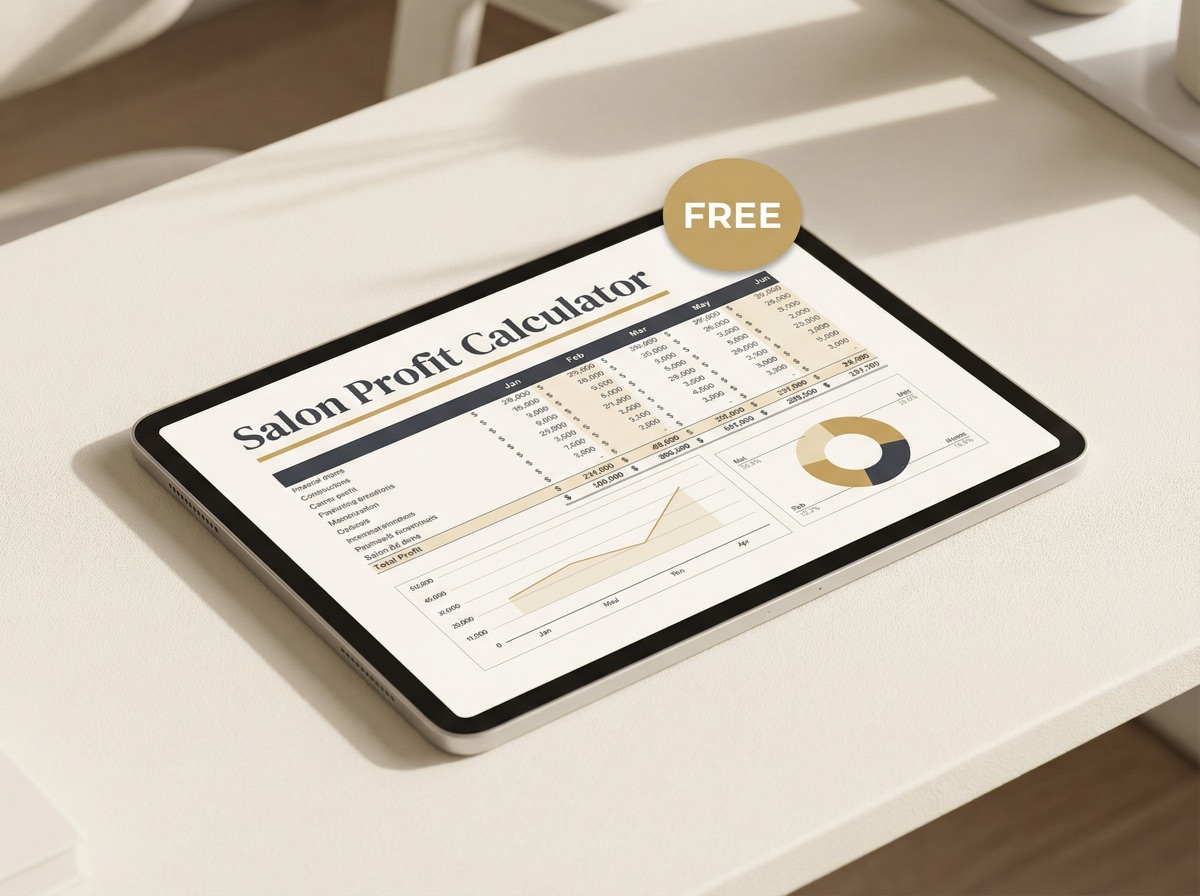
Written by Scott Farmer
Licensed Master Cosmetologist (GA & FL), former Toni & Guy Artistic Director, and founder of Hair Salon Pro. 30+ years behind the chair. 15,000+ clients. Building the business tools cosmetology school never taught. Currently behind the chair at scottfsalon.com in Venice, FL.