Salon Price Increase Letter: How to Tell Clients (With Ready-to-Send Templates)
 Scott Farmer
·
May 9, 2026
·
22 min read
Scott Farmer
·
May 9, 2026
·
22 min read
Quick Answer: How do you tell clients about a salon price increase?
Give at least six weeks’ notice and tell them in person at the chair first, then follow up in writing. The best months are March and April or August and September. This three-step sequence keeps client loss under 5 percent. The fear is bigger than the reality. Losing 15 of 80 clients at a $10 increase still nets about $650 more per month.
Here is what most stylists think will happen when they raise prices: they will lose everyone.
They think clients will get the email, feel insulted, and never come back. Additionally, they picture the chair sitting empty. They lie awake running the math on how many clients they can afford to lose before they can’t make rent.
I know because I did it too. However, every single time, before every single increase.
A salon price increase letter done right doesn’t cause that kind of damage. As a result, here is what actually happens: you lose two or three people. You feel sick about it for about a week. Then you look at your income and realize it went up anyway. The clients who stayed are worth more. The fear is always bigger than the reality.
I am Scott Farmer, Licensed Master Cosmetologist, and I have raised prices more than once in 30 years behind the chair. In practice, from my years as a Toni and Guy Artistic Director to running JScott Salon in Lawrenceville, Georgia, to building my independent book in Venice, FL, the pattern is always the same: the fear is bigger than the reality. The clients who pushed back hardest were almost always the ones I was undercharging the most. That is not a coincidence.
This guide gives you the exact timing, the word-for-word templates, the in-chair scripts, and the honest truth about what happens when you actually do it.
Last updated: May 2026
TL;DR

- 3 ready-to-send templates covering professional, warm/relational, and value-forward client communication styles, plus SMS scripts (98% open rate vs 21% email), in-chair verbal scripts, Instagram and Facebook captions, and in-salon signage copy. Copy, paste, customize, send.
- 6-week minimum announcement window. In-person conversation at the chair first, written follow-up second. Best months: March/April or August/September. The three-step sequence (tell in person, email confirmation, final reminder) keeps client loss under 5%.
- The math works even when you lose clients. Losing 15 of 80 active clients at a $10/visit increase still nets +$650/month. The Professional Beauty Association reports only 3-5% attrition with 30+ days notice.
- Industry baseline: The Bureau of Labor Statistics (SOC 39-5012) puts median hairstylist income at $35,080 annually. Annual price increases are how salon professionals move above that median.
- Who wrote this: I am Scott Farmer, Licensed Master Cosmetologist with over 30 years behind the chair, more than 15,000 clients served, and experience running JScott Salon and my independent suite in Venice, FL. I have raised my prices at least seven times. The free Price Increase Script Pack bundles every template from this guide in one download.
Table of Contents
- The Biggest Mistake Stylists Make (It’s Not the Price)
- Before You Write a Word: Get the Numbers Right
- Tell Your Team Before You Tell Your Clients
- The Timeline
- The Salon Price Increase Letter: 3 Word-for-Word Templates
- The Text Message: SMS Scripts
- The In-Chair Conversation
- Social Media Announcements
- In-Salon Signage
- Updating Your Booking System
- Handling the Pushback
- The Math: Why You End Up With a Better Book
- The 30-Day and 60-Day Check-In
- FAQ
The Biggest Mistake Stylists Make (It’s Not the Price)
Most guides tell you to send a letter. Email your clients. That said, post it on Instagram. Done.
That is backwards.
The move that separates a smooth price increase from a messy one is this: tell clients in person first, not by letter first. For example, at the appointment before the increase, you bring it up in the chair. You explain why. Products cost more. Your time is worth more. The level of work you are delivering has gone up.
Then the salon price increase letter follows as a written confirmation of a conversation they already had.
The difference is enormous. In fact, a letter out of nowhere feels like a policy. A conversation feels like respect. Clients who hear it from you directly, in your voice, are not surprised by the email. They are just reminded of something you already told them.
I do not apologize. I explain. Overall, product costs are up. I have invested in training. The work I deliver is worth what I am charging. Most clients do not blink.
If you skip the in-person conversation and go straight to a letter or email, you are asking people to process a financial change without any human context behind it. Because of this, that is when you get the blowback.
Before You Write a Word: Get the Numbers Right
A poorly timed or poorly sized price increase does more damage than waiting another three months to get it right. Ultimately, lock in the numbers first.
How to Calculate the Right Price Increase
Start with your costs. Instead, not what you charged last year. Your actual costs today.
Add up what you spend monthly: product costs, booth rent or chair costs, insurance, software, continuing education, supplies. Of course, divide that by your billable hours. That is your cost per hour.
Now look at what you are charging per hour of your time. If a client pays $120 for a cut and color that takes two hours, you are billing $60 per hour. If product and supplies eat $20 of that service, you are netting $40 per hour before taxes.
Is that where you need it to be? The salon profit margin guide walks through the full calculation. Run those numbers before you decide how much to raise by.
The 5-10% Rule and When to Break It
A 5-10% increase on most services is the sweet spot. Still, it feels significant to you but small to clients.
On a $150 balayage, a 7% increase is $10.50. Rounded up to $165. Beyond that, most clients do not flinch at $15.
But there are times to break the 5-10% rule:
- You have not raised prices in more than two years. A 15-20% increase is overdue and justified.
- Your costs have spiked (product prices, rent, supply chain hits). Communicate the reason briefly and clients understand.
- You have significantly elevated your skills through major training or a new certification. This warrants a larger repositioning, not just an annual nudge. See how to raise salon prices without losing clients for more on this.
Which Services to Increase vs Hold
Not every service needs to go up at once.
Increase your highest-volume, highest-labor services first: color, highlights, balayage, chemical treatments. To be clear, these are where your time is most invested and where underpricing hurts most.
Consider holding prices on:
– Entry-level services (basic haircuts) that attract new clients
– Add-ons like treatments and glosses that you want clients to keep saying yes to
– Services where you are already at or above market rate
A selective increase looks more thoughtful than a blanket “everything went up.” For a full framework on smart service pricing, how to price salon services for maximum profit covers this in detail.
Tell Your Team Before You Tell Your Clients
This step gets skipped 80% of the time. Then a client asks a stylist “did prices go up?” and the stylist says “I don’t know what you are talking about.” That destroys trust faster than any price increase ever will.
Your team will find out from clients if you do not tell them first. Every time.
What to Tell Them and How to Frame It
Call a quick team meeting. Fifteen minutes. Be direct. Cover:
- What is changing and what the new prices are (by service)
- When the increase takes effect
- How you will communicate it to clients
- What to say if a client brings it up
Do not frame it as an apology. Meanwhile, frame it as a business decision you have thought through.
“We are raising prices starting [date]. In contrast, i have thought this through and the numbers support it. If a client mentions it, here is what to say.”
Give Staff a Script So Clients Do Not Get Mixed Messages
Hand them this:
“Yes, we updated our pricing as of [date]. With that in mind, we have not raised them in [X time], and it was time. The quality of our work has not changed. If anything, it has gotten better.”
Three sentences. Furthermore, confident, not defensive. If they have this ready, they will not fumble it when a client asks.
The Timeline
Timing a price increase wrong costs you clients. In other words, do this in the right sequence and you keep 95% or more of them.
The 6-Week Minimum
Announce at least six weeks before the new prices take effect. Not two weeks. At the same time, not “starting next month.”
Six weeks gives clients time to book in at the current rate if they want to. Notably, it gives regulars time to process the change without feeling blindsided. It gives you time to handle individual questions before it becomes a thing.
Shorter than six weeks and you get pushback. Importantly, you get “I would have come sooner if I had known.” You get people who feel surprised, and surprise reads as disrespect.
Best Month to Announce
Avoid December (clients are stretched financially) and January (same reason, New Year spending guilt). Additionally, the best months to announce price increases are:
- March/April: Heading into summer, clients are already thinking about their hair
- August/September: Back to routine, new season mindset
Announcing in spring means your new prices are live well before the busy summer season.
The 3-Step Announcement Sequence
Do not send one blast and hope everyone saw it. However, use three touchpoints:
- Week 1: In-Person First Tell clients at the chair. This is your first communication. Personal, direct, no surprises.
- Week 1-2: Written Follow-Up Email or text the clients you spoke with. Confirm the date and new pricing in writing.
- Week 6 (last week before) Short reminder. “Just a heads up, new pricing takes effect [date]. Book your current pricing here.”
The in-person conversation is not optional. As a result, it is the whole thing.
The Salon Price Increase Letter: 3 Word-for-Word Templates
Pick the one that fits your relationship with the client segment you are emailing. In practice, all three can go out to different segments in the same week.
Template A: Direct and Professional
Best for: New clients, clients you see less frequently, or any client where you want to keep it simple.
Subject line options:
– “Pricing Update: Effective [Date]”
– “A Quick Update on Our Services”
– “New Pricing at [Salon Name], Effective [Date]”
Hi [First Name],
I want to give you plenty of notice about an upcoming change at [Salon Name].
Starting [DATE], I am updating my pricing. That said, here is what is changing:
[Service Name]: $[old price] to $[new price]
[Service Name]: $[old price] to $[new price]
[Service Name]: $[old price] to $[new price]
If you would like to book your next appointment at the current pricing, you are welcome to do that before [DATE]. After that, the new rates apply.
Thank you for being part of our client family. For example, i am proud of the work we do together and committed to keeping that quality consistent.
To book: [BOOKING LINK]
[Your Name]
[Salon Name]
[Phone Number]
Template B: Warm and Relational
Best for: Long-term loyal clients, regulars who have been with you for years, clients you have a personal relationship with.
Subject line options:
– “Something I wanted to tell you personally”
– “A note from me to you”
– “I wanted you to hear this from me first”
Hi [First Name],
You have been coming to me for [timeframe], and that means something to me. So I wanted to make sure you heard this directly rather than just seeing it on a booking screen.
Starting [DATE], I am updating my pricing.
[Service Name]: $[old price] to $[new price]
[Service Name]: $[old price] to $[new price]
I have not raised my prices in [X years/months], and after a lot of thought, it was time. In fact, the cost of the products I use has increased. My training has expanded. And honestly, my work has gotten better.
If you would like to come in before [DATE] and lock in the current pricing, I would love to see you. Overall, book any time before then and your appointment reflects the old rate.
I genuinely appreciate you. Because of this, thank you for trusting me with your hair.
[Your Name]
Template C: Value-Forward
Best for: Clients who respond to what they are getting, clients who have invested in premium services, newer clients who do not have the relationship depth yet.
Subject line options:
– “What is new at [Salon Name], and What it means for you”
– “We have been leveling up. Here is what changed.”
– “New training, new products, new pricing”
Hi [First Name],
Over the last year, I have invested in some significant upgrades:
- [New product line or technique you have added]
- [Training or certification completed]
- [Equipment or service improvement]
To reflect that, I am updating my pricing starting [DATE].
[Service Name]: $[old price] to $[new price]
[Service Name]: $[old price] to $[new price]
The work you have been getting will stay the same level of quality. Instead, actually better, given the training. The price reflects what that work is worth.
Want to book before the new rates take effect? Link below.
[BOOKING LINK]
See you soon,
[Your Name]
The Text Message: SMS Scripts
Text messages have a 98% open rate. Of course, email averages around 21%. If you want to make sure clients actually see your announcement, SMS is your highest-leverage channel.
Keep texts under 160 characters. Even so, over that, many phones split it into two messages and the second one often arrives out of order.
Main Announcement Text (Send 5-6 weeks out)
“Hi [First Name], quick heads up: [Salon Name] pricing updates on [DATE]. Still, book before then to lock in current rates: [SHORT BOOKING LINK]. Any questions, just reply!”
Character count check: This runs about 145 characters without the variable fields filled in. Beyond that, leave room for the client’s name and your link.
Follow-Up Reminder Text (Send 1 week before)
“Last reminder! To be clear, new pricing at [Salon Name] starts [DATE]. Book your spot at current rates this week: [LINK]”
Short. Clear. One call to action.
Use a link shortener (bit.ly or your booking platform’s built-in short links) so the URL does not eat half your character limit.
The In-Chair Conversation
Some clients will not read your email. Meanwhile, some will ignore the text. They will find out in the chair, at checkout, or when they go to rebook.
You need a verbal script. Not a speech. Three sentences.
The 3-Sentence Answer That Handles 90% of Pushback
“Yes, I updated my pricing as of [date]. In contrast, i had not raised my prices in [X time] and it was overdue. You are still getting the same quality. If anything, better.”
Then stop. Let them respond. With that in mind, most will not say anything beyond “okay.” Some will nod. A few will ask a question. Have the following ready.
What to Say If a Client Says “That’s Too Expensive for Me”
This is the hardest conversation. Furthermore, treat it with respect. Do not apologize. Do not backpedal.
“I understand. In other words, my rates are [new price] for [service] going forward. I would hate to lose you, and I want to be upfront rather than string things along.”
Leave space. At the same time, they either stay or they do not.
When to Hold the Line vs Offer a One-Time Exception
Hold the line with:
– Clients who are occasional (fewer than four visits per year)
– Anyone who becomes aggressive or entitled about it
– New or relatively new clients
Consider a one-time exception only for:
– A client you have known for ten or more years with a meaningful relationship
– A client going through real financial hardship who you genuinely want to support short-term
If you make an exception, make it one-time and say so explicitly: “I am going to honor your old pricing for one more visit. After that, the new rate applies.”
If you are constantly making exceptions, your prices are not real. For more on pricing psychology and holding your rates, see how to retain salon clients and reduce no-shows.
Social Media Announcements
Post on social. Importantly, not because it is the primary channel for this message (it is not), but because some of your clients only follow you on Instagram. They will not see your email. They will see your stories.
Instagram Stories Caption Template
Story 1: Text card graphic
“Heads up: pricing update coming [DATE].”
Story 2: Photo of your work
“Everything you love stays exactly the same. Additionally, the price just catches up with the quality.”
Story 3: Booking prompt
“Book at current pricing through [DATE]. Link in bio.”
Post these three stories in sequence. However, same day as your email announcement.
Instagram Feed Post Caption
“Pricing update starting [DATE].
I have been putting this off, but it was time.
The cost of the products I use has gone up. As a result, my training has expanded. My time is worth more than I have been charging.
If you want to book at current rates, the link in my bio has you covered through [DATE].
Everything else stays exactly the same. In practice, the quality, the care, and the conversation. See you soon.
[Booking Link]”
Facebook Post
Facebook skews older in most markets and responds well to slightly more explanation.
“A quick, transparent update from [Salon Name].
Starting [DATE], I am updating my pricing on [services]. That said, i have not raised my prices in [X time], and it was time.
Here is a breakdown of what is changing:
[Service]: $[old] to $[new]
[Service]: $[old] to $[new]
If you would like to book at the current rate, you are welcome to do so through [DATE]. After that, the new rates apply.
Thank you for your loyalty over the years. For example, it means more than I can say.
Book here: [LINK]”
What NOT to Do on Social
Do not apologize. “I am so sorry but I have to raise my prices” is the opening line on 80% of salon price increase posts. In fact, it signals uncertainty and tells your clients to question whether the increase is justified.
Do not over-explain. One post. Clear. Move on.
Do not engage with negative comments in the comments section. If someone says “that’s too much,” reply: “I understand. Overall, feel free to DM me if you have questions.” Then close the app.
In-Salon Signage
Some clients never check email, never see Instagram, and do not read texts from businesses. They just show up. Because of this, the sign is their first notification.
Put signage up the day you send your first communication. Ultimately, four to six weeks before the increase.
Where to Place It
- At reception/checkout (eye level)
- On your styling station mirror (just below eye line, visible but not dominant)
- At the shampoo bowl area
You do not need huge, alarming signage. Instead, a 4×6 card in a simple frame is enough.
The 3-Sentence Sign That Does Not Feel Defensive
“New pricing effective [DATE].
We are updating our service rates for the first time in [X time].
Book your appointment at current pricing before [DATE] at [SALON URL] or ask us at the desk.”
Three sentences. Informative. No apology.
A QR code below the text that links to your booking page turns the sign into an active booking driver. Of course, print the QR code, laminate the card, done.
Updating Your Booking System
The logistics matter. Even so, handle them wrong and you create confusion, double-standard situations, and awkward checkout moments.
When to Flip Prices Live vs Wait
Update your booking system on the effective date, not before.
If you update prices in Vagaro, GlossGenius, or Fresha two weeks early, clients who book before the date will see the new price during booking and feel misled. Still, keep the old prices in the system until midnight the night before the increase takes effect.
Set a calendar reminder. Beyond that, make the switch yourself. Do not leave it for the morning of.
Handling Pre-Booked Appointments at the Old Rate
Honor them. To be clear, every client who booked before the effective date pays the price they saw when they booked. No exceptions. This is non-negotiable for trust.
If you switch prices and a client who booked at $150 shows up expecting $150 but sees $165 on the screen, that is a trust problem you created. Meanwhile, the $15 is not worth it.
Create a note in your booking software to flag appointments booked before the effective date at the old rate.
Updating Vagaro, GlossGenius, or Fresha Step by Step
Vagaro: Settings > Services > select each service > edit price. Update one by one. In contrast, there is no bulk editor for prices.
GlossGenius: Menu > Services > select service > edit > update price. With that in mind, same approach, service by service.
Fresha: Manage > Services > click the service > edit pricing. Furthermore, fresha lets you set a future date for the price change, which is the cleanest option if your platform supports it. Check your version.
After updating: book a test appointment yourself to confirm the new pricing displays correctly at every stage of checkout.
Handling the Pushback
Most clients will not push back. But some will. In other words, preparation beats improvisation.
“I’ve Been Coming Here for Years”
This is an emotional response, not a logical objection. At the same time, honor the emotion first.
“I know, and I genuinely appreciate that. Notably, your loyalty means a lot. That is part of why I gave everyone so much notice. I did not want it to be a surprise.”
Then pause. Importantly, let them sit with that. Most people soften when they feel acknowledged.
“The Salon Down the Street Is Cheaper”
“They might be. Additionally, my prices reflect the experience and quality I deliver. If cost is the primary factor, you might find a better fit somewhere else. I would rather be honest with you about that.”
This sounds bold. It is. But it is also the most respectful thing you can say. You are not begging. However, you are not defending. You are letting them choose with full information.
“Can I Keep My Old Price?”
“I am not able to do that across the board. As a result, it creates a two-tier system that gets complicated quickly. The new rate applies to everyone starting [date].”
That is your standard answer. In practice, for the rare exception (long-term, genuine relationship), see the exception criteria in the In-Chair Conversation section above.
The Math: Why You End Up With a Better Book
Here is something that does not get said often enough: a well-executed salon price increase letter leaves you with a better client list than you had before.
The clients who leave over a $10 increase were never going to be long-term clients anyway. That said, the ones who stay are telling you they value the work, not just the price. Think about what that means for your book going forward.
Run the actual math
Run the actual math.
Say you have 80 active clients and you raise prices by $10 across the board. For example, you lose five of them. Here is what happens to your income:
| Scenario | Clients | Avg Ticket Increase | Monthly Revenue Change |
|---|---|---|---|
| Before increase | 80 | $0 | Baseline |
| After increase, 5 clients leave | 75 | +$10/visit | +$750/month net gain |
| After increase, 10 clients leave | 70 | +$10/visit | +$700/month net gain |
| After increase, 15 clients leave | 65 | +$10/visit | +$650/month net gain |
This math assumes each client visits once a month. Even if you lose 15 clients (which would be a lot), you still come out ahead.
Now consider the clients who stayed. In fact, they did not complain. They did not threaten to leave. They just booked their next appointment. Those are your dream clients. You now have proof of who they are.
The clients who left? Overall, you now have openings to fill with new clients who come in at your higher rate from day one, with no memory of what you used to charge.
The fear is always bigger than the reality. Every time.
According to a Professional Beauty Association industry survey, only 3-5% of salon clients typically leave after a price increase communicated with at least 30 days notice. Because of this, the number your brain tells you is much higher.
The 30-Day and 60-Day Check-In
Once the new prices are live, watch the numbers. Do not fly blind.
Which Numbers to Watch
- Rebook rate: What percentage of clients are rebooking after their post-increase appointments? Your baseline before the increase is your benchmark. If it drops more than 10%, investigate.
- No-show/cancellation rate: Has it changed? Track week over week for the first 60 days.
- Average ticket: Are clients taking fewer add-ons because they are already paying more? Or are they accepting the increase without changing behavior?
- New client bookings: Are new clients still coming in at the new rates? They have no baseline to compare, so new client volume is a clean test of whether your prices are market-appropriate.
Understanding your salon profit margins gives you the framework for interpreting what these numbers mean.
How Many Clients Leaving Is Acceptable
Some client loss after a price increase is not just acceptable. It is healthy.
If you raise prices and lose 3-5% of your client base, you almost certainly replaced that revenue. You now have capacity to rebook at the higher rate or take on new clients. This is a net positive.
If you lose 15% or more of active clients, that is a signal. Possible causes:
– The increase was too large or too fast
– Communication was poor. Clients felt surprised or disrespected
– You are above market rate for your area
– The quality or consistency of the work is not matching the price point
A well-executed increase with proper communication typically results in less than 5% client loss.
What to Do If Retention Drops More Than Expected
First: do not panic and roll prices back. That destroys credibility and is very difficult to walk back later.
Instead:
1. Talk to three to five clients who left or reduced frequency. Ask direct questions: “Was it the price change, or is there something else I should know?” You will get honest answers from most people.
2. Evaluate your communication. Did clients feel informed, or surprised?
3. Look at your quality consistency. Sometimes a pricing issue is actually a quality perception issue. The increase just makes it visible.
4. Check your market. Pull up five competitor booking pages and compare. Are you genuinely above market?
FAQ
How much notice do I need to give clients?
Six weeks minimum. Eight is better. Less than four weeks feels like an ambush and increases churn.
Should I apologize for raising my prices?
No. Apologizing signals that you do not think the increase is justified. It invites clients to agree with your doubt. Communicate with confidence and warmth, not guilt.
What is the best way to tell long-term clients?
Tell them in person first. Template B (the warm, relational email) comes after that conversation. Long-term clients respond to personal acknowledgment, not just a formal announcement. Say their name. Say you appreciate them. Then say the price is changing.
Can I grandfather certain clients at their old price?
You can, but it creates problems at scale. If you make exceptions for ten clients, you are managing two pricing systems indefinitely. The only sustainable grandfathering is temporary: one or two visits, then they transition to the new rate.
What do I do if clients leave because of the increase?
Let them go gracefully. “I completely understand. I wish you well.” Do not chase. Do not offer discounts. The clients who leave over a $10-15 increase were often the most price-sensitive and highest-maintenance clients in your book. The ones who stay are your dream clients.
Do I need to explain why I am raising prices?
A brief reason helps but is not required. “It has been [X] years since I last updated pricing” is enough. You do not owe a detailed cost breakdown. What clients want to know is whether the quality will stay consistent. Reassure them on that.
Should I raise all services at once or phase it in?
Raising all services at once is simpler and cleaner. One announcement, one effective date, one transition. Phasing in over six months creates confusion and extends the awkwardness.
How does a price increase affect a salon referral program?
Your salon referral program should continue through the price increase. New clients who come in via referral after the effective date come in at the new rate, which is exactly what you want. Make sure your referral card or tracking system reflects the current pricing so referred clients aren’t surprised at checkout.
The Bureau of Labor Statistics reports median annual earnings for hairdressers, hairstylists, and cosmetologists (SOC 39-5012) at $35,080. A well-timed annual price increase is one of the fastest levers for moving above that line.
Download the free Salon Profit Calculator to see exactly what a price increase would do to your take-home pay.
Get Every Script Written and Ready to Send
Every template in this guide (the emails, the texts, the in-chair responses, the social captions) is in the free Price Increase Script Pack.
Copy-paste ready. Formatted for email and SMS. Nothing to rewrite.
Download the free Price Increase Script Pack
Download the free Price Increase Script Pack
It is free. Takes 30 seconds to grab. You will have every message done before the end of the day.
Double Your Chair Income, Without Working More Hours
Raising prices is just one piece. When you run your numbers, I teach the whole Profit-First System so the increase actually sticks and your clients stay.
Run the Free Salon Profit Calculator
Free. Available now. No registration required.
Free Download
Get the Salon Profit Calculator
See exactly where your salon is losing money — in under 5 minutes.
Download Free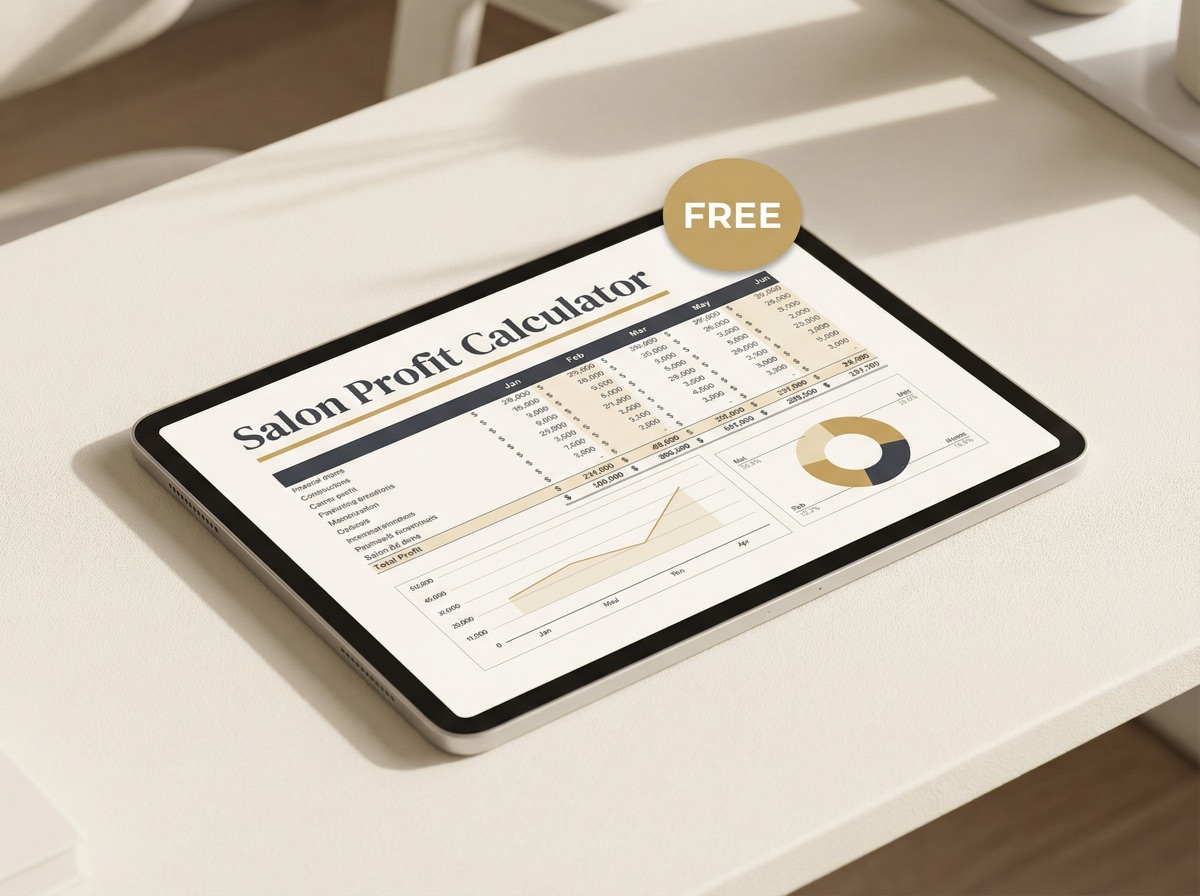
Written by Scott Farmer
Licensed Master Cosmetologist (GA & FL), former Toni & Guy Artistic Director, and founder of Hair Salon Pro. 30+ years behind the chair. 15,000+ clients. Building the business tools cosmetology school never taught. Currently behind the chair at scottfsalon.com in Venice, FL.