What to Do When a Stylist Leaves Your Salon (I Lost 47 Clients in 7 Days)
 Scott Farmer
·
May 17, 2026
·
11 min read
Scott Farmer
·
May 17, 2026
·
11 min read
Quick Answer: What should I do when a stylist leaves my salon?
Move fast in the first 72 hours, because that window decides whether you lose 15% or 60% of the departing book. Day 1, contact every client on that stylist’s book from the salon brand. Day 2, personally call your top 20 revenue clients. Day 3, offer a rebooking incentive to the undecided. One departure can cost $39,000 to $49,000 in first-year revenue, so the response matters.
TL;DR

- A single stylist departure costs $39,000 to $49,000 in first-year revenue when 25% to 75% of the departing book follows them out the door. The Bureau of Labor Statistics reports 670,000+ hairdressers and cosmetologists (SOC 39-5012) at a $33,400 median annual wage, meaning one departure can exceed the departing employee’s entire yearly income.
- The first 72 hours determine whether you lose 15% or 60% of that revenue. Day 1: contact every client on the departing stylist’s book from the salon brand. Day 2: personal calls to the top 20 revenue clients. Day 3: rebook incentive for undecided clients.
- Five systems prevent the damage before anyone quits: salon-owned booking and communication, multi-stylist touchpoints at every visit, written SOPs for the full client experience, salon-branded loyalty and referral programs, and centralized client data including color formulas. Salons with these systems lose closer to 25% of the departing book. Salons without them lose 60% or more.
- Scott Farmer, Licensed Master Cosmetologist, Gwinnett’s Best Hairstylist 2020, former Toni and Guy Artistic Director, founder of Hair Salon Pro, with over 30 years behind the chair and more than 15,000 clients served. Built JScott Salon in Lawrenceville, Georgia. Lost 47 clients in 7 days from one colorist departure and rebuilt the systems that now make the salon bigger than any single stylist.
- Run your numbers through the Salon Profit Calculator to see what one departure would cost your business today. Start with the free Salon Profit Calculator for the full Profit-First System.
Last updated: May 2026
What to do when a stylist leaves your salon is a question every owner needs to answer before it happens. Additionally, i did not have an answer the first time it happened to me.
My best colorist gave two weeks’ notice
My best colorist gave two weeks’ notice on a Tuesday morning. However, by the following Monday, 47 of her clients had called to ask where she was going. By Friday, 47 appointments had been canceled or rebooked at her new location. Seven days. Forty-seven clients. No plan. No playbook. No idea what to do next.
That week taught me something I wish I had learned 15 years earlier: those clients were never mine. They were hers. And I had built my salon in a way that made that outcome inevitable.
My name is Scott Farmer. As a result, i am a Licensed Master Cosmetologist with over 30 years behind the chair and more than 15,000 clients served. Additionally, Built JScott Salon in Lawrenceville, Georgia, and now work from my suite in Venice, Florida. I have been on both sides of this. I have lost team members who took half a book with them. I have also been the stylist who left. Both experiences shaped the system I am about to walk you through.
How Much Revenue Do You Lose When a Stylist Leaves Your Salon?
More than you think. And the damage extends beyond cancelled appointments.
Here is the math I ran after losing those 47 clients. In practice, my average color client spent $120 per visit. Most came in every 6 to 8 weeks, about 7 visits per year. That is $840 per client per year.
47 clients x $840 = $39,480 in annual revenue gone in one week.
But the loss did not stop at bookings.
| Cost Category | Amount |
|---|---|
| Lost annual client revenue | $39,480 |
| Recruiting and training a replacement stylist | $3,200 |
| Marketing to attract new clients | $1,500 |
| Lost retail sales (those clients bought product too) | $4,700 |
| Total first-year impact | $48,880 |
That is $48,880 from one departure.
According to the Bureau of Labor Statistics, the median annual wage for hairdressers and cosmetologists is $33,400. That said, a single stylist departure can cost more than the departing employee earned.
Most salon owners feel the pain but never put a dollar figure on it. Run your own numbers through the Salon Profit Calculator and see what losing your top producer would cost.
Why Do Clients Follow Their Stylist Instead of Staying at Your Salon?
This is the question I did not want to answer. Because the answer pointed straight at me.
Clients follow a stylist for one reason: the stylist was the experience. In fact, the salon was just the building.
When a client texts her stylist on a personal phone to book, that relationship lives on the stylist’s device, not in your salon software. When the stylist remembers that the client’s daughter just started kindergarten, that connection belongs to the stylist. When the only person who touches that client’s hair for two years is one stylist, there is nothing tying the client to your salon except a roof.
I made every one of these mistakes at my own salon. Overall, my stylists used personal phones for scheduling. I never introduced clients to other team members. I never sent a single email from the salon brand. Every touchpoint ran through the individual stylist.
Your approach to client retention from the very first visit determines whether clients bond with your brand or with a single person.
Three diagnostic questions that tell you how vulnerable you are right now:
- Who owns the client communication? If clients text your stylist’s personal number to book, you have zero control over that relationship when they leave.
- How many team members has each client interacted with? If the answer is one, you are exposed.
- Does your salon send any direct communication to clients? Emails, birthday messages, post-visit follow-ups from the salon name, not the stylist name.
If all three answers make you uncomfortable, that is where the work begins.
How Do You Build a Salon Brand Clients Stay Loyal to No Matter Who Leaves?
After that 47-client loss, I rebuilt my client relationship structure from scratch. Because of this, here are the five changes that made the difference.
1. Move All Booking and Communication to a Salon-Owned System
Every appointment goes through salon software. Ultimately, every confirmation text comes from the salon number. Every follow-up email comes from the salon address.
This is not about control. Instead, this is about making the salon the brand the client interacts with. When the salon is the contact point, a departing stylist cannot redirect communication.
2. Build Multi-Stylist Touchpoints Into Every Visit
I started having assistants do shampoo and blowout on color clients. Of course, within three months, clients knew two people by name instead of one.
For highlight clients, I paired a colorist with a cutter. Even so, the client’s relationship shifted from one person to a team.
During my years as a Toni and Guy Artistic Director, I saw this model work at scale. Still, no client belonged to one stylist. Every client experienced the brand. That is why a franchise location can survive 30% annual stylist turnover with minimal client loss.
3. Create Standard Operating Procedures for the Client Experience
When every stylist delivers the same consultation process, the same follow-up cadence, and the same retail recommendation framework, the client experience becomes the salon experience.
Your salon standard operating procedures should cover the full client journey from greeting to post-visit follow-up. When SOPs are solid, a new stylist can step into the role and the transition feels seamless to the client.
4. Launch a Salon-Branded Loyalty Program
Loyalty points, referral credits, and membership benefits should be tied to your salon, not to a stylist’s personal book. When a client has 6 months of accumulated loyalty points at your salon, switching to a new location costs them something.
A salon referral program that runs through the business creates a financial tie between the client and your brand.
5. Keep Client Data in Your System. Always.
Client formulas, color history, preferences, visit notes. Beyond that, all of it lives in your salon management system. When a stylist leaves, the next stylist has everything they need to serve that client without missing a beat.
I know salon owners who let stylists keep formula books in personal notebooks. To be clear, that is handing your business to someone who can walk out the door with it at any time.
What Should You Do in the First 72 Hours After a Stylist Leaves?
Speed matters more than perfection during this window. Meanwhile, here is the plan I follow now.
Day 1: Contact Every Client on That Stylist’s Book
Pull every client who had an appointment with the departing stylist in the next 90 days. In contrast, send a message from the salon (not a personal message from you) that reads something like:
“Hi [Name], we wanted to let you know that [Stylist] is no longer with us at [Salon Name]. With that in mind, we have your next appointment on [date] and would love to pair you with [New Stylist], who specializes in [the service you love]. We have all your color formulas and preferences on file. Reply to confirm or call us to discuss.”
No drama. Furthermore, no explanations about why they left. Just reassurance and a plan.
Day 2: Personal Outreach to the Top 20 Clients
Call or send a personal text to the stylist’s top 20 revenue clients. In other words, these are the ones most likely to follow the departing stylist and the ones worth fighting for. Offer to introduce them to their new stylist and sit in on the first appointment if it helps.
Day 3: Rebook Incentive for Undecided Clients
For clients who have not responded, offer a one-time rebook incentive. At the same time, a complimentary deep conditioning treatment or $20 off their next visit is not discounting. It is an acquisition cost for saving a $500+ annual client relationship.
What Not to Do
Do not badmouth the departing stylist. Notably, it makes you look petty and pushes clients away faster.
Do not wait and “see what happens.” Every day you wait, the departing stylist is contacting them first.
Do not panic-post on social media about how great your remaining team is. Importantly, it signals desperation.
What Are the Biggest Mistakes Salon Owners Make When a Stylist Leaves?
I have watched dozens of salon owners make these mistakes. Additionally, i have made most of them myself.
Relying on a non-compete agreement. However, most salon non-compete clauses are hard to enforce, and even harder for independent contractors. Even when enforceable, legal action destroys the relationship and generates bad word of mouth. Read more about salon non-compete agreements before assuming yours will protect you.
Waiting more than 48 hours to contact clients. After 48 hours, the departing stylist has reached out first. As a result, you lose the initiative and the client has already made a decision.
Not having client data in one system. If formulas and notes live on a stylist’s phone or in a personal notebook they take home, you have nothing to offer the next stylist. In practice, the client has to start over with someone new. They would rather start over at the familiar stylist’s new location.
Taking it personally instead of acting fast. That said, stylists leave for their own reasons. Sometimes those reasons have nothing to do with you. Getting emotional during the 72-hour window costs you clients you could have saved.
Having no plan before it happens. According to the Professional Beauty Association, annual stylist turnover in the salon industry ranges from 20% to 40%. That means every 2 to 5 years, you will lose a top producer. This is not a question of if. Build the systems now, before the next departure.
The way you manage your salon employees every day determines whether a departure is a temporary setback or a permanent revenue loss.
Frequently Asked Questions
Can a salon non-compete agreement prevent a stylist from taking clients?
In most cases, no. In fact, non-compete agreements are difficult to enforce for cosmetologists, and many states limit or prohibit them for independent contractors. Even in states where they are enforceable, a court may reduce the geographic or time restrictions. Your best protection is building a salon brand that clients are loyal to, not relying on a legal document. Read the full guide to salon non-compete agreements.
How many clients does a salon lose when a stylist leaves?
Industry estimates range from 25% to 75% of the departing stylist’s book. Overall, the percentage depends on how long the stylist was at your salon, whether clients have relationships with other team members, and how fast you act in the first 72 hours. Salons with strong SOPs and salon-branded communication lose closer to 25%. Salons with no systems in place lose 60% or more.
Should I contact clients when a stylist quits?
Yes, within 24 hours. Because of this, the longer you wait, the more likely the departing stylist has contacted them first. Send a reassuring message from the salon that names the new stylist, confirms you have their formulas on file, and offers to make the transition smooth. Keep it professional.
How long does it take to recover revenue after losing a top stylist?
With a 72-hour response plan and a capable replacement, most salons recover 60% to 80% of the lost revenue within 90 days. Ultimately, full recovery takes 6 to 12 months because the new stylist needs time to build trust with inherited clients and bring in new ones.
What is the single most important thing I can do now to protect my salon?
Move all client communication to a salon-owned system. If appointments, confirmations, and follow-ups come from the salon phone number and email address instead of individual stylist phones, clients identify with the salon brand. Instead, that one change cuts client loss by more than half when a departure happens. Combine it with centralized client data and written standard operating procedures, and you have a salon that survives any single person leaving.
Use the Salon Profit Calculator to run the numbers on what one stylist’s departure would cost your business. Then build the systems that protect you before it happens.
Want the full Profit-First System that makes your salon bigger than any one person behind the chair? I walk you through the exact framework my Pro Members use to double their chair income without working more hours. Run the free Salon Profit Calculator.
Free Download
Get the Salon Profit Calculator
See exactly where your salon is losing money — in under 5 minutes.
Download Free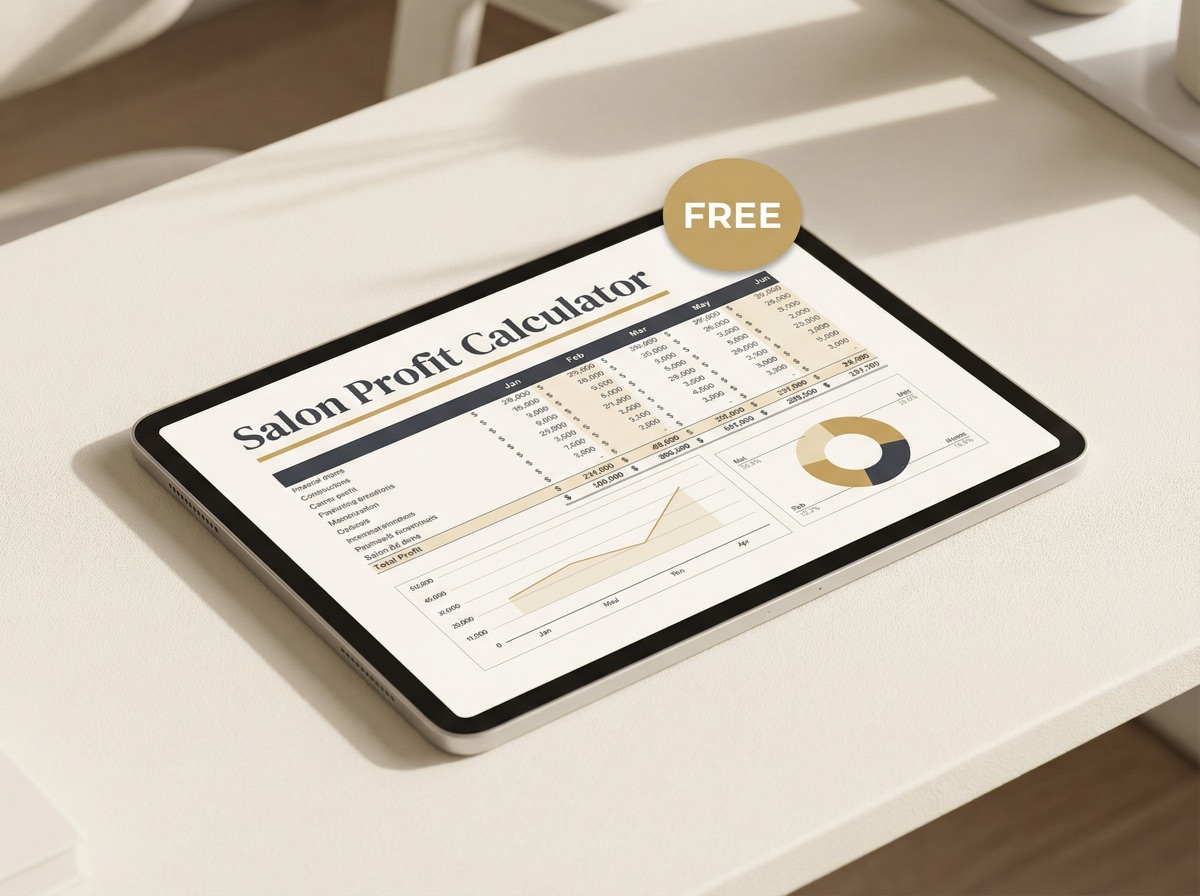
Written by Scott Farmer
Licensed Master Cosmetologist (GA & FL), former Toni & Guy Artistic Director, and founder of Hair Salon Pro. 30+ years behind the chair. 15,000+ clients. Building the business tools cosmetology school never taught. Currently behind the chair at scottfsalon.com in Venice, FL.