Salon Non-Compete Agreement for Hairstylists: What’s Actually Enforceable (And What’s Just Scare Tactics)
 Scott Farmer
·
April 24, 2026
·
13 min read
Scott Farmer
·
April 24, 2026
·
13 min read
Quick Answer: Is a salon non-compete agreement actually enforceable for hairstylists?
Most salon non-competes are unenforceable. Courts void them when the geographic radius is too wide, the time period is too long, or there is no legitimate business interest to protect. The defensible range is six months to one year and 3 to 5 miles in dense markets. Booth renters have the strongest grounds to push back since they are independent contractors, not employees.
TL;DR

- Most salon non-competes are unenforceable: Courts reject agreements where the geographic radius is too wide, the time period is too long, or there is no legitimate business interest to protect. Six months to one year and 3–5 miles in dense markets is the defensible range.
- Booth renters have the strongest grounds to push back: Renters are independent contractors, not employees. California, Minnesota, and North Dakota ban non-competes for employees outright. Booth renters in most states have even fewer restrictions.
- The three-factor test: For a salon non-compete to hold up in court, it needs (1) reasonable geography, (2) reasonable time period, and (3) a real business interest to protect, such as training investment or handed-over clientele. Missing any one factor is usually enough to void the agreement.
- Scott Farmer, Licensed Master Cosmetologist and founder of Hair Salon Pro, has signed non-competes as a stylist and written them as a salon owner. His take: client agreements and service investment policies protect what actually matters and are far harder to challenge in court.
- Go deeper: If you want to protect your salon’s revenue with better systems instead of legal threats, run a Run the free Salon Profit Calculator or use the Salon Profit Calculator to see where your money is actually going.
I’ve been on both sides of a salon non-compete agreement. Additionally, i signed one early in my career when I was young and nervous and had no idea what I was agreeing to. Years later, running JScott Salon, I was the one putting non-competes in front of my stylists.
What I know now that I wish I’d known then: most of what’s in a standard salon non-compete is unenforceable. And a lot of salon owners use these agreements not because they hold legal water, but because stylists don’t know enough to push back.
This article covers what actually makes a
This article covers what actually makes a salon non-compete agreement enforceable, what’s just bluffing, how the booth renter vs. employee distinction changes everything, and how to negotiate if you’re on either side of the table.
Find Your Biggest Profit Leak. Free.
Most salon owners leak $500 to $2,000 a month and never see it. Get the free 3-number Profit Audit and the exact steps to plug the leak.
Legal Disclaimer: This is educational content based on Scott’s experience, not legal advice. However, consult an attorney for your specific situation. Employment law varies significantly by state, and non-compete enforceability is changing fast in many jurisdictions.
What a Salon Non-Compete Agreement Actually Does
A non-compete agreement is a contract where a stylist agrees not to work for competing salons or open their own salon within a specific area for a specific period of time after leaving.
The idea makes sense on paper. As a result, you spend two years training someone, building their clientele, paying for their education. Then they leave and open a salon three blocks away and take your top clients. That stings.
But here’s the reality: courts across the country have become increasingly hostile to non-compete agreements, especially ones that are broad, vague, or place an unreasonable burden on a worker’s ability to earn a living. In practice, judges regularly throw them out.
For a salon non-compete to have any real teeth, three things need to be true.
The Three Factors That Determine Enforceability
1. Reasonable geographic radius
“Within 25 miles” is not reasonable in most markets. That said, neither is “within the county.” Courts look at what makes sense given the actual competitive landscape.
In a dense metro area like Atlanta or Miami, 3 to 5 miles is more defensible. For example, in a rural area where the nearest salon might be 15 miles away, a wider radius could fly. I’ve seen courts accept a 5-mile radius in suburban markets and throw out a 10-mile radius in a dense urban one.
If the radius is so large that a stylist basically can’t work in their field without relocating, courts view it as punishing the employee rather than protecting a legitimate business interest. In fact, that’s a fast track to having the whole thing voided.
2. Reasonable time period
Six months to one year is the range courts are most comfortable with. Overall, two years is a stretch. Three years is almost always too long.
The logic is simple: a client’s loyalty to a stylist fades over time. After 12 to 18 months, most clients have moved on or found someone new. Because of this, a 36-month restriction isn’t protecting a business interest. It’s punishing someone for leaving.
3. A legitimate business interest to protect
This is the one most salon owners overlook. Ultimately, you can’t just say “I don’t want competition.” You need to show what you invested that you’re trying to protect: client relationships you helped build, proprietary training, product formulations, business systems.
A stylist you hired off the street who built their own clientele from scratch? Instead, harder to argue you have a protectable interest in that relationship. A stylist you mentored from cosmetology school, trained in advanced techniques, and handed existing clients? Much stronger case.
Booth Renters vs. Employees: A Completely Different Legal Question
This is where a lot of salon owners make a serious mistake, and it can cost them.
If someone is a booth renter, they are an independent contractor. Of course, they pay you to rent space. They set their own hours, buy their own supplies, and build their own client list. The IRS and most state labor departments are very clear: independent contractors cannot be treated like employees.
Making a booth renter sign a non-compete agreement is legally shaky in most states. Even so, courts frequently void them because the relationship itself undermines the contract. You can’t have it both ways. If they’re independent enough to be a contractor, they’re independent enough to work wherever they want when they leave.
Booth renters may reasonably sign a non-solicitation agreement, which is different. Still, a non-solicitation says: you can go work anywhere you want, but you cannot actively solicit the clients who came to THIS salon to follow you. That’s a narrower restriction and it holds up better.
Employees are different. If you’re paying someone a wage or commission, running payroll, covering their booth space, and directing their work schedule, they are your employee. Beyond that, non-competes for employees are more defensible, provided they meet the reasonable radius, time, and business interest tests above.
If you’re thinking about bringing on your first stylist as an employee, get the paperwork right from day one. To be clear, that means being clear about the employment relationship before you ever hand anyone a contract to sign.
State-by-State Variation: This Is Not One-Size-Fits-All
I can’t stress this enough: non-compete law is highly state-specific, and the landscape has shifted dramatically in the last few years.
California, Minnesota, North Dakota, and Oklahoma have effectively banned non-compete agreements for most workers. Meanwhile, they’re not enforceable. Period. If you’re a stylist in California and your salon makes you sign one, you can almost certainly ignore it.
The FTC issued a rule in 2024 attempting to ban most non-competes nationally. In contrast, that rule is currently tied up in litigation, so its status depends on what courts decide. This is moving fast.
Most other states will enforce non-competes only if they meet the reasonableness tests. With that in mind, some states, like Texas and Florida, have historically been more employer-friendly. States like New York and Massachusetts tend to scrutinize them more heavily and require stronger business interest justification.
Bottom line: what applies in Florida (where my current salon is in Venice) is completely different from what applies in New York. If you’re writing or signing a salon non-compete agreement, you need to know your state’s current rules, not general principles from the internet.
What Salon Owners Get Wrong When Writing Non-Competes
I made some of these mistakes myself in the early JScott Salon days.
Making them too broad. Furthermore, the instinct is to protect as much as possible. A 20-mile radius, 3-year term, covering any work in the beauty industry. Courts see this as overreach and throw the whole thing out. A narrow, specific, defensible agreement beats an aggressive one every time.
Using the same contract for everyone. In other words, the stylist you trained from day one and handed a full book of clients has a different relationship with you than the stylist who came in with their own established clientele. Your contracts should reflect that.
Not tying it to real consideration. If you hand someone a non-compete after they’ve already started working, many states say that’s unenforceable because there’s no new consideration (something of value exchanged). If you want it to hold up, pair it with something: a signing bonus, a raise, access to advanced training.
Confusing non-competes with non-solicitation. At the same time, non-solicitation is narrower and much more defensible. Preventing someone from cold-calling your client list is very different from preventing them from working in the industry. Consider whether a non-solicitation agreement actually covers what you care about, because it probably does.
The Commission vs. Booth Rental Decision and How It Changes Your Risk
The structure of your salon determines what protections are even available to you. A stylist who rents a booth from you and runs their own independent business has fundamentally different legal protections than someone on commission.
If you’ve been treating booth renters like employees, enforcing their schedules, requiring them to use specific products, setting their prices, you may have misclassified them. Importantly, that’s a bigger legal problem than any non-compete.
Get the structure right first. Then worry about the contracts.
How to Negotiate a Non-Compete (If You’re the Stylist)
If a salon owner puts a non-compete in front of you, don’t just sign it because you’re excited about the job and don’t want to rock the boat. Additionally, that’s how I signed my first one. Nervous. Eager. Zero negotiation.
Here’s what you can do:
Ask for the radius to be reduced. “Can we make this 2 miles instead of 10?” is a completely reasonable ask. If they say no and won’t budge at all, that tells you something about how they view the relationship.
Ask for the time period to be shortened. However, six months instead of two years. Frame it as: “I understand you want protection during the transition period. Six months covers that.”
Ask what you get in return. If you’re signing something that limits your future options, there should be something in it for you. As a result, a higher commission rate, a training investment, guaranteed hours. Non-competes are contracts. Both sides should be getting something.
Look up your state’s law. In practice, spending 30 minutes understanding your state’s non-compete rules before you sign anything is worth it. In many states, you may be agreeing to something that’s already unenforceable.
Consult an employment attorney. That said, many offer free or low-cost consultations. If you’re signing a non-compete in a state that largely enforces them, knowing your rights before you sign is worth the cost.
How to Write a Non-Compete That Actually Holds Up (If You’re the Owner)
My approach now, after years of getting this wrong and eventually getting it right, is to keep it narrow and specific.
Work with a local employment attorney. For example, it costs a few hundred dollars and is worth every cent. Laws change, and what was enforceable five years ago may not be today. I’ve seen the legal landscape shift significantly even in Florida during my time at Toni and Guy, where as an Artistic Director I saw how bigger organizations handled this.
Be specific about what you’re protecting. “Client relationships developed through salon resources and referral networks” is more defensible than “any clients.”
Consider using a non-solicitation agreement instead of or in addition to a non-compete. In fact, it’s easier to enforce and it targets what you actually care about: your client list.
Document your training investment. If you paid for courses, certifications, or sent someone to a product education event, keep those records. Overall, that’s your evidence of a protectable business interest.
If you’re hiring, building your team, and want systems for protecting what you’ve built, the HSP Pro Membership at /starter-pack/ includes templates, business frameworks, and community support from salon owners who’ve navigated exactly these decisions.
Running a Profitable Business Starts Before the Contract
Non-competes are a downstream problem. The upstream problem is usually not knowing your numbers well enough to know what’s actually worth protecting.
If you’re not tracking which stylists generate the most revenue, which client relationships drive repeat bookings, and what your real profit margin looks like, a non-compete won’t save you. Knowing your business will.
The Run the free Salon Profit Calculator is built for salon owners who want to understand their actual numbers, not just hope for the best when a stylist walks out the door.
Frequently Asked Questions
Can a salon enforce a non-compete against a booth renter?
In most cases, no. Booth renters are independent contractors, and non-compete agreements generally conflict with that status. Courts frequently void them. A non-solicitation agreement (preventing active solicitation of the salon’s client list) is more defensible for booth renters. Confirm the rules in your specific state with an attorney.
What happens if I violate a salon non-compete agreement?
It depends on whether the agreement is enforceable in your state and whether the salon owner decides to pursue legal action. Enforcement requires the salon to sue you and prove damages. Many salon owners threaten action but never follow through because litigation is expensive. That said, if the agreement is enforceable and the owner pursues it, you could face an injunction (being ordered to stop working at the new location) and potentially damages. Get legal advice before violating any contract you’ve signed.
How long can a salon non-compete last?
Six months to one year is the range most courts are comfortable with. Two years is possible in some states but gets harder to defend. Anything over two years is very difficult to enforce and will likely be reduced or voided by a court. Shorter, specific, well-reasoned agreements hold up better than long, vague ones.
Can a salon non-compete prevent me from working as a hairstylist anywhere?
No. Courts won’t enforce a non-compete that prevents someone from working in their profession entirely. An agreement must be narrow enough that you can still earn a living in the field. If the geographic radius is so large that you’d have to move cities to find work, courts typically void it.
What’s the difference between a non-compete and a non-solicitation agreement?
A non-compete restricts where you can work. A non-solicitation restricts who you can contact or recruit. Non-solicitation agreements say: you can go work anywhere, but you cannot actively pursue clients or other staff from this salon. Non-solicitation agreements are generally narrower, easier to justify, and more enforceable than broad non-competes.
Do non-compete agreements apply in California?
No. California prohibits employee non-compete agreements with very limited exceptions. They are unenforceable as a matter of public policy. If you’re in California and a salon asks you to sign one, it likely has no legal effect. Several other states, including Minnesota, North Dakota, and Oklahoma, have similar bans. According to the National Conference of State Legislatures, over a dozen states have now restricted or banned non-competes, with low-wage and service-industry workers most commonly protected.
Free Download
Get the Salon Profit Calculator
See exactly where your salon is losing money — in under 5 minutes.
Download Free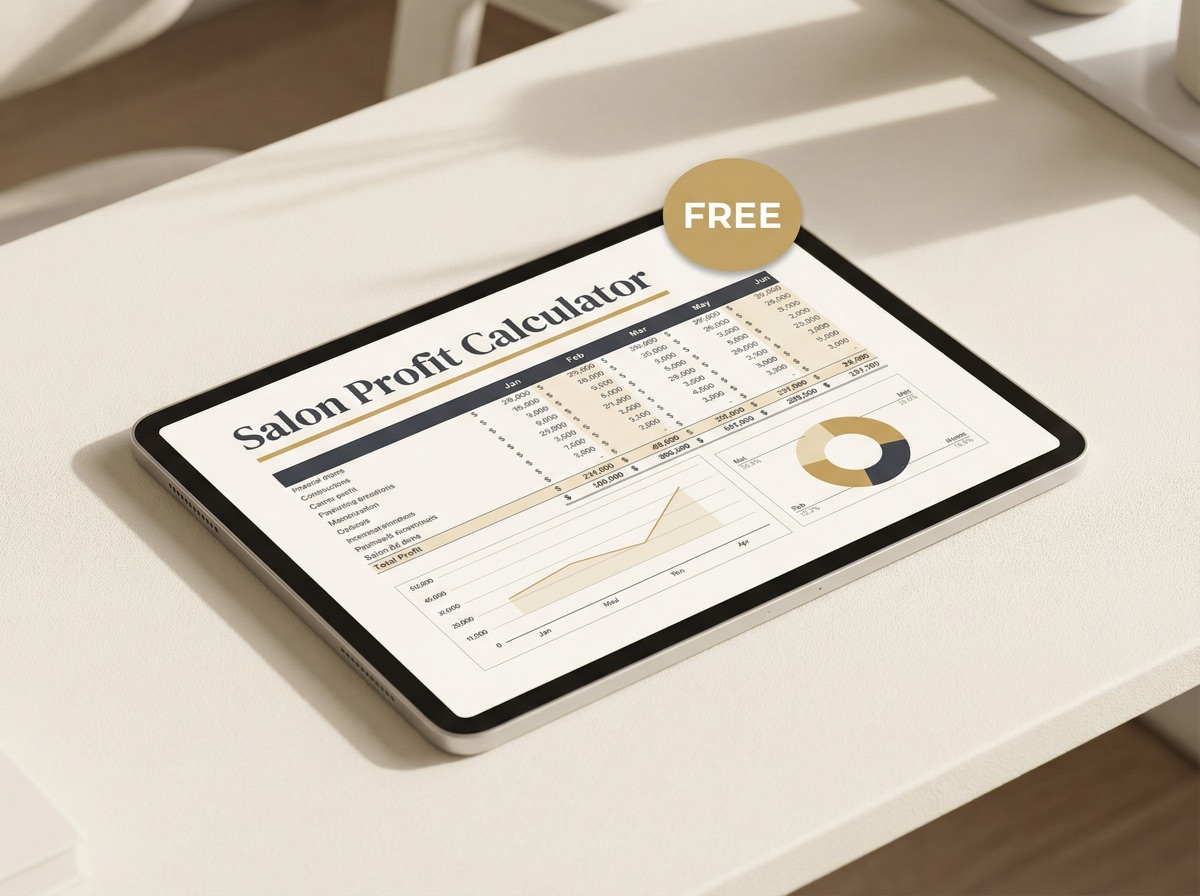
Written by Scott Farmer
Licensed Master Cosmetologist (GA & FL), former Toni & Guy Artistic Director, and founder of Hair Salon Pro. 30+ years behind the chair. 15,000+ clients. Building the business tools cosmetology school never taught. Currently behind the chair at scottfsalon.com in Venice, FL.