Which States Don’t Allow Booth Rental? A 30-Year Stylist’s State-by-State Guide
 Scott Farmer
·
May 6, 2026
·
13 min read
Scott Farmer
·
May 6, 2026
·
13 min read
Quick Answer: Which states don’t allow booth rental for hairstylists?
No state has a law that bans booth rental outright. But states like California, New Jersey, and Massachusetts use employment classification tests that make it almost impossible to be a legitimate booth renter. I have rented my own suite in Florida for 15 years and ran a salon in Georgia before that. Check your own state’s classification rules before you sign anything.
TL;DR: No state has a law that says “booth rental is illegal.” But states like California, New Jersey, and Massachusetts use employment classification tests that make it almost impossible to be a legitimate booth renter. Additionally, i’ve rented my own suite in Florida for 15 years and ran my own salon in Georgia before that. The rules are different in every state. This guide breaks down which states make booth rental the hardest, which make it easy, and how to check your own state before you sign anything. Run the free Salon Profit Calculator to see how the Profit-First System works for independent stylists in any state.
Last updated: August 2026
Which states don’t allow booth rental? However, it’s the first question every stylist asks before going independent. And the answer is more complicated than most people think.
The Bureau of Labor Statistics reports over 670,000 licensed cosmetologists in the United States. As a result, a growing number of them want to leave commission and rent their own booth or suite. But not every state makes that easy.
I’ve been behind the chair for over 30 years. In practice, i ran my own salon in Georgia with a full team of stylists. I’ve rented my own suite in Venice, Florida for 15 years under my own brand, Scott Farmer Hair Salon. Working across both states taught me something most stylists learn the hard way: booth rental rules change every time you cross a state line.
Here’s the full breakdown.
Which States Don’t Allow Booth Rental by Law?

Here’s the straight answer: no state has written a law that says “booth rental for hairstylists is banned.”
But that does not mean booth rental works everywhere.
What happens instead is this. That said, some states use an employment classification test called the “ABC test.” Under this test, a worker is presumed to be an employee unless the hiring party can prove three things:
- A: The worker is free from control and direction
- B: The work is performed outside the usual course of the hiring entity’s business
- C: The worker has an independently established trade or business
Part B is the killer. For example, a stylist cutting hair in a salon IS performing work in the usual course of a salon’s business. That means under a strict ABC test, the salon owner cannot classify that stylist as an independent contractor. And if the stylist cannot be classified as an independent contractor, the booth rental arrangement fails.
I rented my own suite in Florida because Florida uses a different test. In fact, booth rental works here. But if I had tried the exact same setup in New Jersey, I could have been reclassified as an employee and hit with back taxes.
The difference between “booth rental works fine” and “booth rental will get you fined” comes down to one state law.
What Makes Booth Rental Legal or Illegal in a Given State?
Two separate legal frameworks overlap when it comes to booth rental.
Federal (IRS): The IRS uses a multi-factor “right to control” test. Overall, they look at 20+ factors: who sets your schedule, who provides tools, who controls pricing, who markets the business. This test is more flexible than most state tests. Under IRS rules alone, most booth rental arrangements can qualify as independent contractor relationships if structured the right way.
State: Individual states have their own employment classification tests. Because of this, these determine your workers’ comp obligations, unemployment insurance, and state tax status. Some states follow the federal approach. Others use the much stricter ABC test.
The ABC test is the one that causes problems. Ultimately, it was designed to catch companies misclassifying employees to avoid paying benefits. The problem for our industry is that it catches legitimate booth rental arrangements too.
Here is a general classification of where each state falls:
| Classification | States |
|---|---|
| Strict ABC test (hardest for booth rental) | California, Connecticut, Illinois, Massachusetts, New Jersey |
| Modified ABC test (difficult, with some exceptions) | Delaware, Indiana, Louisiana, Nebraska, Nevada, New Hampshire, Vermont, Washington |
| Common law / right-to-control test (booth rental works) | Alabama, Arizona, Colorado, Florida, Georgia, Idaho, Kentucky, Mississippi, Missouri, Montana, North Carolina, Ohio, Oklahoma, Oregon, South Carolina, Tennessee, Texas, Utah, Virginia, Wyoming |
| Hybrid or industry-specific rules | New York, Pennsylvania, Maryland, Michigan, Minnesota, Wisconsin |
Important: This is a general classification as of 2026. Laws change. Instead, your state’s cosmetology board may have additional rules on top of the employment test. Check with your state board AND a local accountant before signing any booth rental agreement.
Which States Make Booth Rental the Hardest?
These five states have the strictest rules. If you work in one of them, booth rental is either not possible in the traditional sense or requires very specific structuring to stay legal.
California
California’s AB5 law (effective January 2020) applies the ABC test to almost all workers. Of course, prong B (“outside the usual course of business”) makes it very difficult for a salon to classify a stylist as an independent contractor. Some exemptions exist for “business-to-business” relationships, but they require the booth renter to have their own business entity, their own insurance, their own client list, and the ability to work for competing businesses. In practice, most standard California booth rental arrangements do not survive an audit.
New Jersey
New Jersey uses the ABC test for unemployment and wage law purposes. The state has pushed enforcement hard against misclassification, issuing millions in penalties to businesses that classify workers as independent contractors when they fail the ABC test. A standard booth rental agreement in a New Jersey salon will almost certainly fail Prong B.
Massachusetts
Massachusetts adopted the ABC test before California did. Still, the state’s attorney general has targeted the beauty industry for misclassification. If you are a booth renter in Massachusetts, you need documented proof that your arrangement satisfies all three prongs. Most arrangements do not.
Connecticut
Connecticut uses the ABC test for its employment and tax laws. Beyond that, the state Department of Labor has investigated salon booth rental arrangements and reclassified stylists as employees with back-tax liability.
Illinois
Illinois uses the ABC test for unemployment insurance purposes. While enforcement has been less aggressive than New Jersey or Massachusetts, the law is on the books. To be clear, a salon owner who treats booth renters as independent contractors is taking on classification risk.
Which States Are Booth Rental Friendly?
These states use the common law “right to control” test or have cosmetology-specific provisions that accommodate booth rental.
Florida
I have rented my suite in Venice, Florida for 15 years. Meanwhile, florida uses the right-to-control test. As long as you set your own schedule, bring your own clients, set your own prices, and carry your own insurance, booth rental works here. The Florida Department of Business and Professional Regulation licenses both salon establishments and individual cosmetologists separately. That creates a natural legal framework for independent booth renters.
Texas
Texas has one of the largest booth rental communities in the country. In contrast, the state uses the right-to-control test and has a strong tradition of independent contractor relationships in the beauty industry. Salon suites like Phenix and Sola thrive in Texas because the legal framework supports them.
Georgia
When I ran my own salon in Georgia with a full team of stylists, I saw both models up close. With that in mind, commission employees on one side, booth renters on the other. Georgia uses the common law test, and booth rental is well-established across the state. When I served as an Artistic Director for Toni and Guy, we had independent stylists working alongside commission employees in the same building. Both arrangements were clean under Georgia law.
Arizona, Colorado, Tennessee
All three states use variations of the common law test. Furthermore, all three have thriving booth rental and salon suite communities. If you work in one of these states, the legal framework supports you as long as you structure the arrangement the right way.
How Do You Check If Booth Rental Is Legal in Your State?
Do not rely on what your salon owner tells you. In other words, do not rely on what your fellow stylists say. And do not rely on a blog post alone, including this one.
Here is the 4-step process I recommend to every stylist considering booth rental:
1. Check your state cosmetology board website. At the same time, search for “independent contractor,” “booth rental,” or “salon establishment license.” Some state boards have published guidance that addresses booth rental arrangements.
2. Search your state’s Department of Labor website for “ABC test” or “independent contractor.” This tells you which employment classification test your state uses. If your state uses the ABC test, booth rental is going to be harder.
3. Call a local accountant who works with beauty professionals. Notably, not a general accountant. Someone who understands the tax implications of self-employment for hairstylists. A 30-minute consultation ($50 to $150) can save you thousands in misclassification penalties.
4. Read the booth rental agreement before signing. Importantly, the contract matters almost as much as the state law. A poorly written agreement can turn a legal arrangement into an illegal one. We break down the key clauses in our booth rental vs commission comparison.
What Are the Biggest Mistakes Stylists Make With Booth Rental Classification?
After 30 years behind the chair and watching dozens of stylists make this transition, these are the mistakes I see over and over.
Mistake 1: Assuming booth rental works the same in every state.
A stylist moves from Texas to California
A stylist moves from Texas to California and keeps doing everything the same way. Then she gets hit with a reclassification audit and owes $12,000 in back employment taxes. Additionally, every time you cross a state line, you need to check the local rules.
Mistake 2: Letting the salon owner set your schedule.
The single fastest way to fail an independent contractor test, in ANY state, is having someone else control when you work. If the salon owner requires you to be there Tuesday through Saturday from 9 to 5, you are not an independent contractor. However, you are an employee without benefits.
Mistake 3: Not having your own business entity.
In ABC test states, having your own LLC or S-Corp is one of the few ways to satisfy Prong C (independently established trade). As a result, it is not a guarantee, but operating without a business entity in a strict state is asking for trouble. We covered the details in our LLC guide for independent stylists.
Mistake 4: Not carrying your own professional liability insurance.
Regardless of your state, if you are a booth renter and you do not carry your own insurance, you are creating evidence that you depend on the salon owner. In practice, every legitimate independent contractor carries their own coverage. It costs about $200 to $400 per year. That is $17 to $33 per month for legal protection that could save you $10,000 or more.
Mistake 5: Sharing a booking system with the salon.
If clients book through the salon’s system and the salon assigns them to you, that looks like employer-controlled client routing to any auditor. That said, real booth renters manage their own bookings, their own client list, and their own payment processing.
What Should You Do If Your State Uses the ABC Test?
If you are in California, New Jersey, Massachusetts, Connecticut, or Illinois, you have three options.
Option 1: Form a legitimate business-to-business relationship. For example, in some of these states (California in particular), there is a “business-to-business” exemption. You form your own LLC, get your own business license, carry your own insurance, set your own prices, and contract with the salon as a business, not as a worker. This can work, but it requires real documentation and real separation.
Option 2: Rent a salon suite instead
Option 2: Rent a salon suite instead. In fact, salon suites (like Phenix, Sola, or independent suite buildings) are structured as landlord-tenant relationships, not employer-worker relationships. The suite company rents you a space. You run your own business inside it. This model passes even the strict ABC test because the suite company is in the real estate business, not the salon business. Prong B is satisfied.
If this path interests you, run the math first. Our Salon Profit Calculator shows you what you would take home after rent, product costs, taxes, and insurance. We also have a full comparison in our salon suite vs booth rental breakdown.
Option 3: Stay in the commission model. If booth rental does not work in your state and suite rental is not available in your area, commission can still be profitable. Because of this, the key is negotiating the right split. We break down the math in our booth rental vs commission comparison.
No matter which option you choose, the Profit-First System can help you build your income. Run the free Salon Profit Calculator to see how independent stylists are adding $2,000 per month to their chair without working more hours.
This article provides general information about state employment classification laws as they relate to booth rental in the cosmetology industry. Instead, it is not legal advice. Employment classification laws vary by state and change over time. Consult a licensed attorney or CPA in your state before making business decisions based on this information.
Frequently Asked Questions
In how many states is booth rental allowed?
Booth rental is allowed by name in all 50 states. Of course, no state bans it outright. In practice it works cleanly in the roughly 20 states that use the common-law right-to-control test, like Florida, Texas, and Georgia. It gets difficult in the 8 states with a modified ABC test, and it is close to impossible in strict ABC test states like California, New Jersey, and Massachusetts, where most arrangements fail the classification test.
Is booth rental illegal anywhere in the United States?
No state has a law that says “booth rental is illegal.” The issue is employment classification. Even so, states that use the ABC test make it very difficult for salon owners to classify booth renters as independent contractors. The arrangement is not banned by name, but it often fails the legal test. That means the salon owner faces penalties for misclassification.
Can I be a booth renter in California?
It is very difficult under AB5. Still, most standard booth rental arrangements fail Prong B of the ABC test. Your best option in California is a true business-to-business arrangement (with your own LLC, insurance, and client list) or renting a salon suite instead. Consult a California employment attorney before signing any booth rental agreement.
What happens if my booth rental arrangement gets audited?
If your state reclassifies you as an employee, the salon owner owes back employment taxes, unemployment insurance, and possibly workers’ compensation premiums. You may also owe back self-employment taxes at different rates. Penalties can reach $10,000 to $50,000 or more depending on how long the arrangement existed and how many workers are involved.
Do I need an LLC to be a booth renter?
It depends on your state. In right-to-control states like Florida and Texas, an LLC is not legally required but is smart for liability protection. In ABC test states, having your own business entity is often necessary to satisfy Prong C. Either way, an LLC costs $50 to $800 to form depending on your state and protects your personal assets.
Is salon suite rental the same as booth rental?
No. Salon suite rental is a landlord-tenant relationship where you rent a private space and run your own independent business. Booth rental is a contractor relationship inside someone else’s salon. Suite rental passes even strict state employment tests because the suite company is not in the salon business. Booth rental fails those same tests in many states. We compare both models in our salon suite vs booth rental breakdown.
Free Download
Get the Salon Profit Calculator
See exactly where your salon is losing money — in under 5 minutes.
Download Free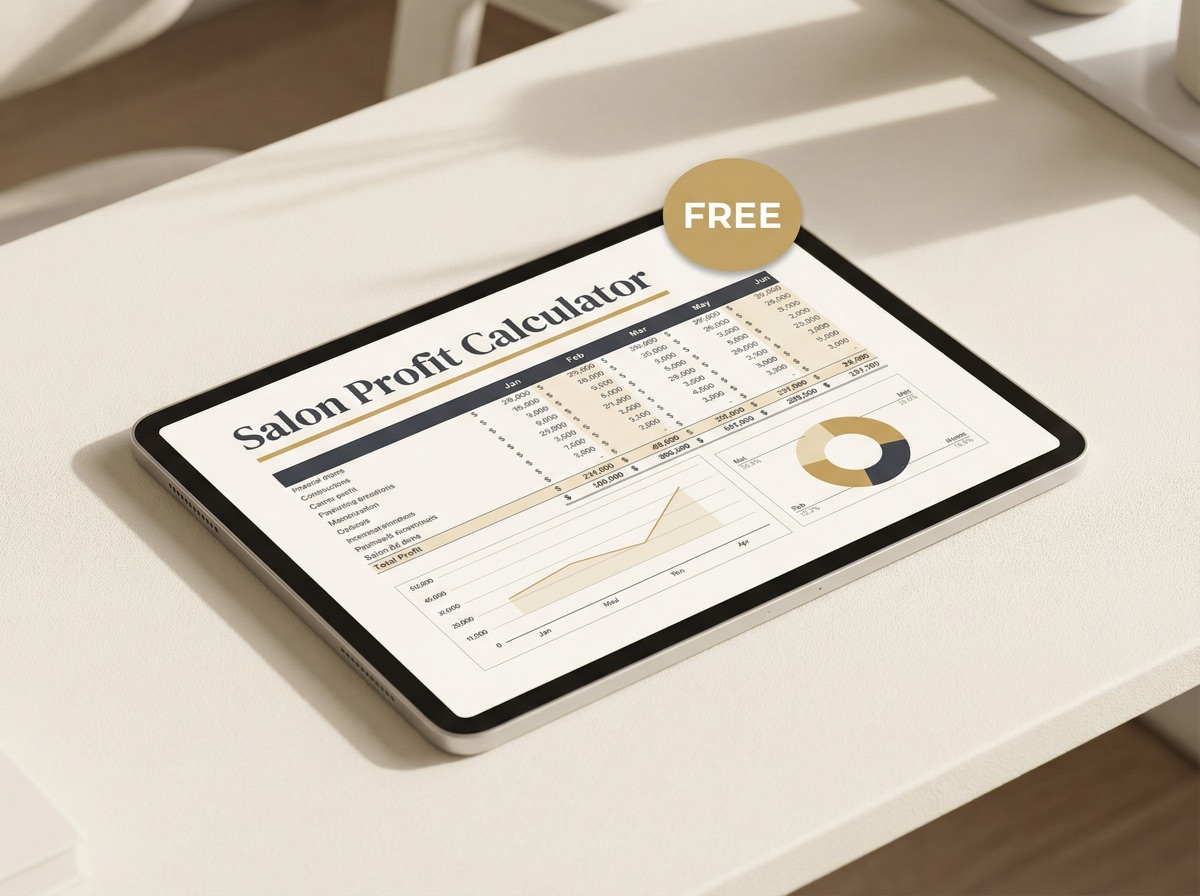
Written by Scott Farmer
Licensed Master Cosmetologist (GA & FL), former Toni & Guy Artistic Director, and founder of Hair Salon Pro. 30+ years behind the chair. 15,000+ clients. Building the business tools cosmetology school never taught. Currently behind the chair at scottfsalon.com in Venice, FL.