How Much to Charge for Booth Rent (An Owner’s Guide to Setting Prices That Fill Booths)
 Scott Farmer
·
July 1, 2026
·
12 min read
Scott Farmer
·
July 1, 2026
·
12 min read
Quick Answer: Most salons charge between $150 and $400 a week, or roughly $600 to $1,600 a month, for a single booth. The right number for how much to charge for booth rent depends on your market and your overhead, but the cleanest test is this: your rent should land at 15% to 25% of the monthly revenue a stylist can realistically produce in that chair. Price under that band and you leave money on the table. Price over it and your booths sit empty.
TL;DR:
– Typical salon booth rent runs $150 to $400 a week, or about $600 to $1,600 a month, depending on your city and what is included
– Set rent at 15% to 25% of the revenue the chair can realistically produce, not a random round number
– Charge more when you include back bar, laundry, front desk, retail, and marketing; charge less for a bare station
– An empty booth earns you zero, so a filled booth at a fair price beats a premium price nobody takes
– Run your real overhead per station before you set the price, or you can rent chairs at a loss without noticing
I still remember the first rent number I ever quoted a stylist. I opened JScott Salon, had two empty stations, and pulled a weekly figure out of thin air because it “felt about right.” It was too low. Three months later I did the math on what those two chairs cost me in rent, utilities, and back bar. I was basically paying to let someone work in my building.
Booth rent is not a number you guess. It is a number you calculate from two things: what your market will bear, and what that chair actually costs you to keep open.
I have priced this from both sides. I set the rent as the owner collecting it at JScott Salon, and years later I paid booth rent myself as an independent. Here is how I would price it if I were filling a station tomorrow.
What Is the Average Booth Rent for a Salon?
Let me give you the honest ranges first, then the logic underneath them, because a range without context is useless.
Across most of the country, a single booth rents for somewhere between $150 and $400 a week. In a small town or a bare-bones setup, you might see $125. In a high-rent metro with a full-service space and a strong walk-in flow, $500 a week is not crazy.
Here is how it shakes out by market and what is usually bundled in.
| Market tier | Weekly rent | Monthly rent | Typically included |
|---|---|---|---|
| Small town / rural | $125 to $200 | $500 to $800 | Station, mirror, shared back bar |
| Mid-size city / suburb | $200 to $300 | $800 to $1,200 | Station, back bar, laundry, utilities |
| Major metro | $300 to $450 | $1,200 to $1,800 | Station, back bar, front desk, retail split |
| Premium / high-traffic | $400 to $600 | $1,600 to $2,400 | Full service, marketing, walk-in flow, receptionist |
Notice the pattern. The rent climbs with the market, but it climbs faster when you bundle more in. A stylist paying $400 a week in a metro is often paying for a receptionist booking their clients and a front window full of foot traffic. That is a different product than a bare chair in a quiet strip mall.
So when someone asks me the flat question “how much should I charge for booth rent,” my first answer is always a question back: what are you actually renting them?
How Do You Calculate the Right Booth Rent for Your Salon?
The market range gives you a ballpark. The percent-of-revenue rule gives you the real number.
Here is the rule I trust. A stylist’s rent should sit at roughly 15% to 25% of the monthly service revenue that chair can realistically produce. Under 15% and you are almost certainly underpricing. Over 25% and you make the booth hard to fill, because the stylist cannot make the math work.
Run it forward. Say a solid stylist in your area does $6,000 a month in services in a full chair.
- At 15%, rent lands around $900 a month, or about $208 a week.
- At 20%, rent lands around $1,200 a month, or about $277 a week.
- At 25%, rent lands around $1,500 a month, or about $346 a week.
That band, roughly $900 to $1,500 a month, is your defensible price for that chair. Where you land inside it depends on how much you include and how strong your location is.
This same ratio is the one your stylists will run from the other direction to decide if your booth is worth it. We break the logic down in what percentage of revenue salon rent should be, and I want you pricing on the same math they will use to judge you.
Do not eyeball this. Plug the chair’s realistic revenue into our free booth rent vs commission calculator and see the take-home on both sides. When you can see what the stylist keeps at each rent level, you price with confidence instead of hope.
For the bigger-picture trade-off between renting chairs and running commission, booth rental vs commission in 2026 walks through which model fits which salon.
What Costs Do You Need to Cover Before You Set the Price?
Here is the mistake I made at JScott Salon, and the one I watch new owners repeat. They price the booth against the market and forget to price it against their own overhead. Every chair costs you money whether someone sits in it or not, so before you quote a rent number, you need your cost per station.
Add up your monthly fixed costs and divide by the number of chairs:
| Cost per station (example) | Monthly |
|---|---|
| Share of lease and utilities | $350 |
| Insurance and licenses | $60 |
| Back bar product (if included) | $150 |
| Laundry, cleaning, supplies | $80 |
| Front desk or booking software | $90 |
| Your cost to keep that chair open | about $730 |
If that chair costs you $730 a month to keep open and you rent it for $700, you are losing $30 a month to let someone work in your salon. That is my old rookie mistake in one line.
Your rent has to clear your cost per station with real margin on top. That margin is your profit for taking on the risk, the lease, and the headaches. A healthy target is rent that runs at least 30% to 40% above your cost per station. The more you include, the higher that cost climbs, which is exactly why an all-in booth commands more rent. You are not being greedy. You are recovering real cost plus a fair margin.
Should You Charge Flat Rent, Weekly, or a Percentage?
Owners ask me this constantly. There are three common structures, and they are not equal.
Flat weekly rent. The most common and the cleanest. The stylist pays the same amount every week no matter what they earn. This is what I ran and what I recommend for most salons. Weekly beats monthly for cash flow, because you collect 52 times a year instead of 12, and a stylist who misses one week has not buried you.
Flat monthly rent. Simpler paperwork, but riskier cash flow. One slow month and you are chasing a big single payment. I only like this for established renters with a long track record.
Percentage of revenue. Tempting, because it feels fair. But charging a percentage of a stylist’s take usually crosses from renter into employer in the eyes of the law, and it can blow up their independent-contractor status. If you want a cut of revenue, run a commission model instead. Check which states restrict or ban booth rental before you get creative.
My default advice: flat weekly rent, in writing, with a clear list of what is included. If you are torn between renting chairs and running a split, understand the trap on the commission side too, which we cover in the salon commission structure trap.
How Do You Price So Booths Actually Fill?
A booth priced perfectly on paper still earns you nothing if it sits empty. An empty chair at $400 a week earns you zero. A filled chair at $300 a week earns you $15,600 a year. The filled booth wins every time, so price to fill, not to flex. A few rules I live by:
Start slightly below the top of your market band. Being the best value in your area fills chairs faster than being the priciest. You can raise rent on renewal once the stylist is established and their book is full.
Offer a ramp for new renters. A reduced rent for the first 4 to 8 weeks, while a stylist builds their book in your space, lowers their risk and gets your chair earning sooner. I have filled more booths with a soft first month than with any ad.
Bundle value, then charge for it. Front desk booking, laundry, retail commission, marketing. Every extra justifies a higher number and makes your booth stickier. Stylists do not leave a chair that makes their life easier.
Put every number in writing. Rent, what is included, hours of access, notice to leave, and how increases work. Here is exactly what to include in a salon booth rental contract so nothing is left to a handshake.
Run the numbers from your stylist’s chair too. When you plug their realistic book into the booth rent vs commission calculator and see they still take home a strong number at your rent, you know your price will fill the chair instead of scaring people off.
What Should You Include, and What Costs Extra?
The fastest way to justify a higher rent is to be crystal clear about what the stylist gets. Vague inclusions cause fights. Clear ones let you charge more.
| Usually included in rent | Often charged extra or shared |
|---|---|
| Station, chair, mirror, storage | Back bar color and product |
| Utilities and wifi | Retail (commission split on sales) |
| Shared shampoo bowls | Towel and cape laundry service |
| Basic cleaning of common areas | Front desk booking of their clients |
| Access during posted hours | Marketing and social promotion |
The pattern is simple. The bare bones of a working chair belong in the base rent. Anything that costs you real money per client, or that actively grows the stylist’s book, is fair to bundle at a higher rent or split separately. Decide this before you quote, not after. I have seen an owner and a renter fall out over who buys the color three months in, all because nobody said it out loud on day one.
Your Booth Rent Pricing Checklist
Before you quote a single number, run this list.
- Pull your true cost per station from your monthly overhead divided by your chairs
- Check the going weekly rate in your market for a comparable space
- Estimate the realistic monthly revenue a full chair produces in your salon
- Set rent at 15% to 25% of that revenue, then confirm it clears your cost per station with margin
- Decide exactly what is included and what is extra, in writing
- Choose flat weekly rent unless you have a strong reason not to
- Consider a reduced first month to fill the chair faster
- Put the whole deal in a written agreement with clear terms
Price this way and you stop guessing. You rent chairs that cover their cost, throw off real profit, and stay full because the stylist can make the math work too. That is the whole game. A booth priced right is a raise for both of you.
Frequently Asked Questions
How much should I charge for booth rent in my salon?
Most salons charge $150 to $400 a week, or about $600 to $1,600 a month, for a single booth. The right number sits at 15 to 25 percent of the monthly revenue that chair can realistically produce, adjusted up for everything you include like back bar, laundry, and front desk. Always confirm the rent clears your own cost per station with margin left over.
Is booth rent charged weekly or monthly?
Both are common, but flat weekly rent is cleanest and safest for cash flow. You collect 52 times a year instead of 12, and one slow week does not create a big missed payment. Monthly rent works for established renters with a long track record, but weekly protects a new owner better.
Can I charge a percentage of a stylist’s revenue as booth rent?
Usually not. Charging a percentage of a stylist’s take tends to cross from renter into employer in the eyes of the law and can break their independent-contractor status. If you want a share of revenue, run a commission model instead. Keep booth rent as a flat fee and check your state rules first.
What should be included in booth rent?
The base rent should cover the station, chair, mirror, storage, utilities, wifi, shared shampoo bowls, and cleaning of common areas. Back bar product, retail commission, laundry service, front desk booking, and marketing are often charged extra or split. Decide and write down what is included before you quote a price.
How do I set booth rent so my chairs actually fill?
Price slightly below the top of your market band, offer a reduced first month while a new stylist builds their book, bundle real value like booking and laundry, and put every term in writing. An empty chair earns nothing, so a fair price that fills the booth beats a premium price that leaves it sitting.
The Real Takeaway
How much to charge for booth rent comes down to two numbers meeting in the middle: what your market will pay, and what your chair costs you to keep open. Land your rent at 15 to 25 percent of the revenue that chair can produce, confirm it clears your overhead with margin, be clear about what is included, and price to fill rather than to flex.
Start with the math. Run a realistic book through the free booth rent vs commission calculator and see the take-home on both sides before you quote a single stylist. Price where the chair fills and the numbers still work.
And if you want the budget template, pricing guides, and price increase scripts I use to set rates and raise them without losing people, the Salon Owner Starter Pack has the exact tools I wish I had when I set that first rent number at JScott Salon.
What salon owners ask next
How do I attract stylists to rent my booths?
The best booth renters come from referrals, your existing network, and stylists who are already looking to go independent. Having a clear rental agreement, a clean space, and a fair rent price does most of the selling. The full playbook on setting up and filling chairs is in how to rent out booths in your salon.
What should my booth rental contract include?
At minimum: rent amount and due date, payment method, access hours, what you supply versus what the renter brings, the termination notice period, and language confirming the renter is an independent contractor. Leaving any of those out creates disputes you do not want. The full checklist is in what to include in a booth rental contract.
Is booth rental or commission better for growing my salon?
Neither is universally better. Commission gives you more control and a cut of every ticket but comes with payroll complexity and management overhead. Booth rental gives you predictable income and fewer people to manage but limits how much you earn per chair. The full breakdown is in booth rental vs commission 2026.
Free Download
Get the Salon Profit Calculator
See exactly where your salon is losing money — in under 5 minutes.
Download Free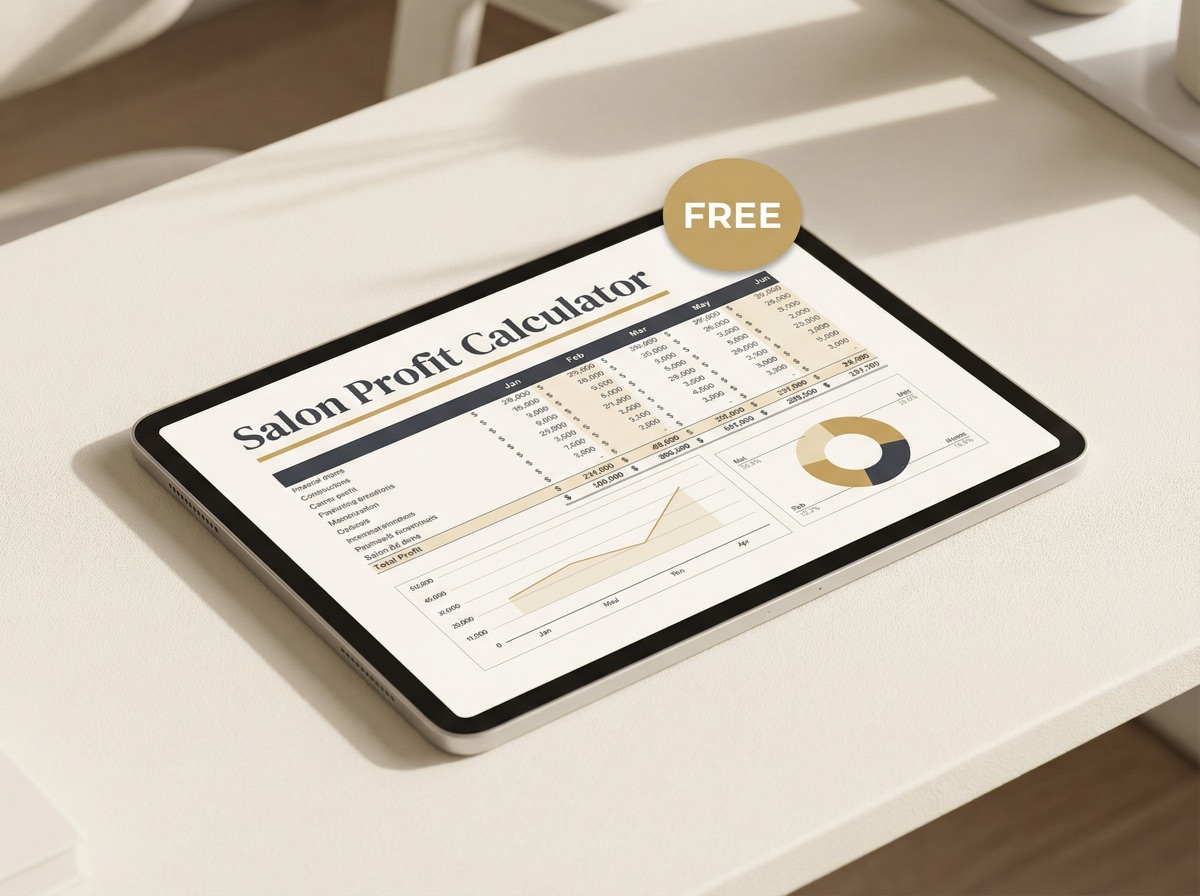
Written by Scott Farmer
Licensed Master Cosmetologist (GA & FL), former Toni & Guy Artistic Director, and founder of Hair Salon Pro. 30+ years behind the chair. 15,000+ clients. Building the business tools cosmetology school never taught. Currently behind the chair at scottfsalon.com in Venice, FL.