Booth Rental Startup Costs: What It Really Takes to Go Independent
 Scott Farmer
·
July 1, 2026
·
10 min read
Scott Farmer
·
July 1, 2026
·
10 min read
Quick Answer: Booth rental startup costs usually run $2,500 to $6,500 for a hairstylist leaving commission. That covers your first month rent plus a deposit ($700 to $2,000), a starter set of tools and back bar product ($800 to $2,000), insurance and licenses ($200 to $500), booking software and payment setup ($50 to $200), and a cash cushion for slow early weeks. Budget high, not low.
TL;DR:
– Most stylists need $2,500 to $6,500 to open their own booth the right way.
– The rent itself is the small part. Deposits, product, tools, and a cash cushion are what add up.
– You now pay for everything the salon used to cover: color, foils, towels, insurance, card fees, retirement.
– Plan for a 1 to 2 month income dip while you rebuild your book on your own terms.
– Run your real numbers in the booth rent vs commission calculator before you give notice.
I have been on both sides of this. I owned JScott Salon and rented chairs to stylists, and I also worked independent renting my own space. So I have signed the leases and I have cashed the deposit checks. The move to booth rental is one of the best money decisions a stylist can make. It is also the one where people undershoot the startup budget and then panic in week three.
Let me walk you through every dollar so you do not.
How much does it cost to start booth renting?
For most hairstylists, the honest all-in number to start renting a booth is $2,500 to $6,500. The spread is wide because it depends on your city, your specialty, and how much you already own.
A blonde specialist in a big city who needs a full color inventory sits at the high end. A precision cutter in a small town who already owns her shears sits at the low end.
Here is the piece nobody tells you at the commission salon. Your paycheck used to be net. The salon skimmed its cut off the top and handed you what was left. As a renter, your money comes in gross, and you pay all the costs yourself, in advance. That flips your cash flow. You spend before you earn.
So the startup number is really two numbers stacked together. The cost to physically open the booth, and the cash cushion to survive until your gross income covers your new monthly bills.
What is the full breakdown of booth rental startup costs?
Here is the real-shaped budget I give stylists who ask me to sanity check their plan. These are typical ranges in 2026, not extremes.
| Startup cost | Low end | High end | Notes |
|---|---|---|---|
| First month booth rent | $400 | $1,200 | Varies wildly by city and salon |
| Security deposit | $300 | $1,200 | Often equal to one month rent |
| Shears, tools, hot tools | $300 | $1,500 | Depends what you already own |
| Back bar and color inventory | $500 | $1,500 | Color, developer, foils, towels |
| Retail starter stock (optional) | $0 | $800 | Only if you plan to sell product |
| Liability + rental insurance | $150 | $400 | Annual, often paid upfront |
| Business license / local permits | $50 | $250 | City and county rules vary |
| Booking software (first months) | $0 | $150 | Many have free tiers to start |
| Card processing setup | $0 | $50 | Reader hardware, if needed |
| Marketing to move your book | $50 | $500 | Cards, signage, small ad spend |
| Cash cushion (1 to 2 months bills) | $700 | $2,000 | The part people skip |
| Total | $2,500 | $9,500 | Most land $3,000 to $6,500 |
The two lines people erase from their own budget are the deposit and the cash cushion. Do not erase them. The deposit is not optional, and the cushion is what keeps you from taking a bad walk-in just to make rent.
What monthly costs replace my commission split?
This is the part that trips up stylists most. At a commission salon, you saw one number leave your check. As a renter, a dozen small costs replace that split, and you handle each one yourself.
Here is what now lands on you every month:
- Booth rent (weekly or monthly, your biggest fixed cost)
- Back bar product you used to grab off the salon shelf for free
- Card processing fees (roughly 2.6 to 3 percent of every card swipe)
- Booking software once you outgrow the free tier
- Your own supplies: towels, capes, foils, cleaning products
- Self-employment taxes (set aside 25 to 30 percent of profit)
- Retirement, because no one is matching a 401k for you now
That last one stings. When I worked independent, the retirement math was the wake-up call. Nobody hands a booth renter a benefits package. You build your own.
A good rule from my JScott Salon days: your booth rent should stay under a healthy slice of your revenue, not eat it. I break that math down in how salon rent compares as a percentage of your revenue, and it is worth reading before you sign anything.
Not sure the numbers even work in your favor yet? Run them both ways in the free booth rent vs commission calculator. It shows your take-home under commission next to your take-home as a renter, side by side, using your real prices.
How much cash cushion do I actually need?
Plan for one to two months of your full monthly bills sitting in the bank before you open. Not your business bills. Your life bills too. Rent at home, groceries, car, all of it.
Here is why. When you leave commission, some clients follow you and some do not. Even the loyal ones take a few weeks to rebook on your new schedule. Your income does not drop to zero, but it dips. I have watched great stylists panic in that dip and make fear decisions, like slashing prices or grabbing every discount client, that hurt them for a year.
The cushion buys you the one thing that matters most in month one: the ability to say no to bad clients and hold your prices.
If most of your book plans to follow you, a one month cushion is fine. If you are starting cold in a new part of town, stretch it to two or three. The move itself has a playbook, and I lay out the client transition step by step in how to transition from commission to booth rental.
How can I lower my booth rental startup costs?
You can trim the startup number without cutting corners on your work. A few moves that actually help:
Negotiate the deposit and first month. Some salon owners will split the deposit over two months or waive part of it for a stylist with a strong book. I did this for renters I trusted. Ask.
Buy back bar in phases. You do not need a full color wall on day one. Stock what you use most this week and build inventory from real bookings, not guesses. I break down smart back bar spending in how to reduce salon back bar costs.
Start on free software tiers. Most booking and payment tools have a free plan. Prove your volume before you pay for the upgrade.
Bring the tools you already own. After a few years behind the chair, you likely own most of your shears and hot tools already. Do not re-buy what is in your kit.
Do not skip insurance. This is the one place I tell people never to trim. If a client gets a chemical burn, one claim can end your business. It is cheap for what it protects. Here is exactly why booth renters need insurance and what kind to get.
One more thing before you sign a lease. Confirm booth rental is even legal where you live, because a handful of states restrict or ban it. Check the list of states that do not allow booth rental first.
Is booth rental worth the startup cost?
For most stylists with a steady book, yes. Here is the plain math.
Say you do $6,000 a month behind the chair. On a 50/50 commission split, you keep $3,000 before tax. On a booth rent of $800 a month, you keep $5,200 before your other costs. Even after you subtract product, fees, and taxes, most renters land well ahead of where the split left them.
The startup cost is a one-time hurdle. The commission split is a cut you pay every single week, forever. That is the trade. A few thousand dollars now to stop giving away half your work for the rest of your career.
I have never met a stylist who ran the real numbers, made the move, and wanted to go back. The startup budget scares people. The math almost never does. If you want the full comparison in one place, my breakdown of salon booth rental vs commission for 2026 walks through both models side by side.
I picked up this discipline about knowing your real numbers back in my Toni and Guy days, where every chair had to justify its cost. It stuck with me through every salon I ran since.
Do this before you give notice: run your exact prices through the free booth rent vs commission calculator so you know your take-home the day you open, not the day you find out the hard way.
And if you want the templates I use with stylists making this jump, the Salon Owner Starter Pack has the budget template, a pricing guide, and price-increase scripts to protect your rates while you rebuild.
Frequently Asked Questions
How much does it cost to start booth renting?
Most hairstylists spend $2,500 to $6,500 to start renting a booth. That includes first month rent, a deposit, tools, back bar product, insurance, licenses, and a one to two month cash cushion. Your city and specialty push you toward the high or low end.
Do I need a deposit to rent a salon booth?
Almost always yes. Most salon owners ask for a security deposit equal to about one month of rent, so plan for $300 to $1,200 on top of your first month. Some owners will split the deposit over two months if you have a strong book, so it is worth asking.
What monthly costs do booth renters have besides rent?
Beyond rent, renters pay for their own back bar product, card processing fees of about 2.6 to 3 percent per swipe, booking software, supplies like towels and foils, self-employment taxes, and their own retirement savings. These replace the single commission cut you used to see at a salon.
How much cash should I save before I start booth renting?
Save one to two months of your full monthly bills, both business and personal, before you open. This cushion covers the income dip while clients rebook on your new schedule and lets you hold your prices instead of taking bad discount work out of fear.
Is booth rental cheaper than commission in the long run?
For most stylists with a steady book, yes. Commission takes a cut of every service forever, while booth rent is a fixed cost you can outgrow. Once your income covers rent and your own supplies, you usually keep far more per client than any commission split allows.
What salon owners ask next
What should my booth rental agreement include?
A solid agreement covers your weekly rent amount, payment due date, access hours, what the salon provides versus what you supply, the notice period to leave, and a clause confirming your independent contractor status. Missing any of those creates problems later. The full checklist is in what to include in a booth rental contract.
How do I figure out what to charge clients once I am renting?
Start with your take-home target and work backwards. The stylist hourly rate calculator takes your income goal, your costs, and your available hours, and tells you exactly what you need to charge per service to hit it. That number becomes your pricing floor.
Is booth rental even legal in my state?
Most states allow it, but a few restrict or regulate it in ways that matter. Booth rental is illegal in some states and requires specific licensing arrangements in others. Before you sign anything, check which states do not allow booth rental so you know the law where you work.
Free Download
Get the Salon Profit Calculator
See exactly where your salon is losing money — in under 5 minutes.
Download Free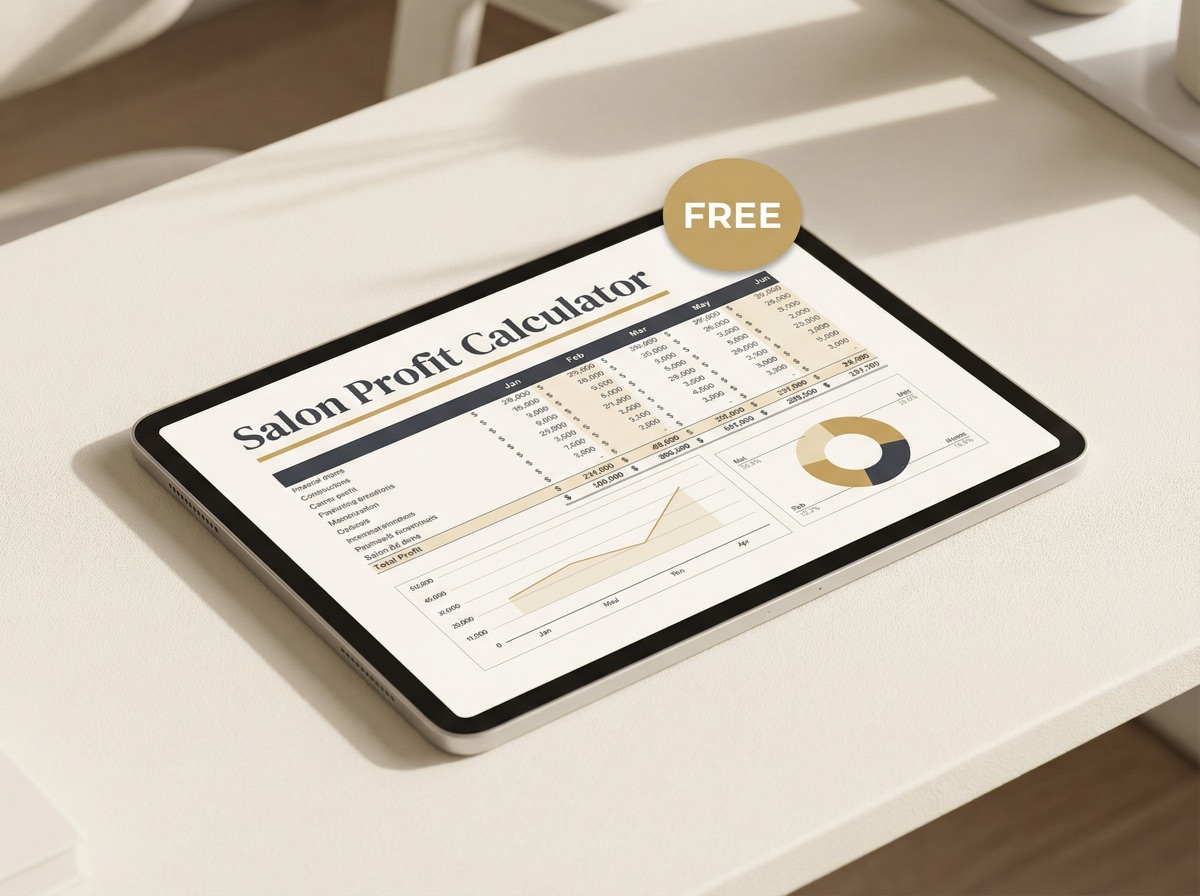
Written by Scott Farmer
Licensed Master Cosmetologist (GA & FL), former Toni & Guy Artistic Director, and founder of Hair Salon Pro. 30+ years behind the chair. 15,000+ clients. Building the business tools cosmetology school never taught. Currently behind the chair at scottfsalon.com in Venice, FL.