How to Rent Out Booths in Your Salon (The Step-by-Step Owner Playbook)
 Scott Farmer
·
July 1, 2026
·
12 min read
Scott Farmer
·
July 1, 2026
·
12 min read
Quick Answer: To rent out booths in your salon, you stop being an employer and become a landlord. You set a flat weekly or monthly chair rent, sign each stylist to a booth rental contract, and hand them control of their own pricing, hours, and clients. The big legal shift: your renters become independent business owners, not W2 staff, so you drop payroll, commission math, and most of the daily supervision. Learning how to rent out booths in your salon is really about swapping variable payroll for predictable rent.
TL;DR
– Renting booths turns you from an employer into a landlord. Steady rent replaces commission payroll.
– The core legal move: your stylists become independent contractors or their own businesses, not employees you control.
– Price each chair on a flat rate. Cover your rent, utilities, and a profit margin, then check it against local rates.
– You give up control over pricing, hours, and product. Do not write a contract that quietly keeps that control, or you break the law.
– Fill chairs by recruiting stylists with their own books, not brand-new grads who need clients handed to them.
I ran the commission-versus-rent decision more than once when I owned JScott Salon. I have also sat on the other side as an independent stylist paying rent every week. So I will walk you through this the way I wish someone had walked me through it, with the money and legal parts in plain language.
Let me be honest about why most owners land here.
You are tired of payroll. Tired of chasing productivity numbers, covering slow weeks out of your own pocket, and managing grown adults like they are teenagers. Renting booths can fix a lot of that. It can also blow up in your face if you do it wrong.
What does it actually mean to rent out booths in your salon?
When you rent out booths, you lease a physical station to a stylist for a set fee. That is it. They pay you rent and run their own little business inside your four walls.
They set their own prices. They buy their own color and product. They keep 100 percent of what they charge clients. They book their own appointments and keep their own money.
You are no longer their boss. You are their landlord.
That single change ripples through everything. No more commission splits. No more payroll taxes on their earnings. No more calling the shots on their schedule. You collect rent, keep the lights on, and maintain the space.
This is the heart of the shift, and where most owners get tripped up. Keep acting like a boss after you switch to rent and you create a legal mess. More on that below.
Commission model vs booth rental model: what changes for you as the owner
Here is the trade in one table. This is the owner’s view, not the stylist’s.
| Factor | Commission model | Booth rental model |
|---|---|---|
| Your income | Variable. Rises and falls with each stylist’s sales | Fixed. Same rent whether they are busy or slow |
| Payroll | You run it. Wages, taxes, commission math | Gone. No payroll on renters |
| Control | High. You set prices, hours, product, service menu | Low. They set their own prices, hours, and product |
| Risk | You carry slow weeks and empty chairs | They carry their own slow weeks. You just need the chair filled |
| Daily management | Heavy. You supervise the floor | Light. You manage the building, not the people |
| Client ownership | Salon owns the book | Stylist owns the book |
| Upside ceiling | Higher per chair when a stylist crushes it | Capped at the rent, no matter how much they earn |
Read that last row twice. Rent is predictable, but it is capped. If you have a superstar pulling 8,000 dollars a month behind a chair, commission can pay you far more than a 250-dollar-a-week rent ever will. A room full of steady mid-level stylists, and rent almost always wins on peace of mind.
Not sure which side you fall on? Run your numbers in the free booth rent vs commission calculator. It shows both models side by side using your real chair count and rates.
How do I convert my salon from commission to booth rental, step by step?
Here is the order I would run it in. Do not skip the legal step. I have watched owners get hit with back taxes over it.
Step 1: Check your state law. Some states restrict or flat-out ban booth rental. Others require the renter to hold a separate establishment license. Before you plan anything, confirm you are even allowed to do this where you operate. Start with our guide on which states don’t allow booth rental.
Step 2: Run the money both ways. Figure out your true cost per chair. Rent, utilities, insurance, front desk, supplies you still provide, and a profit margin on top. That number becomes your floor for chair rent. Compare it against what you make now on commission.
Step 3: Set your chair rent. More on pricing below. Pick a flat weekly or monthly number.
Step 4: Write real contracts. Every renter signs a booth rental agreement that treats them as an independent business. This is the document that keeps you legal. Do not use a downloaded employment form and cross out the word “employee.”
Step 5: Decide who transitions. Not every commission stylist should become a renter. The ones with strong books thrive. The new grads who need clients fed to them usually sink. Be honest with each person.
Step 6: Change your systems. Separate booking if they want it, separate payment collection, and a clear line on what the salon provides versus what they buy. Utilities, wifi, laundry, backbar. Spell it all out.
Step 7: Give notice and set a start date. Switching how someone gets paid is a big deal. Give real notice, put the new terms in writing, and let people decide.
The stylists who leave over this were usually the ones who needed you to carry them anyway. That is a hard truth, but it is a truth.
What is the legal and tax shift from W2 stylists to independent renters?
This is the part that gets owners in trouble, so slow down here.
A commission stylist is usually a W2 employee. You withhold taxes. You pay the employer share of payroll tax. You control their schedule and their prices.
A booth renter is not your employee. They are an independent contractor or their own LLC. You do not withhold their taxes. You do not pay payroll tax on them. And critically, you do not control how they run their business.
That control test is everything. The IRS and most states look at behavior, not what your paperwork says. If you call someone a “renter” but you still set their hours, dictate their prices, require them to use your products, and make them attend your meetings, the government can rule they were an employee the whole time. Then you owe back payroll taxes and penalties.
So when you switch, you have to actually let go. Real renters:
- Set their own prices
- Keep their own hours
- Buy their own product
- Book and keep their own clients
- Get a 1099, not a W2, if they cross the reporting threshold
You will likely collect rent and issue nothing on their service income at all, because you never touched it. Talk to a CPA who knows salons before you finalize this. I mean that. One conversation now saves you a five-figure headache later. Our breakdown of the salon commission structure trap covers why so many owners cling to control they should let go of.
One more thing on insurance. Your renters need their own liability coverage. Do not assume your salon policy covers an independent business operating in your space. Read do booth renters need insurance and require proof before they start.
How do I price a booth so it actually makes money?
Do not pull a number out of thin air. Build it from your costs.
Add up everything one chair costs you per month. Your share of rent, utilities, insurance, front desk if you keep one, cleaning, and any supplies you still hand out. Divide by your number of chairs. That is your break-even per chair.
Now add profit on top. You are running a business, not a charity. A common setup is a flat weekly rate that clears your cost per chair with a healthy margin.
Then sanity-check against your market. Call around. Rents in a small town run very different from a big city. In a lot of markets you see chairs going anywhere from 150 to 400 dollars a week, but yours depends on your rent, your traffic, and how nice your space is.
A quick gut check I use: your total chair rent income should land in a sensible slice of the salon’s old revenue, not eat the stylist alive. If rent is so high nobody can make a living, your chairs sit empty. Empty chairs pay you nothing. Our guide on salon rent as a percentage of revenue helps you find that balance.
Run both scenarios before you commit. The booth rent vs commission calculator will show you the monthly income difference in about two minutes.
How do I fill the booths once I switch?
A rented chair only pays you if someone is sitting in it. Filling booths is a different game than hiring employees.
You are not looking for people who need clients. You are looking for stylists who already have a book and want a professional home. Independent stylists, folks leaving a bad commission gig, and renters unhappy at their current suite are your targets.
Sell the freedom. Renters want to keep their own money, set their own prices, and run their own show. That is your pitch. Point to your location, your foot traffic, your parking, your vibe.
Word of mouth is your best tool. Happy renters tell other stylists. I filled chairs at JScott Salon mostly through the network the current team already had. Back when I was training artists at Toni and Guy, the strong stylists always knew other strong stylists, and that referral chain is gold when you are recruiting renters.
Keep the space nice, keep the rent fair, and treat your renters like the business owners they are. Good renters stay for years. That stability is worth more than squeezing an extra 25 dollars a week.
When you do bring someone on, get the paperwork right the first time. Our checklist on what to include in a salon booth rental contract walks through every clause you need.
Is booth rental right for every salon?
No. And I would rather tell you that up front than sell you a dream.
Rent works best when you have stylists with established books, a decent location, and an owner who is genuinely tired of managing people. It gives you predictable income and a lighter load.
Rent works poorly when your team is mostly new stylists who need clients handed to them, when your state restricts it, or when you have one superstar whose commission earnings dwarf any rent you could charge.
There is also a middle path. Some owners run a hybrid, keeping a couple of commission chairs for developing talent while renting the rest. That is fine, as long as you keep the two groups legally separate and do not blur the lines.
The right answer is your answer, based on your numbers and your goals. Which brings me to the tool I keep pointing you to, because it settles the argument fast.
Frequently Asked Questions
Is it legal to rent out booths in my salon?
In most states, yes, but a handful restrict or ban it, and some require the renter to hold a separate establishment license. Check your state cosmetology board and confirm the rules before you convert. The legal risk is not the rental itself, it is treating a renter like an employee after you switch.
Do booth renters pay me a percentage or a flat fee?
Flat fee. That is the whole point of booth rental. You charge a set weekly or monthly rent no matter how much the stylist earns. If you take a percentage of their service revenue, you are drifting back toward commission and muddying the independent contractor line.
Do I still pay payroll taxes on booth renters?
No. Booth renters are independent businesses, not employees, so you do not withhold their taxes or pay employer payroll tax on them. You collect rent. Just make sure their independence is real, because misclassifying an employee as a renter can trigger back taxes and penalties.
How much should I charge for a booth?
Build it from your cost per chair, then add a profit margin, then check it against local rates. Many markets land between 150 and 400 dollars a week, but your right number depends on your rent, your traffic, and your space. Price it so a stylist can still earn a good living, or the chair sits empty.
What happens to my current commission stylists?
You give them the choice to become renters, and not all of them will. Stylists with strong books usually thrive under rent. Newer stylists who rely on you to feed them clients often struggle. Give real notice, put the new terms in writing, and be honest with each person about whether renting fits them.
Want to see the exact dollar difference for your salon? Run the free booth rent vs commission calculator. Plug in your chairs and rates and it shows you both models side by side.
And if you are ready to make the move, the Salon Owner Starter Pack gives you the budget template, pricing guide, and price-increase scripts to run the numbers and set your rates with confidence.
What salon owners ask next
How do I know if I am pricing my booths right?
The test is whether booths fill and stay filled. If you have a waitlist, your rent is too low. If booths sit empty for more than a week or two, you are likely priced above what your market and foot traffic can justify. The full pricing framework with market ranges is in how much to charge for booth rent.
What should go in my booth rental agreement?
Every agreement needs the rent amount and due date, access hours, what you provide versus what the renter supplies, the notice period, and a clause confirming independent contractor status. A vague agreement is the number one reason booth rental arrangements blow up. The full list is in what to include in a booth rental contract.
Is a commission structure ever better than booth rental for my salon?
It depends on your market, your team’s experience level, and how much you want to manage versus collect rent. Commission gives you more control and a percentage of every ticket. Booth rental gives you predictable income and fewer HR headaches. The full comparison of both models is in booth rental vs commission 2026.
Free Download
Get the Salon Profit Calculator
See exactly where your salon is losing money — in under 5 minutes.
Download Free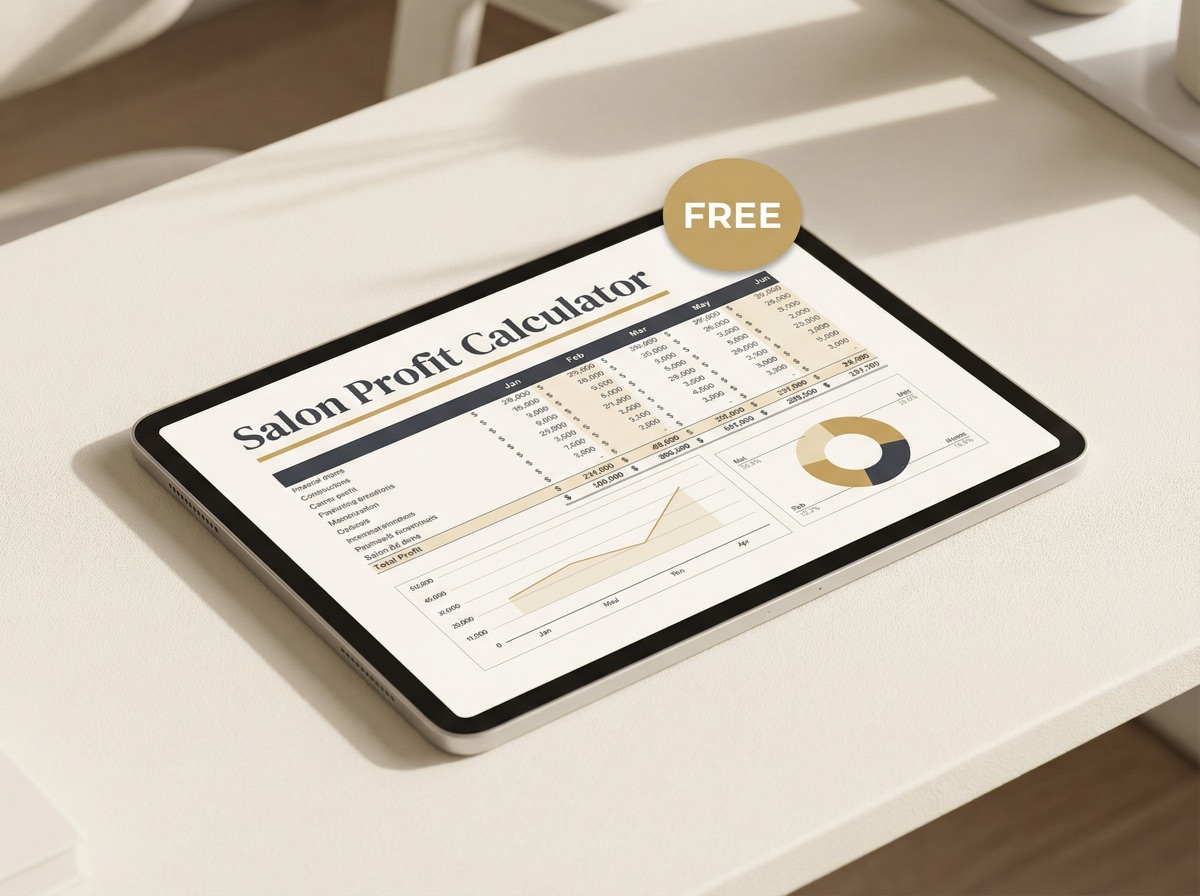
Written by Scott Farmer
Licensed Master Cosmetologist (GA & FL), former Toni & Guy Artistic Director, and founder of Hair Salon Pro. 30+ years behind the chair. 15,000+ clients. Building the business tools cosmetology school never taught. Currently behind the chair at scottfsalon.com in Venice, FL.