How to Manage Salon Employees: Why I Stopped Being Their Friend (and My Salon Got Better)
 Scott Farmer
·
June 13, 2026
·
13 min read
Scott Farmer
·
June 13, 2026
·
13 min read
Quick Answer: How do I manage salon employees without becoming their friend?
Replace friendship-based leadership with six systems: an employee handbook, a 15-minute Monday huddle, performance benchmarks like a 75%+ booking rate and 65%+ retention, a 48-hour feedback rule, clear work-friendship boundaries, and an accountability calendar with 30/60/90-day milestones. After I put these in place at my own salon, revenue rose $38,000 in one year with the same team.
TL;DR

- The Bureau of Labor Statistics reports over 670,000 cosmetologists (SOC 39-5012) working in the United States, and the vast majority who become salon owners have zero formal management training. Friendship-based management costs a typical 4-chair salon $51,900 per year in late starts, no-shows, performance gaps, and unresolved client complaints.
- This guide covers 6 systems that replace friendship with leadership: employee handbook, 15-minute Monday huddle, performance benchmarks (75%+ booking rate, 65%+ retention, retail attachment), 48-hour feedback rule, work-friendship boundary protocol, and accountability calendar with 30/60/90-day milestones.
- Scott Farmer, Licensed Master Cosmetologist with over 30 years behind the chair and more than 15,000 clients served, lost $4,200 in a single month to one employee’s no-call-no-shows at JScott Salon in Lawrenceville, Georgia. After implementing these 6 systems, salon revenue increased $38,000 in the first year with the same team, same chairs, and same zip code.
- The Professional Beauty Association reports that salons with documented performance standards retain staff 40% longer than those without. Clear systems reduce average late arrivals from 9 per month to 1 and raise team booking rate from 68% to 81% within 60 days.
- Start by running your numbers through the free Salon Profit Calculator to see how much poor management is costing your chair revenue. Run the free 3-Number Profit Audit to start applying the Profit-First System that turns these management fixes into an extra $2,000 per month behind the chair.
Last updated: June 2026
My name is Scott Farmer
My name is Scott Farmer. Additionally, i am a Licensed Master Cosmetologist with over 30 years behind the chair and more than 15,000 clients served. I built JScott Salon in Lawrenceville, Georgia and now run my suite in Venice, Florida.
If you are trying to figure out how to manage salon employees without becoming the bad guy, keep reading. However, i lost $4,200 in a single month because I could not bring myself to write up my best colorist.
She called out three Saturdays in a row. As a result, each Saturday she was booked with $1,400 in appointments. Some rebooked. Most did not come back.
I knew on Saturday number two that I needed to have the conversation. But she was my friend. In practice, we grabbed drinks on Tuesdays. I knew her kids’ names. I thought the friendship meant she would not take advantage of the flexibility I gave her.
That assumption cost me $4,200 in lost revenue, two clients who never returned, and three months of tension that poisoned the culture in the entire salon. When I finally sat her down for a formal write-up, she quit. That said, said I “changed.”
She was right. I did change. And my salon got better within 60 days of that change.
This article is the framework I built after making every leadership mistake you can make behind the chair. According to the Bureau of Labor Statistics, there are over 670,000 cosmetologists working in the United States, and the vast majority who become salon owners have zero formal management training.
Why Do Most Salon Owners Fail at Managing Employees?
Cosmetology school teaches you color theory, cutting techniques, and chemical safety. In fact, nobody spends a single hour on how to manage salon employees. So we default to what we know: friendship.
Here is what the friend-boss dynamic looks like in a salon:
- You let a stylist clock in 15 minutes late three times before saying anything
- You absorb a no-show day yourself instead of enforcing the attendance policy you never wrote
- You avoid giving feedback on a bad client interaction because you do not want to create “drama”
- You pay the same commission rate to someone performing at 60% of their potential because raising expectations feels confrontational
- You work 50 hours behind the chair PLUS manage the schedule, inventory, and marketing because asking more from your team feels unfair (this is the fast track to salon owner burnout)
I did every single one of these at my own salon. Every one.
The reason salon owners default to friendship over leadership is simple: we work in the same room. Overall, a restaurant manager can walk back to the office. A corporate boss can close their door. You are three feet from your employees for 8 to 10 hours a day, five days a week. Conflict feels personal because everything is personal in that environment.
But here is what I learned after 30 years: the salon runs worse when you prioritize being liked over being clear.
How Much Does Being the “Cool Boss” Cost Your Salon?
Let me show you what friendship-management costs a typical 4-chair salon owner in a year.
| Problem | Monthly Cost | Annual Cost |
|---|---|---|
| Late starts (15 min late, 3 stylists, 3x/week at $85/hr chair revenue) | $765 | $9,180 |
| No-call-no-shows (1 per month, average $1,400 booked) | $1,400 | $16,800 |
| Unaddressed performance gaps (1 stylist at 60% vs 85% booking rate) | $1,700 | $20,400 |
| Client complaints handled reactively (2 per month, 50% leave) | $460 | $5,520 |
| Total | $4,325 | $51,900 |
That is $51,900 in revenue you are leaving on the table because you do not have clear expectations, documented policies, and the confidence to enforce them.
I am not guessing. Because of this, i tracked these numbers at my own salon the year I finally started measuring. The Professional Beauty Association reports that salons with documented performance standards retain staff 40% longer than those without. The first year I shifted from friendship to leadership, revenue went up $38,000 with the same team. Same stylists. Same chairs. Same zip code. The only thing that changed was me.
What Are the 6 Systems That Replace Friendship With Leadership?
Managing does not mean being cold, mean, or corporate. Ultimately, it means being clear. Every system below exists so that your employees never have to guess what you expect from them.
1. Write the Employee Handbook Before You Need It
The worst time to set expectations is when someone violates them. If you do not have an employee handbook, you will always feel like the bad guy when you enforce a rule you never communicated.
Your salon employee handbook needs at minimum:
- Start time policy (what counts as late, consequences at each stage)
- Attendance and no-show policy (how many absences before a write-up, doctor’s note requirements)
- Client interaction standards (greeting script, consultation process, rebooking expectation)
- Dress code and station cleanliness
- Phone and social media policy during work hours
- Commission or pay structure with clear performance benchmarks
- Termination process (verbal warning, written warning, final warning, termination)
I did not have any of this at my own salon until year four. Instead, the first week after I handed out the handbook, two stylists pushed back. One said it felt “corporate.” She quit three months later. Her replacement outperformed her by 40% in the first 90 days because that replacement knew exactly what was expected from day one. If you want to see what clear salon standard operating procedures look like in practice, I have a full breakdown.
2. Run a 15-Minute Monday Huddle
Every Monday morning at my salon, we stood in a circle for 15 minutes before the first client walked in. Of course, i covered three things:
- Numbers from last week (total salon revenue, booking rate, retail percentage)
- One client experience win worth celebrating
- One area of focus for the week (punctuality, rebooking, upselling, whatever needed work)
This huddle replaced 80% of the awkward one-on-one conversations I used to dread. When you share numbers with the whole team, accountability becomes a group standard, not a personal attack. Even so, the stylist who booked at 62% last week sees that everyone else is at 80%. Nobody has to say her name.
The huddle cost me 15 minutes a week and eliminated about $18,000 in annual performance drag because problems never festered longer than 5 business days.
3. Set Performance Benchmarks (Not Goals, Benchmarks)
Goals are wishes. Still, benchmarks are minimum standards. There is a massive difference.
Here are the benchmarks I expect from every employed stylist in a salon:
| Metric | Benchmark | How to Track |
|---|---|---|
| Booking rate (hours booked / hours available) | 75% minimum | Salon software weekly report |
| Client retention rate | 65% minimum | 90-day rebook percentage |
| Average ticket | Within 15% of salon average | Monthly service revenue / total services |
| Retail attachment rate | 1 retail item per 4 service clients | POS report |
| Punctuality | Zero unexcused lates per pay period | Time clock or log |
When I introduced these at my salon, I did not frame them as pressure. Beyond that, i framed them as protection. “These benchmarks exist so I never have to guess whether you are doing your job. If you hit these numbers, I will never micromanage you. You will have total autonomy at your station.” I track these with a simple weekly pull from my salon software. If you do not have a system for this yet, the Salon Profit Calculator shows you which numbers matter most. For a deeper dive into salon KPIs and what to track, I wrote a full guide.
That framing changed everything. To be clear, top performers loved it because it meant I would finally deal with the underperformers dragging the team down. Underperformers either rose to the standard or self-selected out within 90 days.
4. Give Feedback Within 48 Hours
When I worked as an Artistic Director at Toni and Guy, one thing they drilled into every leader was this: feedback expires. If you see a problem and wait two weeks to address it, you have already communicated that the problem is acceptable.
My rule at my own salon became 48 hours. If I see something that needs correction, I address it before the end of the next business day. Meanwhile, not in front of clients. Not in a group text. A 3-minute private conversation at the station before the salon opens or after the last client leaves.
The script is simple:
“Hey [name], I noticed [specific behavior]. In contrast, here is what I need instead: [specific expectation]. Does that make sense? Cool, thank you.”
No long speeches. With that in mind, no “we need to talk.” No building a case over six weeks until you explode. One observation, one correction, done. Move on.
Stylists on my team told me they preferred this to the old way. Furthermore, the old way was me acting normal for weeks and then suddenly being frustrated. They could never tell where they stood. The 48-hour rule made me predictable, and predictable is what employees want from a boss.
5. Separate Social Time from Work Time
You can like your employees. In other words, you can enjoy working with them. But you need a boundary between work and friendship, and that boundary is the salon floor.
My rules after I rebuilt the leadership structure at my salon:
- I stopped attending after-work drinks with the team (once a month max for a planned team dinner)
- I stopped texting employees about non-work topics during business hours
- I stopped sharing my personal financial stress with the team
- I started saying “I will think about it” instead of “yes” to every schedule change request
This was the hardest shift. At the same time, it felt lonely for the first two months. But the respect I gained from the team was immediate. When you have clear boundaries, employees feel safe because they know the rules will not change based on who you hung out with last weekend.
I still cared about their lives. Notably, i asked about their kids, remembered their birthdays, and paid for continuing education. The difference was: I stopped asking them to be my emotional support system, and they stopped treating my flexibility as an entitlement.
6. Build an Accountability Calendar
Do not try to remember when someone’s last write-up was or when their 90-day review is due. Importantly, put it on a calendar. I use a simple system:
- Day 1: Signed offer letter + handbook acknowledgment
- Day 30: Check-in conversation (how are they settling in, any questions)
- Day 60: First performance review against benchmarks
- Day 90: Decision point (full onboarding complete, continue or part ways)
- Quarterly: 20-minute performance review with benchmark data
- Annually: Full review + compensation discussion
When I did not have this calendar, reviews happened when I remembered. Which was never. Additionally, compensation conversations happened when a stylist threatened to leave. Which meant I always negotiated from a position of fear.
The calendar makes you proactive instead of reactive. It costs nothing. However, it eliminates 90% of the “I never knew where I stood” complaints that make good stylists leave bad salons.
What Happens When You Lead Instead of Friend?
Within 60 days of implementing these systems at my own salon:
- Average booking rate went from 68% to 81% across the team
- Late arrivals dropped from 9 per month to 1 per month
- I personally worked 8 fewer hours per week because I stopped covering for absent stylists
- Two underperformers left (one quit, one was termed after three documented warnings)
- The remaining three stylists told me the environment felt “calmer”
Calmer. Not stricter. Not scarier. Calmer.
Because clarity creates calm. When everyone knows the rules, nobody walks on eggshells. As a result, nobody wonders if they are about to get blindsided. Nobody resents the person getting special treatment. The rules are the rules, and they apply to everyone the same way.
Revenue at my salon increased $38,000 that year. In practice, i did not add a single new service, raise a single price, or run a single ad. I just stopped managing by friendship and started managing by systems. If you want to understand how your salon commission structure might be holding your team back, I break down the math in a separate post.
What Are the Most Common Salon Employee Management Mistakes?
Promoting your best stylist to manager without training
Your best colorist is not automatically your best leader. I made this mistake. Twice. If you are going to promote someone to a management role, invest in their leadership development first. That said, a terrible manager will cost you more than a vacant management position. If you are still figuring out when to hire your first salon employee, get the timing right before you worry about management training.
Writing policies after a violation
Every policy you create in the heat of the moment feels like a personal attack to the person who triggered it. Build your systems before you need them, not after. If you are reading this and you have zero documented policies, build them this week while things are calm.
Giving everyone the same feedback
Your top performer needs recognition and growth opportunities. Your middle performer needs clear benchmarks and coaching. Your underperformer needs documentation and a deadline. Treating all three the same is lazy management disguised as fairness.
Frequently Asked Questions
How do you handle a stylist who pushes back on new policies?
Listen to their concern. Ask if they have a better idea that achieves the same outcome. If they do, consider it. If they do not, enforce the policy. Document the conversation. One push-back is normal. Repeated refusal to follow documented policy is insubordination, and you should follow your termination process.
Should salon owners be friends with their employees?
You can be friendly. You cannot be best friends. The moment your friendship prevents you from giving honest feedback, enforcing a policy, or terminating someone who needs to go, the friendship is costing you money and poisoning your culture. My standard: I am warm, I am fair, I celebrate wins, and I do not attend Friday drinks.
How many warnings should a salon employee get before being fired?
I use a three-strike system for most violations: verbal warning (documented), written warning (signed), final written warning with termination date if not corrected. Gross violations (theft, harassment, intoxication, client safety issues) skip the progression and go to immediate termination. Always document everything in writing.
What KPIs should salon owners track for employee performance?
At minimum: booking rate (target 75%+), client retention (target 65%+), average ticket relative to salon average, retail attachment rate, and punctuality. Run these numbers weekly and review them monthly. If you do not track performance, you cannot manage performance. A free tool to start tracking: the Hair Salon Pro Profit Calculator.
How do you give feedback without creating drama?
Private, specific, and fast. Never in front of clients. Never in a group setting unless it is a group issue. Use the formula: “I noticed [specific behavior]. Here is what I need instead: [specific expectation].” No emotion, no history, no character judgments. One issue at a time. Then move on like it never happened.
What Should You Do Next to Manage Your Salon Team Better?
If you are reading this and recognizing yourself in my early mistakes, you are not a bad owner. You are a talented stylist who was never taught how to lead. Nobody is.
The systems in this article are a starting point. Start by running your numbers through the Salon Profit Calculator to see exactly how much poor management is costing your chair revenue right now.
Run the free 3-Number Profit Audit, built
Run the free 3-Number Profit Audit, built on the Profit-First System I developed over 30 years behind the chair. Inside HSP Pro, you get employee handbook templates, performance review frameworks, the exact scripts I use for difficult conversations, and weekly group coaching where we troubleshoot real team situations together.
You do not have to figure this out alone. And you do not have to keep losing money to a problem that has a system-level solution.
Hiring and Retaining Staff Guides
Free Download
Get the Salon Profit Calculator
See exactly where your salon is losing money — in under 5 minutes.
Download Free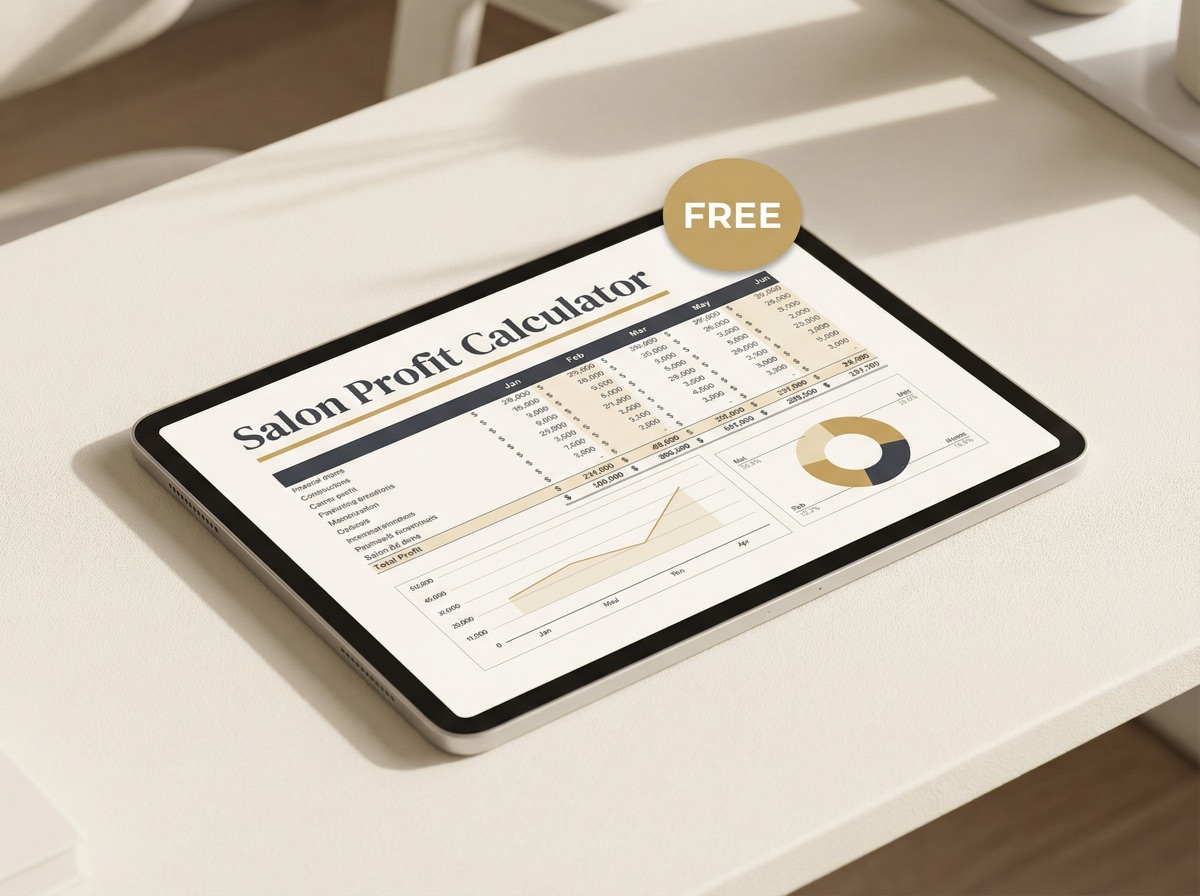
Written by Scott Farmer
Licensed Master Cosmetologist (GA & FL), former Toni & Guy Artistic Director, and founder of Hair Salon Pro. 30+ years behind the chair. 15,000+ clients. Building the business tools cosmetology school never taught. Currently behind the chair at scottfsalon.com in Venice, FL.