Salon Employee Handbook: What to Include and Why It Protects You
 Scott Farmer
·
July 1, 2026
·
10 min read
Scott Farmer
·
July 1, 2026
·
10 min read
The first time I fired someone at JScott Salon, I did everything by feel. No written warning. No policy on paper. Just me, frustrated, telling a stylist it wasn’t working out.
Two weeks later I got a letter from her lawyer.
I won that one, but only because a few clients backed me up. It should never have been that close. The whole thing came down to a document I didn’t have.
That document is a salon employee handbook. If you have a team and you don’t have one, you are running your business on hope.
Quick Answer: A salon employee handbook is a written set of policies and procedures every employee reads and signs. It should cover attendance, dress code, client and no-show rules, social media, back bar use, pay and tips, discipline, and termination. It protects the owner by turning “you knew the rule” into a signed fact, which is your best defense in any dispute or firing.
Why Does a Salon Need an Employee Handbook at All?

Because “everybody knows the rules” is not a defense.
When I worked independent as Scott Farmer Hair Stylist, I only had to manage myself. Easy. The moment you hire your first employee, you take on a whole new job: setting expectations and enforcing them fairly. A handbook is how you do both without playing favorites.
Here is what a good handbook actually does for you.
It sets one standard for everyone. No more “well, she gets to leave early.” The rule is written down and it applies to the whole floor.
It protects you legally. If a fired stylist claims she never knew showing up late three times was a problem, you pull the signed page where she agreed to the attendance policy. Case closed, most of the time.
This saves you from repeating yourself. New hire questions like “when do I get paid” and “can I take walk-ins” are answered on paper, not by you every single week.
It makes you look like a real business. Stylists want to work somewhere organized. A handbook signals you run a tight, fair shop. That matters when you are trying to keep good stylists from leaving.
One more thing. A handbook only protects you if you actually follow it. If your policy says three late arrivals gets a written warning, you write the warning every time. Skip it once and you’ve handed the next lawyer an opening.
What Are the Essential Sections a Salon Handbook Must Have?
This is the core of the whole document. Miss one of these and you have a gap that will cost you later.
Here are the sections I tell every owner to include, no exceptions.
Attendance and scheduling. When shifts start. How to request time off. What happens when someone is late or no-shows. Salon time is money. A stylist who strolls in 20 minutes late pushes back every client behind them.
Dress code and personal presentation. You are selling beauty. Your team is the walking billboard. Spell out what “professional” means so you never have to have the awkward “that outfit isn’t working” talk on the fly.
Client and no-show policy. Who owns the client. How walk-ins get assigned. What a stylist does when a client no-shows. Whether stylists can give out personal numbers. This section quietly prevents your biggest fights.
Social media policy. Can stylists post client photos? Do they need permission? Can they promote a side booth on their personal page? Get this in writing before it becomes a problem, not after.
Product and back bar use. Color, tools, retail. Who pays for waste. Whether personal use of professional product is allowed. Back bar theft and waste is a silent profit leak in a lot of salons.
Pay, commission, and tips. How they get paid, how often, and how tips are handled. If you run commission, the split lives here or references your salon commission structure. Vague pay language is where wage claims are born.
Discipline and corrective action. The step-by-step for when someone breaks a rule. Verbal warning, written warning, then termination. This is your paper trail.
Termination. What gets someone fired on the spot versus a slow burn. Final paycheck timing. Return of keys and product. What happens to their book.
Cover these eight and you have a handbook that actually holds up.
How Does Each Section Protect Me as the Owner?
Every section does double duty. It runs the salon and it covers your back. Here is the map.
| Handbook section | What it must cover | Why it protects you |
|---|---|---|
| Attendance | Shift times, tardiness rule, time-off requests, no-show consequence | Turns “she was always late” into a documented pattern before you fire |
| Dress code | Clear standard for professional appearance and grooming | Removes the “that’s just your opinion” argument from any conversation |
| Client and no-show | Client ownership, walk-in assignment, no-show handling | Heads off client-poaching fights and unfair-treatment claims |
| Social media | Photo consent, brand rules, side-hustle promotion limits | Protects client privacy and stops stylists marketing away from you |
| Product and back bar | Usage rules, personal-use policy, waste responsibility | Cuts theft and waste; gives grounds to act when product walks out |
| Pay and tips | Pay schedule, commission split, tip handling | Your defense against a wage dispute or unpaid-tip claim |
| Discipline | Warning steps and documentation | Builds the paper trail that makes a firing defensible |
| Termination | Fireable offenses, final pay, return of property | Keeps a firing clean, legal, and hard to challenge |
Read that table twice. Every row is a fire you are preventing before it starts.
There is a bigger point underneath all of this. Whether your team is made up of W-2 employees or independent renters changes what you can even put in a handbook. Employees follow your rules. Renters run their own business under your roof. If you are fuzzy on which is which, sort out employee versus independent contractor first, because a handbook that treats a renter like an employee can blow up your worker classification.
Getting these policies written the right way is exactly the kind of grind most owners keep putting off. The $17 Salon Owner Starter Pack gives you the budget template, pricing guide, and script framework so the money and policy side of your salon stops living in your head. Grab it here: https://hairsalonpro.systeme.io/c5047b9c.
How Do I Actually Build a Salon Employee Handbook?
You don’t write it from scratch. You start from a frame and fill it in with your salon’s real rules.
Here is the order I’d do it in.
Start with a template. A salon employee handbook template gives you the section headings so you’re not staring at a blank page. You fill in your specifics. Your hours, your split, your dress standard.
Write your policies and procedures in plain language. Eighth-grade reading level. No legal fog. Your stylists have to understand it or it doesn’t work. Short sentences beat lawyer sentences here.
Be specific. “Be on time” is weak. “Clock in by the start of your first booked appointment, and three late clock-ins in a rolling 30 days triggers a written warning” is a rule you can actually enforce.
Add a signature page. This is the whole game. One page that says “I have read and understood these policies.” Every employee signs it. You keep it in their file. No signature, no protection.
Have an attorney look it over. This is the one place I tell owners to spend a little money. A local employment attorney reviewing your handbook for one hour is cheap insurance. State laws on final pay, breaks, and tip handling vary, and you do not want to guess.
Roll it out to the whole team at once. Sit everyone down, walk through it, answer questions, collect signatures the same day. Don’t email it and hope.
The whole thing is a weekend project, not a month. Most owners overthink it and end up with nothing. Something signed beats something perfect that lives in your head.
For the day-to-day of leading the team once the handbook is signed, the managing salon employees guide covers the rest.
What Mistakes Do Salon Owners Make With Handbooks?
I have seen the same few mistakes over and over, in my own salons and in the ones I’ve coached.
The biggest one is not having a handbook at all. If that’s you, everything above fixes it.
Second is having one but never enforcing it. A handbook you ignore is worse than none, because it proves you knew the right process and skipped it.
Third is writing it once and never touching it again. Your pricing changes. Your policies change. State law changes. Review it once a year. I picked up that discipline of constant refinement back in my Toni and Guy days, where the standard was reviewed and drilled until it was second nature. Same idea, smaller scale.
Fourth is copying a generic corporate handbook off the internet. A salon runs nothing like a call center. Back bar, tips, client books, walk-ins. None of that lives in a generic template. Use one built for salons.
Fifth is skipping the non-compete and client-list conversation. If you want to stop a departing stylist from walking your whole book out the door, that belongs in your paperwork. Understand what a salon non-compete agreement can and can’t do before you rely on one, because the rules changed and a lot of old templates are worthless now.
Avoid those five and you’re ahead of most salon owners in your city.
Frequently Asked Questions
Is a salon employee handbook legally required?
No state legally requires you to have one. But without it, you lose your best evidence in wrongful termination and wage disputes. It is optional the way a smoke detector is optional. Nobody makes you install one until the fire starts.
Do independent contractors and booth renters follow the handbook?
No, and this is critical. A handbook is for W-2 employees. If you make a booth renter follow employee rules, you risk having them reclassified as an employee, which triggers back taxes and penalties. Renters get a separate lease agreement, not a handbook.
How long should a salon employee handbook be?
Long enough to cover the eight core sections and short enough that people actually read it. For most small salons that is ten to twenty pages. If it’s fifty pages, nobody reads it and it doesn’t protect you.
Should a lawyer review my handbook?
Yes, at least once. A local employment attorney reviewing your handbook for an hour is inexpensive protection. State rules on final pay, meal breaks, and tip handling vary enough that guessing is a real risk.
How often should I update the handbook?
Once a year at minimum, plus any time your pay structure, policies, or state employment law changes. When you update it, have every employee re-sign the acknowledgment page so your paper trail stays current.
Your Next Move
A handbook is one of those things that costs you nothing until the day it saves you thousands. I learned that the hard way with a lawyer’s letter I never should have gotten.
Build yours this weekend. Template, your real rules, a signature page, one lawyer review. Done.
If you want the money and policy foundation to go with it, the $17 Salon Owner Starter Pack gives you the templates and scripts to run the business side of your salon without reinventing it: https://hairsalonpro.systeme.io/c5047b9c.
And when you’re ready to run your whole team like a real operation, with the systems, scripts, and coaching that get you there faster, HSP Pro is where salon owners go to stop guessing.
What salon owners ask next
What interview questions help me find stylists who will actually follow the handbook?
Ask how they handled a policy conflict at their last salon and what they did when a coworker broke a rule. How they describe past workplaces tells you whether they respect structure or fight it. The full question set is in hairstylist interview questions for salon owners.
How do I write a pay plan stylists trust and understand?
Write it so a stylist can calculate their own check without asking you. The split percentage, how it steps up with volume, and how bonuses are calculated all need to be in plain language. The math behind a fair split is in salon commission split calculator.
My stylists keep leaving despite having a handbook. What am I missing?
A handbook sets the rules but does not make people want to stay. Retention comes from feeling seen, having a clear growth path, and trusting the pay plan. The early warning signs and the weekly systems that stop exits before they happen are in how to keep stylists from leaving your salon.
Free Download
Get the Salon Profit Calculator
See exactly where your salon is losing money — in under 5 minutes.
Download Free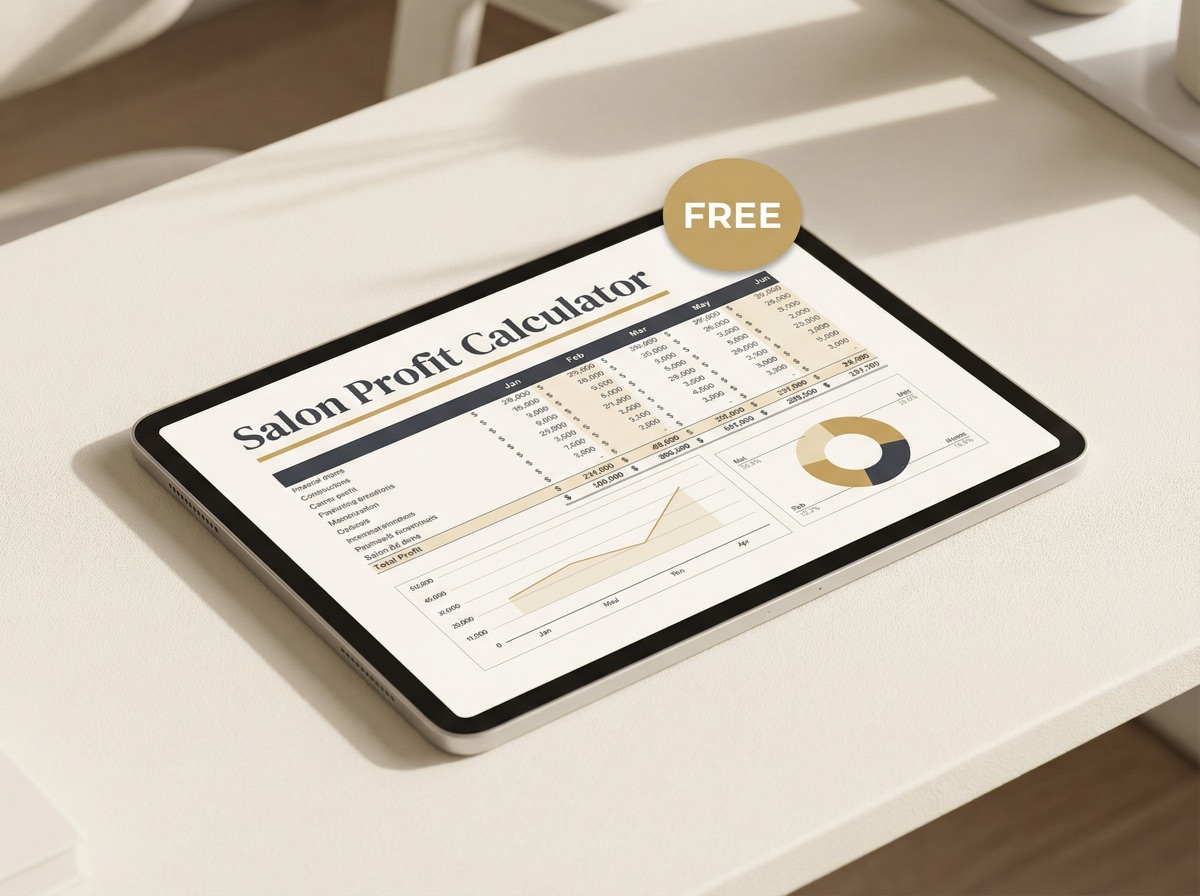
Written by Scott Farmer
Licensed Master Cosmetologist (GA & FL), former Toni & Guy Artistic Director, and founder of Hair Salon Pro. 30+ years behind the chair. 15,000+ clients. Building the business tools cosmetology school never taught. Currently behind the chair at scottfsalon.com in Venice, FL.