How to Transition From Commission to Booth Rental (Without Losing Clients or Income)
 Scott Farmer
·
July 1, 2026
·
11 min read
Scott Farmer
·
July 1, 2026
·
11 min read
Quick Answer: To transition from commission to booth rental, give proper written notice, confirm your state allows booth rental, line up a booth with a clear written agreement, and quietly prepare your client list, your pricing, your booking system, and your insurance before your last commission day. Most stylists who plan the move over 60 to 90 days keep 80% or more of their clients and take home more money per head almost immediately, because they stop giving 40% to 60% of every ticket to the house. The switch is less about courage and more about math and paperwork.
TL;DR:
– Booth rental means you pay a fixed weekly or monthly rent and keep 100% of your service and retail money
– Commission means the salon keeps a cut of every ticket, usually 40% to 60%, in exchange for running the business
– The transition works best over 60 to 90 days, not overnight
– You need a written booth rental agreement, your own booking system, your own insurance, and a plan to bring your clients with you
– Run your real numbers before you quit, because rent that looks cheap can be expensive if your book is thin
Picture the Friday afternoon I finally did the math on my own paycheck. I was booked solid, turning away new clients, and still bringing home less than the stylist two chairs down who had left for a rented booth six months earlier. Same skill. Same hours. Very different take-home.
That is the moment most stylists start asking the real question. Not “should I leave commission,” but “how do I actually make the jump without blowing up my income or losing the clients I spent years building.”
I have lived both sides of this. I started behind the chair inside other people’s salons, opened JScott Salon and collected booth rent as an owner, and later worked independent. Here is the honest playbook.
Is Booth Rental Actually Worth It for You?
Before you give notice, run the numbers. Booth rental only pays off when your book is full enough that a fixed rent costs you less than the commission cut you hand over now.
Here is the simple version. On commission, if the salon takes 50% and you do $6,000 in services a month, you keep $3,000 and the house keeps $3,000. On booth rental, if your rent is $900 a month, you keep $5,100 on that same $6,000. That is a $2,100 swing every single month for the same work.
But flip it. If you only do $2,000 a month in services, that same $900 rent eats 45% of your revenue before you buy a single bottle of color. Now booth rental looks a lot less friendly.
The break-even point is the whole game. A useful rule of thumb: your rent should sit under 20% to 25% of the revenue you can realistically produce. We break that ratio down in what percentage of revenue should salon rent be, and it is the first check I want you to run.
Do not guess this. Plug your actual weekly service numbers into our free booth rent vs commission calculator and see your take-home both ways, side by side, before you decide anything. If the numbers say stay on commission for now, that is a win too. You just saved yourself from an expensive mistake.
For a deeper breakdown of both models, booth rental vs commission in 2026 walks through the trade-offs.
What Do You Need Before You Make the Switch?
Booth rental turns you from an employee into a business owner overnight. That sounds dramatic. It is. The salon used to handle your booking, your supplies, your card processing, your insurance, and your no-show headaches. Now you do.
Get these lined up before your last commission day:
| What you need | Why it matters |
|---|---|
| A written booth rental agreement | Protects your rent, your hours, your access, and your exit |
| Confirmation your state allows booth rental | A few states restrict or ban it outright |
| Your own liability insurance | The salon’s policy does not cover you as a renter |
| Your own booking and payment system | Clients book with you, pay you, and rebook with you |
| A client list you legally control | Your ability to invite clients is often limited by your current contract |
| 2 to 3 months of savings | Slow first weeks are normal while clients follow you over |
Two of these trip people up the most.
First, the legal check. Booth rental is not legal everywhere, and the rules vary by state. Read which states do not allow booth rental before you sign anything, because no agreement can override state law.
Second, insurance. When you rent a booth, you are an independent business. The salon owner’s general liability policy does not extend to your work. If a client reacts to a color service, that is on you. Here is the plain truth on whether booth renters need insurance: yes, and it is cheaper than one bad afternoon in small claims court.
How Do You Transition From Commission to Booth Rental, Step by Step?
This is the part everyone wants. Here is the sequence I have watched work, spread over about 60 to 90 days.
Step 1: Read your current contract first. Before anything else, find your commission agreement and read the non-compete and non-solicitation language. Some contracts limit how and when you can contact clients after you leave. You need to know your boundaries before you plan around them. When in doubt, a one-hour consult with an employment attorney is money well spent.
Step 2: Run your real take-home math. Use the calculator. Confirm booth rental actually beats your current commission check at your real revenue, not your dream revenue.
Step 3: Find and vet the booth. Tour the space at a busy hour. Ask about foot traffic, parking, hours of access, what is included, and whether product and back bar are yours or shared. Get every promise in writing. A cheap booth in a dead location is not cheap.
Step 4: Set your prices as a business, not an employee. You are about to keep 100% of your ticket, but you also cover your own product, tools, and card fees. Many stylists actually raise prices slightly at this stage because they are now running a business, not splitting a check. Do not undercut yourself.
Step 5: Build your independent systems quietly. Set up your booking app, your payment processing, your business phone or booking link, and your insurance while you are still on commission. Do not launch them at work. Just have them ready.
Step 6: Give proper professional notice. Two weeks is standard, more if your contract requires it. Leave clean. The salon industry in any town is small, and your reputation walks out the door with you. I have seen stylists torch a bridge on the way out and regret it for years.
Step 7: Invite your clients the right way. Within whatever your contract and state law allow, let clients know where to find you. A simple, warm message works best. Something like: “I am so grateful you trust me with your hair. Starting the 15th I will be styling at my own space at [location]. I would love to keep taking care of you. Here is how to book.” No trash talk about the old salon. Just an invitation.
Step 8: Protect your cash for the first 60 days. Some clients follow immediately. Some take a few cycles to find you. Your savings cushion covers the gap so you are not panicking in week three.
How Much Will You Actually Take Home as a Booth Renter?
Let me show you a real-shaped example, because the headline “keep 100%” hides some costs.
Say you do $6,000 a month in services and $600 in retail. On a 50% commission split, you were keeping roughly $3,000 from services, maybe a small retail bonus, and the salon covered product and supplies.
As a booth renter on that same $6,600:
| Line | Amount |
|---|---|
| Service revenue | $6,000 |
| Retail revenue | $600 |
| Booth rent | -$900 |
| Product and back bar | -$500 |
| Card processing (about 3%) | -$198 |
| Liability insurance | -$45 |
| Estimated take-home | about $4,957 |
That is roughly $1,900 more a month than the commission version, on the exact same book. Over a year, that gap is real money. It is a car payment. It is a Roth IRA. It is the difference between surviving and building something.
But notice the costs did not vanish. They moved onto your plate. That is the trade. More money, more responsibility. Run your own version in the booth rent vs commission calculator so your numbers are yours, not my example.
What Are the Biggest Mistakes That Cost Stylists Clients and Money?
I have watched good stylists fumble this move. The mistakes repeat.
Leaving before the math works. Excitement is not a business plan. If your book is not full enough, booth rent will bleed you. Wait, build your clientele, then jump.
Signing a booth agreement you did not read. Vague rent, surprise fees, no exit clause. A booth rental agreement is a business contract. Treat it like one.
Under-pricing out of fear. New independents often feel like they have to be cheap to keep clients. You do not. Your clients follow you for you, not for a discount.
Burning the bridge. The stylist who badmouths the old salon on the way out becomes the cautionary tale. Years ago when I trained as an artistic director inside the Toni and Guy system, the one lesson that stuck harder than any technique was that this industry runs on relationships. Leave clean.
Treating commission like the enemy. Commission is not a trap for everyone. For a newer stylist still building a book, a good commission salon provides clients, training, and a safety net. The problem is staying too long. We cover exactly when a split stops serving you in the salon commission structure trap.
Your First 30 Days as a Booth Renter
The move is done. Now protect it.
- Confirm every client who followed you has your booking link saved
- Rebook every client at the chair before they leave
- Track your weekly revenue and rent ratio from day one
- Set aside 25% to 30% of every dollar for self-employment taxes, because no one is withholding for you now
- Reinvest a little into what grows your book: better retail, a small referral incentive, cleaner photos
The stylist who plans this move keeps their clients and doubles their take-home per head. The stylist who winged it spends six months clawing back to even. The difference is not talent. It is the plan.
Frequently Asked Questions
How long does it take to transition from commission to booth rental?
Most stylists move over 60 to 90 days. That gives you time to read your contract, run your numbers, secure a booth, build your booking and payment systems, and give proper notice. Rushing it is the most common reason stylists lose clients in the switch.
Will I lose my clients if I switch to booth rental?
Not if you plan it. Stylists who prepare their client list, give clean notice, and invite clients warmly within their legal limits typically keep 80% or more of their book. Clients follow the stylist, not the salon sign, as long as you make it easy for them to find and book you.
Is booth rental cheaper than commission?
It depends on your revenue. Booth rental costs a fixed rent, so it wins when your book is full. On $6,000 a month in services, a $900 booth beats a 50% commission split by around $2,000. On a thin book, that same rent can cost you more than commission would. Run both in a booth rent vs commission calculator before deciding.
What do I need to become a booth renter?
A written booth rental agreement, confirmation your state allows booth rental, your own liability insurance, your own booking and payment system, control of your client list within your contract limits, and 2 to 3 months of savings for slower early weeks.
Do booth renters have to raise their prices?
Not required, but many do slightly. As a renter you cover your own product, tools, and card fees, and you keep 100% of the ticket. Pricing like a business owner instead of an employee usually means a small increase, not a discount.
The Real Takeaway
Going from commission to booth rental is not a leap of faith. It is a math problem with a paperwork checklist attached. Get the numbers right, get the agreement in writing, bring your clients along the right way, and the money follows almost immediately.
Start with your own numbers. Run your real weekly book through the free booth rent vs commission calculator and see your take-home both ways before you give notice.
And if you want the pricing scripts, budget template, and price increase language that make the switch smoother, the Salon Owner Starter Pack has the exact tools I wish I had when I made my first move behind the chair.
What salon owners ask next
How much money do I need saved before I go booth rental?
Most stylists need two to three months of booth rent plus startup costs set aside before they leave commission. Rent varies by market, but expect $300 to $800 a month. The full breakdown of what it actually costs to make the switch is in booth rental startup costs: real numbers.
What percentage of my revenue should booth rent be?
The rule most experienced booth renters use is under 20 to 25 percent of your monthly service revenue. Above that and the math stops working in your favor. The full breakdown with examples by revenue tier is in what percentage of revenue should salon rent be.
Do I need my own insurance as a booth renter?
Yes. The salon owner’s policy covers the building and their business, not your work. If a client reacts to a color service, that claim lands on you personally. Booth renter liability insurance runs about $150 to $300 a year. The full explanation is in do booth renters need insurance.
Free Download
Get the Salon Profit Calculator
See exactly where your salon is losing money — in under 5 minutes.
Download Free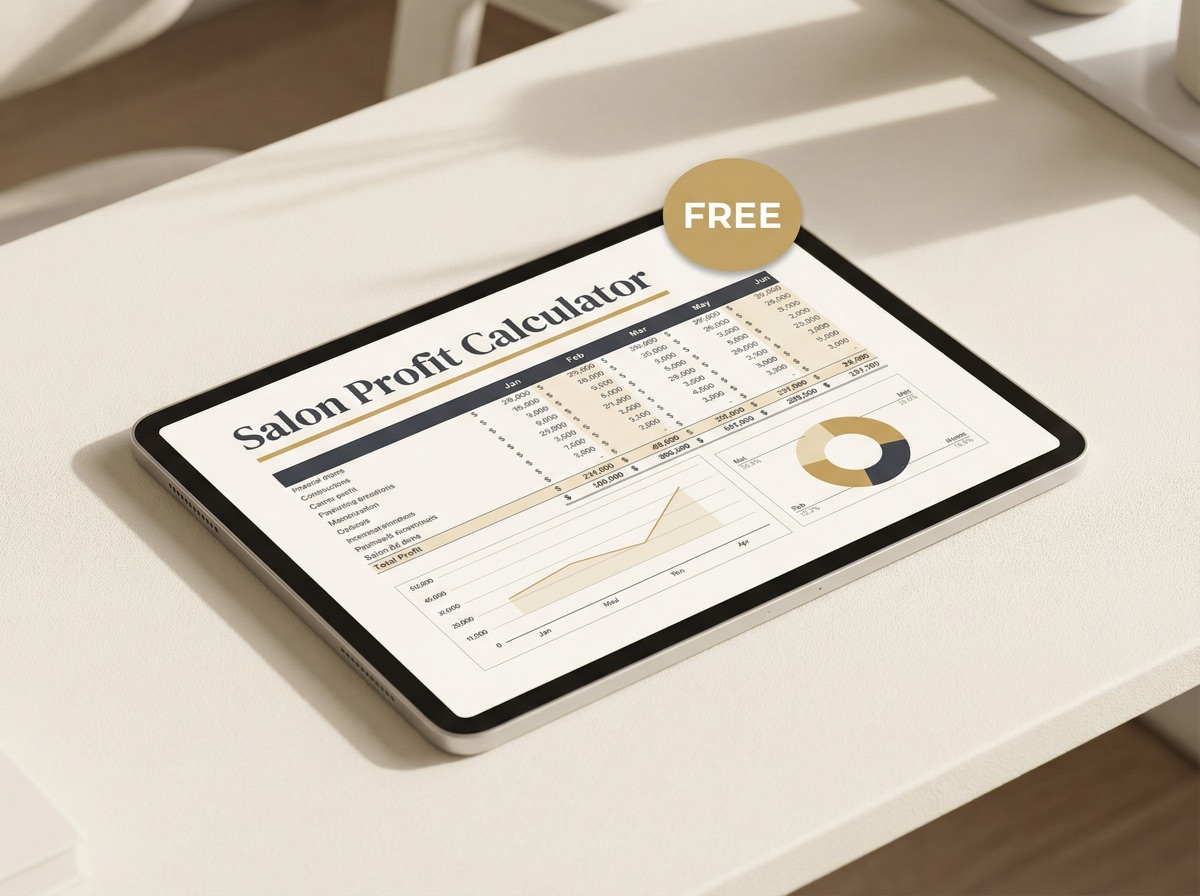
Written by Scott Farmer
Licensed Master Cosmetologist (GA & FL), former Toni & Guy Artistic Director, and founder of Hair Salon Pro. 30+ years behind the chair. 15,000+ clients. Building the business tools cosmetology school never taught. Currently behind the chair at scottfsalon.com in Venice, FL.