Salon Upselling: How to Add $300+ Per Week With Add-On Services (Without Being Pushy)
 Scott Farmer
·
June 3, 2026
·
12 min read
Scott Farmer
·
June 3, 2026
·
12 min read
Quick Answer: How can you add $300 or more per week with salon add-on services?
Recommend one add-on per appointment based on what the hair needs. Deep conditioning, gloss refreshes, scalp treatments, and bond-builders run $20 to $50 each. Twenty clients a week at one $30 add-on equals $600 in new revenue. Even at 50% conversion that is $300 a week, with no new clients booked.
Last updated: June 2026
$62
$62. That was my average ticket when I opened JScott Salon. Haircuts, colors, the standard service menu. I was booked solid four days a week and pulling in just enough to cover rent, product, and the lease on the space. The math looked right until I ran the numbers through a profit calculator and realized my take-home was barely clearing $40,000.
The problem was not the number of clients. I had 18 to 22 per week. The problem was what I earned from each one. Every client left my chair at roughly the same dollar amount because I offered roughly the same service every time. No add-ons. No upgrades. No customized treatment recommendations.
I did not change that because I thought upselling was sleazy. In practice, i had worked with stylists who pushed services clients did not need just to hit commission targets. During my years as an Artistic Director at Toni and Guy, I watched high-pressure upselling destroy client trust faster than bad haircuts. I did not want to be that person.
Then I learned the difference between selling and solving. Here is what I mean.
Why Most Stylists Resist Upselling (and Why They Are Wrong)

The word “upselling” carries baggage. That said, it sounds like the guy at the electronics store pushing the extended warranty. Most stylists avoid it because they associate it with being pushy, and most stylists’ clients are people they care about.
Here is what upselling is behind the chair: it is telling a client with dry, damaged ends that a $35 deep conditioning treatment will fix the texture issue they complained about in the consultation.
That is not selling. For example, that is doing your job.
The Professional Beauty Association reports that salons with active add-on service menus generate 20% to 35% higher revenue per visit than salons that rely on base services alone. Not because they are pushier. Because they are more thorough in diagnosing what each client needs.
When I started recommending add-ons at JScott Salon, my average ticket climbed from $62 to $94 over 18 months. My client count stayed the same. My hours stayed the same. My income went up by more than $30,000 per year. That is the power of solving problems instead of just cutting hair.
The 7 Most Profitable Salon Add-On Services
Some add-ons earn more per minute than others. Some take too long for the revenue they generate. Some require expensive product with thin margins. Here are the seven I found that deliver the best profit per minute of chair time, based on my 30 years behind the chair and serving more than 15,000 clients.
1. Deep Conditioning Treatments ($25 to $45)
Time: 10 to 15 minutes added to service.
Product cost: $3 to $7 per application.
Profit margin: 80% to 88%.
This is the easiest add-on in the industry. Every color client, every client with heat damage, every client who swims or lives in a dry climate needs conditioning. When I ran my salon independently as Scott Farmer Hair Stylist in Venice, FL, I recommended deep conditioning to every color client. Acceptance rate: 65%.
How to recommend it: “Your ends are drier than last time. I want to put a conditioning treatment on while we process your color. It adds about 10 minutes and costs $35. Your hair will feel completely different when you leave.”
2. Gloss and Toner Refreshes ($30 to $50)
Time: 15 to 20 minutes.
Product cost: $4 to $8.
Profit margin: 78% to 87%.
Between full color appointments, gloss treatments extend vibrancy and add shine. For brunettes fading warm and blondes going brassy, a mid-cycle gloss at $35 to $45 keeps them off the “I need a full color” treadmill.
How to recommend it: “Your color still has good depth, so you do not need a full retouch today. But I am seeing some brassiness around the face. A quick gloss will knock that out and add about two more weeks of life to your color. It is $40 and takes 15 minutes.”
3. Scalp Treatments ($20 to $35)
Time: 5 to 10 minutes.
Product cost: $2 to $5.
Profit margin: 82% to 90%.
Scalp health is a growing concern for clients, and it is the highest-margin add-on on this list. The product cost is minimal. The time is short. And clients feel like they got a spa experience.
How to recommend it: “I am noticing some dryness at your scalp line. I can do a quick exfoliating treatment while I shampoo you. It takes about 5 extra minutes, costs $25, and it will feel incredible.”
4. Bond-Building Treatments ($25 to $40)
Time: Added during chemical processing, no extra seat time.
Product cost: $6 to $12 (higher than others).
Profit margin: 55% to 70%.
Products like Olaplex, Redken pH-Bonder, and similar bond-building systems add to chemical services without adding chair time. Furthermore, with my Redken and Paul Mitchell certification background, I can tell you these products protect hair integrity during lightening and color. The margin is lower than conditioning treatments, but the zero-extra-time factor makes the per-minute profit excellent.
How to recommend it: “Since we are lifting you two levels today, I want to add a bond protector into your formula. It protects the structure of your hair during lightening. It is $30 and I mix it right into your color, so it does not add any extra time.”
5. Bang or Fringe Trims Between Appointments ($10 to $15)
Time: 5 to 8 minutes.
Product cost: $0.
Profit margin: 100%.
This is not exactly an add-on to an existing appointment. It is a standalone micro-service between regular visits. Clients with bangs need trims every 2 to 3 weeks. Offering a quick complimentary or low-cost bang trim brings them into the salon more often, strengthens the relationship, and creates an opportunity to recommend a real add-on.
How to recommend it: “Your bangs are going to be in your eyes in about two weeks. Come in for a quick trim. It is $12 and takes 5 minutes. We can book it right now.”
6. Blowout Upgrades and Styling Add-Ons ($15 to $30)
Time: 10 to 15 extra minutes.
Product cost: $1 to $3.
Profit margin: 85% to 92%.
Not every client wants a basic blowout. Offering a flat iron finish, curling iron style, or braided detail as an upgrade turns a standard finish into a premium experience. Weddings, events, and date nights are natural triggers.
How to recommend it: “Do you have anything going on this weekend? I can do a quick curl set after the blowout. It adds about 10 minutes and $20. You will walk out looking like you just left a photoshoot.”
7. Express Color Services ($15 to $25)
Time: 5 to 10 minutes.
Product cost: $3 to $6.
Profit margin: 70% to 80%.
Root touch-up add-ons during a cut appointment, gray blending for male clients, or a quick glaze on a haircut. In practice, these micro-color services capture revenue from clients who do not want a full color appointment but need something more than a cut.
How to recommend it: “I see a little gray coming in at the temples. That said, i can do a quick 5-minute blend that knocks it back without a full color commitment. It is $20.”
How to Calculate Your Upselling Revenue Potential
Use the Salon Profit Calculator to model your current average ticket against what it could be with add-ons. Here is the formula:
Current weekly revenue: Clients per week x current average ticket
Potential weekly revenue: Clients per week x (current average ticket + average add-on price x conversion rate)
Example:
– 20 clients per week
– Current average ticket: $65
– Average add-on price: $30
– Conversion rate: 50% (10 out of 20 clients accept)
Current weekly revenue: 20 x $65 = $1,300
New weekly revenue: (20 x $65) + (10 x $30) = $1,600
Weekly increase: $300
Annual increase: $15,600
That is before you factor in the compounding effect. For example, clients who receive add-on treatments come back more consistently because their results are better. My retention rate climbed 8 percentage points in the first year I started recommending add-ons consistently.
For the full breakdown of setting your service menu prices to accommodate add-ons, read the complete pricing guide. The salon pricing formula shows you exactly how to calculate your floor price per minute of chair time.
The 3-Step Recommendation Framework (Not a Sales Script)
I do not use scripts for upselling. Scripts sound rehearsed and clients can feel it. What I use is a framework.
Step 1: Diagnose During the Consultation
Every appointment starts with a consultation, even for regulars. Look at the hair. Touch it. Notice what changed since the last visit. Dryness? Breakage? Color fading? Scalp irritation? You are the licensed professional in this room. Use your expertise.
This step takes 60 seconds and it is free. But it gives you the diagnostic foundation for any add-on recommendation.
Step 2: Name the Problem Before Offering the Solution
“Your ends are dry” comes before “I recommend a conditioning treatment.” The problem comes first. The solution comes second. The price comes third.
When you reverse the order (start with the price or the product name), it feels like a sales pitch. When you start with the diagnosis, it feels like care.
Step 3: Give the Time and the Price Together
Clients have two concerns about add-ons: how much and how long. Answer both in one sentence.
“It is $35 and adds about 10 minutes to your appointment.”
No pressure. No guilt. Just the facts. If they say no, move on. No awkward pause. No second pitch. You planted the seed. Many clients who say no the first time say yes the second or third time because they trust that you are not pushing.
The Numbers That Prove Upselling Works
Track these four salon KPIs weekly to measure your add-on performance:
| Metric | Baseline (No Add-Ons) | Target (Active Add-Ons) | What It Tells You |
|---|---|---|---|
| Average ticket | $55 to $75 | $80 to $110 | Revenue per client visit |
| Add-on acceptance rate | 0% | 40% to 60% | How well your recommendations land |
| Revenue per service hour | $45 to $65 | $65 to $90 | True productivity measure |
| Client return rate | 55% to 70% | 70% to 85% | Add-ons improve results, which improves retention |
According to the Bureau of Labor Statistics, the median annual wage for hairstylists and cosmetologists is $35,080. Even so, a stylist who adds $15,600 per year through add-on services is earning 44% more than the median without working a single extra hour. That is the difference between surviving and building.
5 Mistakes That Kill Add-On Revenue
1. Recommending the same add-on to every client. If every person in your chair hears “do you want a conditioning treatment,” you are not diagnosing. You are pitching. Customize your recommendation based on what you see and feel.
2. Waiting until checkout to mention add-ons. The chair is where trust lives. The front desk is where transactions happen. Recommend add-ons while you are working, not when the client is reaching for their wallet.
3. Stacking multiple add-ons in one visit. One add-on per appointment is the sweet spot. Two feels greedy. Three feels like a car dealership. If a client needs multiple treatments, space them across visits and explain why.
4. Not training your team. If you own the salon and your stylists are not recommending add-ons, you are leaving $50,000 to $100,000 per year on the table across a 4-chair salon. Give your team the framework, the language, and the product knowledge. Then track the metric weekly.
5. Pricing add-ons too low. A $10 add-on sends the message that the service is not valuable. A $25 to $40 add-on positions it as a professional treatment. Clients who pay $10 for something assume it was a nice extra. Clients who pay $35 assume it was necessary and effective.
How Add-On Revenue Connects to Your Total Salon Profit
Add-on services are the highest-margin revenue in a salon because the fixed costs are already covered. Your chair is occupied. Your utilities are running. Your time is committed. The add-on cost is almost entirely product, which runs 10% to 25% of the service price.
That means 75% to 90% of every add-on dollar goes straight to your bottom line. Furthermore, compare that to a base haircut where product, rent, insurance, and overhead eat 50% to 65% before you take home a dollar.
When I teach the Profit-First System, add-on strategy is one of the four levers I cover. It sits alongside pricing, utilization, and retention as the controllable factors that determine what you actually earn behind the chair.
If you want to learn how all four levers work together, the math behind each one, and the exact system I used to double my chair income without adding hours, run the free Salon Profit Calculator. It is 90 minutes that can change the next 12 months of your income.
How to Build Your Add-On Service Menu
Start with three add-ons. Not seven. Not twelve. Three.
Pick the three that fit your existing service mix, require the least extra time, and have the highest profit margin. For most stylists, that means:
- A conditioning or bond treatment (for color clients)
- A scalp treatment (for cut-only clients)
- A gloss or toner refresh (for color clients between appointments)
Price them between $25 and $45 each. Print them on your service menu with a one-line description that focuses on the result, not the product name.
Example:
– Hydration Reset ($35): Deep conditioning treatment for dry, damaged, or chemically treated hair. Restores moisture and shine in one session. 10 minutes.
Not:
– Redken Extreme Strength Builder Plus Treatment ($35)
Clients buy results. They do not buy product names. Your menu should reflect that.
Frequently Asked Questions
How do I upsell without being pushy?
Start with the diagnosis, not the product. When you name the problem first (“your ends are dry,” “I am seeing some breakage,” “your scalp looks irritated”), the recommendation feels like professional advice, not a sales pitch. Give the time and price together in one sentence. If the client says no, accept it with zero pressure. Trust builds over multiple visits.
What is a good add-on acceptance rate?
40% to 60% is a strong target for experienced stylists. Anything above 60% means you are either recommending only when the need is obvious (good) or recommending to everyone regardless of need (not good). Below 30% usually means you are not asking consistently or your recommendation language needs work.
How much can salon add-ons increase my income?
A stylist seeing 20 clients per week who adds a $30 service to half of those appointments generates an extra $300 per week, or $15,600 per year. At a 4-chair salon with all stylists trained on add-ons, that is $50,000 to $75,000 in additional annual revenue from the same client base.
Should I offer add-on discounts to new clients?
No. Discounting an add-on teaches the client that its full price is negotiable. Offer a complimentary mini-version (a 3-minute scalp massage during shampoo, for example) and then recommend the full treatment at the next visit. This gives them the experience without devaluing the service.
What add-on services work best for men’s haircuts?
Scalp treatments, gray blending, and beard conditioning are the top three for male clients. Keep the pitch simple, fast, and results-focused. Male clients respond well to specific dollar amounts and exact time commitments. “It is $20 and adds 5 minutes” works better than a long explanation of product benefits.
Ready to see how add-on revenue fits into your complete profit picture? I am teaching the full Profit-First System on the free Salon Profit Calculator. You will learn the four numbers that control your chair income and the exact system I used to go from $40,000 to six figures without working more hours. Run the free calculator.
Free Download
Get the Salon Profit Calculator
See exactly where your salon is losing money — in under 5 minutes.
Download Free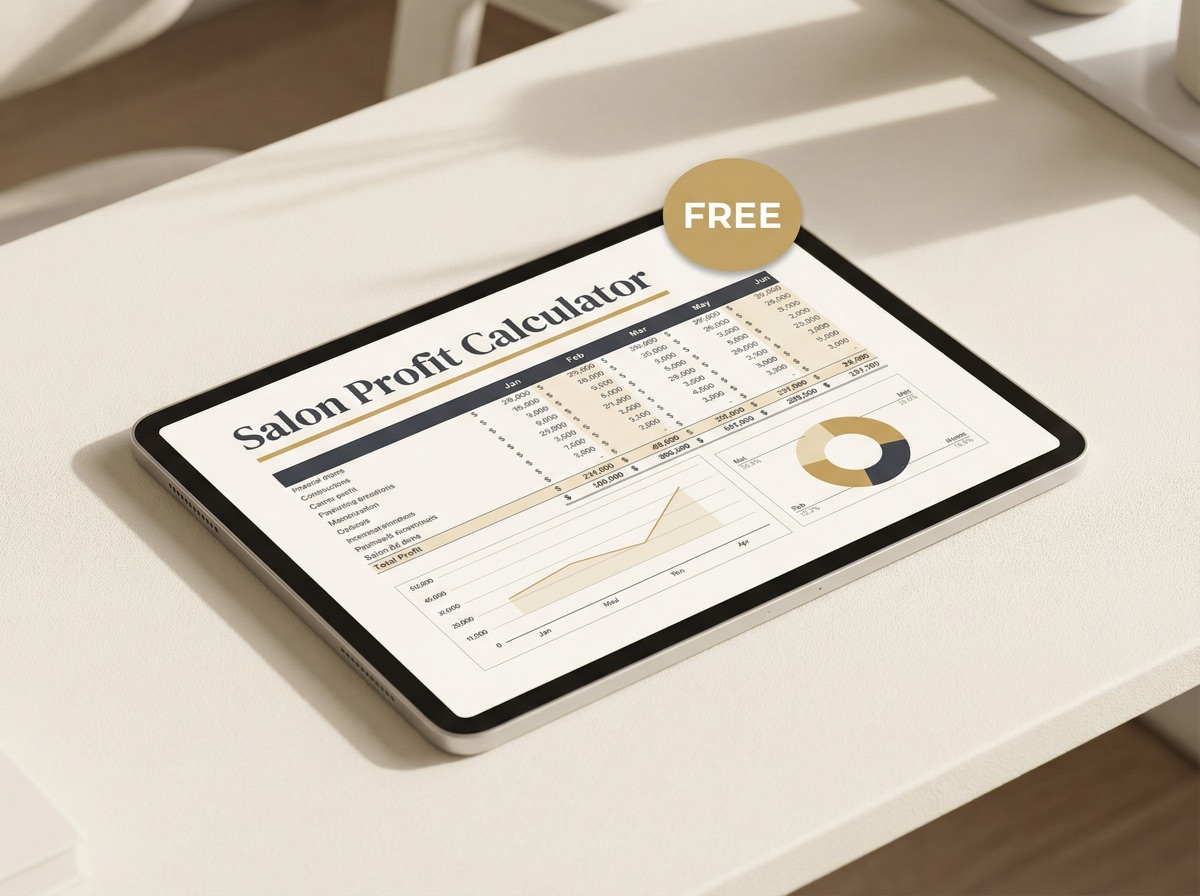
Written by Scott Farmer
Licensed Master Cosmetologist (GA & FL), former Toni & Guy Artistic Director, and founder of Hair Salon Pro. 30+ years behind the chair. 15,000+ clients. Building the business tools cosmetology school never taught. Currently behind the chair at scottfsalon.com in Venice, FL.