When to Leave Commission and Go Suite: The Math That Tells You If You Are Ready
 Scott Farmer
·
July 1, 2026
·
11 min read
Scott Farmer
·
July 1, 2026
·
11 min read
Quick Answer: When to leave commission for a salon suite comes down to two numbers: your monthly service revenue and your portable client book. If you bring in $5,000 to $6,000 a month and can keep 75% or more of your clients, the suite math works. Below $5,000, stay on commission or try booth rental first.
TL;DR: The math favors leaving commission for a salon suite when your monthly service revenue hits $5,000 to $6,000 for 3 or more months straight and you can keep at least 75% of your client book. Below $5,000 a month, booth rental or staying on commission is safer. Above $6,000 with a loyal book, a suite can add $1,200 to $2,400 a month to your take-home. Use the free booth rent vs commission calculator to see your exact after-tax take-home under both models, or the Salon Profit Calculator for a broader monthly breakdown.
Last updated: June 23, 2026
“Scott, when should I leave commission for a salon suite?” I get this question more than almost any other.
My answer is always the same. Maybe. But not until we run the numbers.
Every year, thousands of stylists leave commission too early and end up scrambling to cover suite rent with half a client book. And every year, thousands more stay on commission too long, handing $20,000 or more in potential income to someone else because they are afraid to run the math. My name is Scott Farmer, and I have been on both sides of that mistake over 30 years behind the chair. I started on commission, built my own book as an independent, ran my own salon with a full team, and eventually came back to a single chair pulling $16,000 a month.
When to leave commission for a salon suite is not a gut feeling. It is a math problem with a clear tipping point. This post gives you the exact numbers to find yours.
What Is the Tipping Point for Leaving Commission for a Suite?

The short answer: when your monthly service revenue sits between $5,000 and $6,000 consistently and you can bring at least 75% of your client book with you.
Here is why that number matters.
According to the Bureau of Labor Statistics, the median annual wage for hairdressers and cosmetologists is around $35,000. Commission splits run 40% to 60% in the stylist’s favor, with the average landing around 45% to 50%. On $6,000 a month in services at a 50% split, your take-home is $3,000. The salon keeps $3,000 to cover rent, product, front desk, utilities, insurance, and their profit.
A salon suite in a mid-market city runs $275 to $500 a week. Call it $350 a week or $1,400 a month. Add $400 a month for product and supplies. Your total fixed cost is $1,800 a month.
On the same $6,000 in revenue, your take-home in a suite is $4,200 a month. That is $1,200 more than commission. Every single month.
At $8,000 a month in revenue, the gap widens to $2,200 per month. That is $26,400 a year the commission model was costing you.
| Monthly Revenue | Commission Take-Home (50%) | Suite Take-Home (after $1,800 costs) | Monthly Difference |
|---|---|---|---|
| $4,000 | $2,000 | $2,200 | +$200 |
| $5,000 | $2,500 | $3,200 | +$700 |
| $6,000 | $3,000 | $4,200 | +$1,200 |
| $7,000 | $3,500 | $5,200 | +$1,700 |
| $8,000 | $4,000 | $6,200 | +$2,200 |
The crossover is clear. At $4,000 in revenue, the difference is barely worth the risk. At $5,000 you start to see real money. At $6,000 and above, staying on commission is costing you more than most car payments.
Run your actual numbers against these benchmarks with the Salon Profit Calculator before you decide.
Why Does $5,000 to $6,000 a Month Matter So Much?
Because below that line, you do not have enough margin to absorb a bad month.
Suite rent is due whether the phone rings or not. On commission, a slow week costs you income but it does not cost you cash out of pocket. On a suite lease, a slow week means you still owe $275 to $500 in rent with nothing coming in.
At $4,000 a month in revenue, your suite take-home is only $2,200 after costs. One cancellation-heavy week drops you below what you would have made on commission. Two bad weeks in a row and you are dipping into savings to make rent.
At $6,000, you have a $1,200 monthly cushion above your commission equivalent. That cushion absorbs a slow week without breaking you. It also gives you room to invest in the things commission stylists never can: your own retail line, your own branding, your own online booking system.
I learned this the hard way early in my career. When I was at Toni and Guy as Artistic Director, I watched talented stylists leave the floor for suites before their books could support it. Three months later, half of them were back. The ones who waited until their book was full? They never looked back.
How Do You Know If Your Client Book Can Support a Suite?
Your revenue number means nothing if the clients will not follow you. Here is how to pressure-test your book before you give notice.
Count your repeat clients from the last 6 months
Pull your appointment history. Count every client who booked with you at least twice in the last 6 months. That is your portable book. One-time walk-ins and salon-referred new clients are unlikely to follow you.
In my experience, stylists keep 60% to 85% of their personal book when they move. The biggest factor is not geography or parking. It is relationship depth. Clients who follow you on social media, text you directly, and specifically ask for you by name when they call will follow you across town. Clients who book “the next available appointment” at the front desk will not.
Calculate your portable revenue
Multiply your repeat client count by your average ticket and your average visit frequency. That is your projected suite revenue.
Example: 45 repeat clients, $95 average ticket, visiting every 6 weeks (8.7 visits per year).
45 x $95 x 8.7 / 12 = $3,109 per month in portable revenue.
That number is below the $5,000 threshold. This stylist needs to either build the book further on commission or raise the average ticket before making the move.
The 75% rule
The Professional Beauty Association and industry data both confirm: if your portable revenue covers at least 75% of your current total revenue, you have a safe base to move. The remaining 25% will come from organic growth, social media, and referrals within the first 90 days. If your portable revenue is below 60% of your current total, stay on commission and build.
For a full breakdown of the financial comparison, read our guide on salon booth rental vs commission. The client-move playbook works the same whether you are going to a booth or a suite.
What Are the Hidden Costs Most Stylists Miss Before Going Suite?
The lease payment is the number every stylist knows. The costs below are the ones that wreck budgets in month two.
Self-employment taxes
On commission, your employer pays half of your Social Security and Medicare taxes. As a suite operator, you pay both halves. The IRS self-employment tax rate is 15.3% total, which means an extra 7.65% of your income that did not exist before. On $60,000 in annual revenue, that is $4,590 you need to set aside on top of your income taxes.
If you have not already, grab our Salon Owner Starter Pack for $17. It includes a budget template that accounts for self-employment tax, quarterly estimated payments, and every other line item suite operators miss.
Health insurance
Many commission salons offer group health insurance or at least contribute toward it. On your own, individual health insurance runs $350 to $700 a month for a solo stylist depending on your state and plan. Budget for it before you move, not after.
Product costs you did not carry before
On commission, the salon buys the color, foil, toner, developer, and everything else you use. On a suite, you buy all of it. Color costs alone run $150 to $400 a month for a busy colorist. Add retail inventory, disposables, and back-bar product and you are looking at $300 to $600 a month in supplies.
For a detailed guide on what it takes to run a suite, read our how to start a salon suite business guide.
Downtime you used to get paid for
On commission, cancellations and no-shows still cost you income but you are at least in a building with walk-in potential. In a suite, a no-show is an empty room with rent running. Build a cancellation policy before day one. Charge a booking deposit. Protect your calendar.
Our post on how to build a salon membership program covers how to create predictable recurring revenue that protects you from schedule gaps.
What Mistakes Do Stylists Make When Leaving Commission for a Suite?
I have watched this transition go wrong hundreds of times. Here are the four patterns that repeat.
Leaving with no cash reserve
If you do not have 3 months of personal expenses plus 3 months of suite rent saved in cash, you are not ready. Period. The first 90 days in a suite are unpredictable. Bookings take time to stabilize. Clients who said they would follow you will not all rebook in week one. The reserve is not optional.
Not raising prices on the move
Commission salons set the prices. You worked inside their menu. Your suite prices should be higher because your costs are higher and your client experience is better. Most stylists should raise prices 10% to 20% on the transition. The clients who follow you are following you for the relationship, not the price.
Signing a 12-month lease when a 6-month option exists
Some suite companies offer shorter lease terms at a slightly higher weekly rate. For your first suite, the flexibility is worth the extra $25 to $50 a week. If the suite does not work, a 6-month exit is a bruise. A 12-month exit is a broken bone.
Forgetting about marketing
On commission, the salon’s brand drives some of your traffic. In a suite, you are invisible unless you build your own presence. Start posting consistently on Instagram 60 days before you move. Build an email list. Get your Google Business Profile set up. For a full content plan that turns social posts into actual bookings, read our guide on salon social media content that drives bookings.
How Do You Build a 90-Day Financial Bridge Before the Move?
The bridge is not complicated. It is three steps that take 90 days of discipline.
Step 1: Save hard for 90 days. Set aside 20% to 30% of every commission check into a separate savings account. Do not touch it. That is your suite launch fund.
Step 2: Run the math on paper. Open the Salon Profit Calculator and model your suite income using your real numbers. Portable clients, your actual average ticket, your projected weekly bookings, and the suite rent in your area. If the calculator shows you breaking even or losing money in month one, extend the bridge.
Step 3: Secure the suite before you give notice. Sign the suite lease with a start date 30 to 60 days out. Then give your commission salon notice. Do it in that order. Never give notice without a signed space.
I have seen too many stylists give notice on a Monday, start searching for suites on Tuesday, and realize every decent space in their market has a 4-week waitlist. Now they have no chair and no income. Lock the suite first, then burn the bridge.
Is Booth Rental a Better First Step Than Going Straight to a Suite?
For some stylists, yes.
Booth rental is the middle step. You leave commission, keep more of your income, but do not carry the full overhead of a suite. Weekly booth rent runs $150 to $400, compared to $275 to $800 for a suite. Startup costs are a few hundred dollars instead of $3,000 to $5,000.
If your portable revenue is between $3,500 and $5,000 a month, booth rental might be the right move for now. Build your book, raise your average ticket, and save toward a suite. When your revenue consistently clears $5,500 to $6,000, that is when the suite math starts making sense.
Our full salon suite vs booth rental comparison breaks down the earning ceilings, startup costs, and lifestyle trade-offs of each model.
What Salon Owners Ask Next
- How do I tell my salon owner I am leaving without burning the relationship?
- What should I look for before signing a salon suite lease?
- How long does it realistically take to get back to my current income after the move?
Frequently Asked Questions
How much money should I have saved before leaving commission for a suite?
Save at least 3 months of personal living expenses plus 3 months of suite rent. For most mid-market stylists, that is $8,000 to $15,000 in cash. Add $1,500 to $3,000 for opening supplies if you are not bringing your own equipment. The reserve keeps you solvent during the transition dip that hits almost every stylist in weeks 3 through 8.
Can I leave commission if I only have 30 clients?
It depends on your average ticket and visit frequency. Thirty clients at $120 average ticket visiting every 5 weeks generates $3,120 a month. That is below the $5,000 tipping point for most suite markets. You would be better off building to 45 to 50 repeat clients on commission first, or exploring booth rental as a bridge step.
What commission percentage makes it not worth staying?
If your commission split is below 45%, the math almost always favors leaving once your monthly revenue exceeds $4,500. At a 40% split on $6,000 in revenue, you take home $2,400. A suite at $1,800 in monthly costs nets you $4,200. That is a $1,800 per month swing. The lower your commission percentage, the sooner the tipping point arrives.
Will I lose clients when I move to a suite?
Expect to lose 15% to 40% of your total book. Repeat clients who have a personal relationship with you will follow at a much higher rate (75% to 90%) than salon-referred or walk-in clients (20% to 40%). The clients you keep are your highest-value clients, which means your average ticket often goes up after the move.
Should I raise my prices when I move to a suite?
Yes. Your costs are higher, your overhead is real, and your client experience is better. A 10% to 20% price increase on the transition is standard. Most clients expect it. The ones who do not are usually the ones you were undercharging anyway. Use the free Price Increase Script Pack to handle the conversation.
The decision to leave commission is not about courage. It is about math. Run your numbers. Count your portable clients. Check your cash reserve. If the math works, move. If it does not, build until it does.
Start here: Run your numbers in the free Salon Profit Calculator and model your commission income against your projected suite income side by side. If you want the full financial templates, pricing scripts, and budget worksheets to plan the move, grab the Salon Owner Starter Pack for $17.
Free Download
Get the Salon Profit Calculator
See exactly where your salon is losing money — in under 5 minutes.
Download Free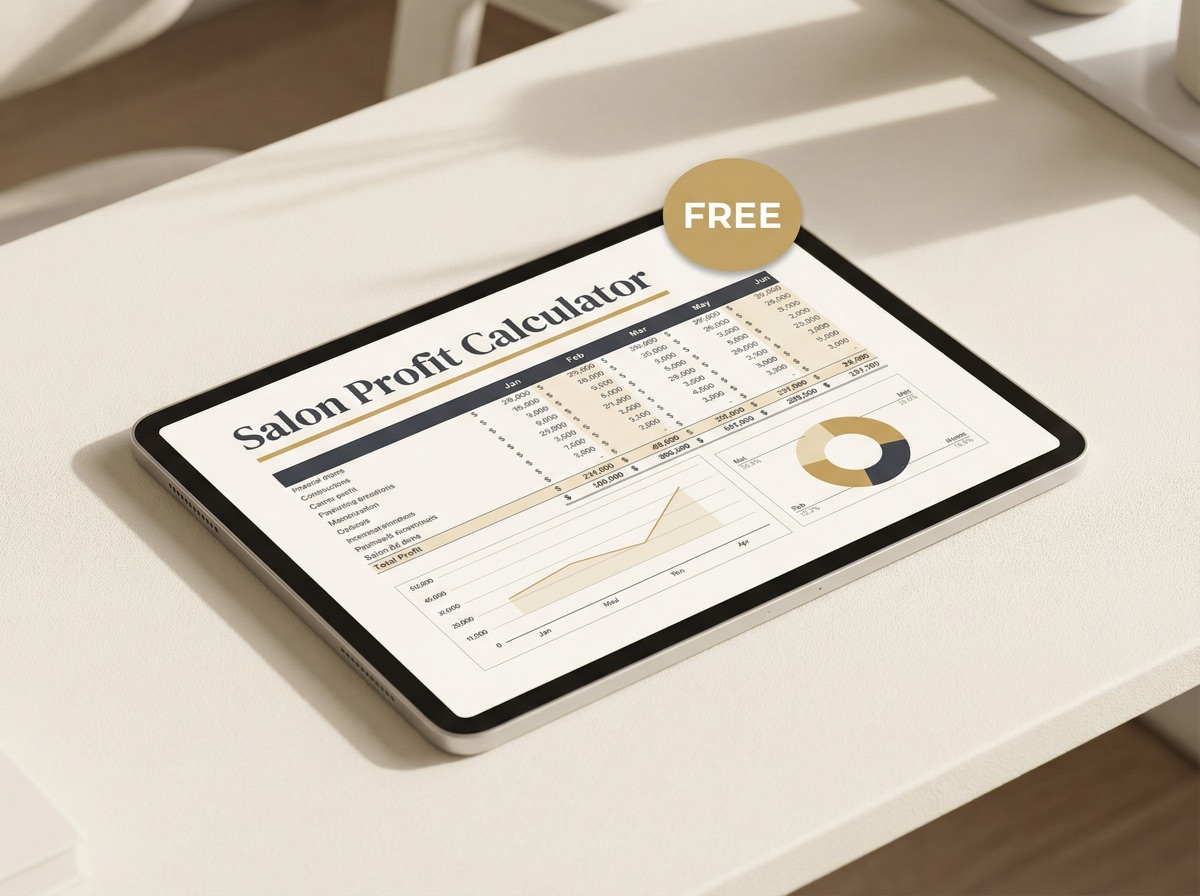
Written by Scott Farmer
Licensed Master Cosmetologist (GA & FL), former Toni & Guy Artistic Director, and founder of Hair Salon Pro. 30+ years behind the chair. 15,000+ clients. Building the business tools cosmetology school never taught. Currently behind the chair at scottfsalon.com in Venice, FL.